
latest
What The Death Of ISIS Commander Abu-Bilal Al-Manuki Means For Terror Networks Worldwide.

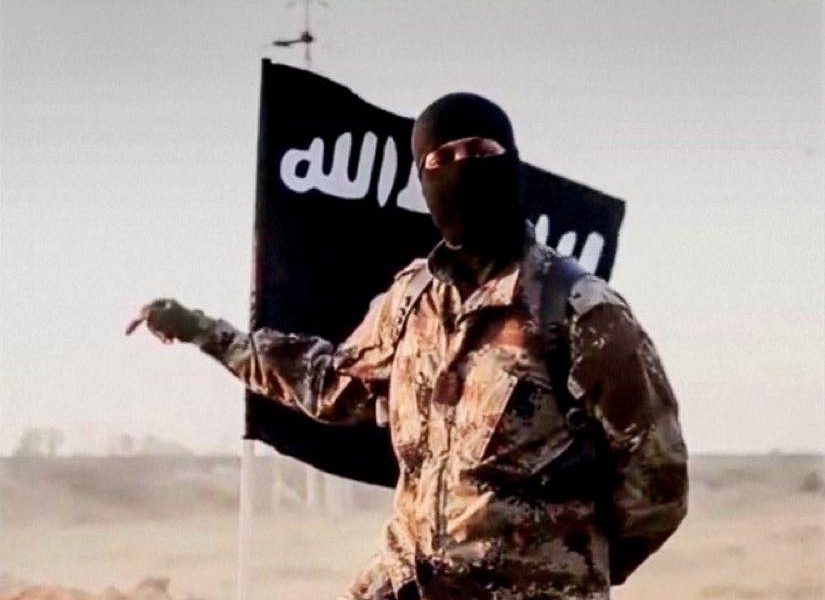
The reported killing of Abu-Bilal al-Manuki, a senior Islamic State commander widely regarded as the group’s second-in-command globally, by joint United States and Nigerian forces could mark one of the most significant counterterrorism breakthroughs in the Lake Chad conflict in recent years.....KINDLY READ THE FULL STORY HERE▶
Beyond the removal of a high-ranking extremist leader, the operation points to a broader shift in the ongoing fight against Islamic State West Africa Province (ISWAP) and other jihadist networks operating across Nigeria and the wider Sahel region.
According to a statement attributed to Donald Trump, the strike was executed by U.S. forces in coordination with the Nigerian military following what he described as a “carefully planned and highly complex mission.”
The operation highlights an unusual level of intelligence sharing, surveillance capability, and operational coordination between Nigeria and the United States in counterterrorism efforts.
However, analysts suggest the significance of the mission goes far beyond the elimination of a single commander, as al-Manuki was believed to play a central role in ISWAP’s evolving military strategy.
The Figure Behind ISWAP’s Tactical Evolution In West Africa
Security and intelligence sources familiar with insurgent operations in the Lake Chad Basin say al-Manuki was among foreign fighters deployed to strengthen ISWAP’s operational capacity in the region.
These fighters, reportedly with combat experience from other jihadist theatres, are believed to have contributed to a shift in insurgent tactics across North-East Nigeria.
Their arrival coincided with a noticeable change in ISWAP operations, including coordinated night raids, mobile attack formations, the use of drones for reconnaissance and attacks, increased deployment of improvised explosive devices (IEDs), renewed suicide bombing tactics, and improved battlefield communication systems.
Previously, insurgent attacks in the region were largely localised and predictable. Over time, however, ISWAP began adopting more complex strategies similar to those used by ISIS in Iraq and Syria, particularly surprise night operations targeting isolated military positions.
The introduction of drone usage, though still limited in capability, marked a concerning evolution in the group’s operational sophistication.
Al-Manuki was believed to be a key figure in driving this transformation, with alleged responsibilities extending beyond battlefield command to include coordination of funding channels, recruitment support, propaganda structures, and strategic links between ISIS central leadership and ISWAP factions in West Africa.
Why The Operation Matters
The killing of such a high-profile figure carries several strategic implications.
First, it disrupts ISWAP’s command and coordination structure. Beyond frontline fighters, the group relies heavily on leadership networks responsible for logistics, financing, recruitment, and strategic planning. Removing a key coordinator can lead to confusion and temporary disruption within the organisation.
Second, the operation suggests a significant intelligence breakthrough. ISWAP has long benefited from difficult terrain across the Lake Chad islands, Sambisa Forest, and wider Sahel corridor, which has helped shield its leadership. Successfully locating and targeting a figure of al-Manuki’s profile points to deeper intelligence penetration than previously acknowledged.
President Trump’s reference to intelligence “sources” monitoring the commander’s movements may also heighten suspicion within insurgent ranks, potentially triggering internal mistrust and fear of infiltration.
Third, the strike reflects growing global concern about the expansion of ISIS-linked activities in West Africa. The Sahel has increasingly become a major hub for jihadist activity amid instability in countries such as Mali, Burkina Faso, and Niger, prompting international attention beyond regional security concerns.
Not A Decisive End To ISWAP
Despite the significance of the operation, experts caution that it does not signal the defeat of ISWAP.
The group has historically demonstrated resilience following leadership losses, surviving military offensives, internal splits, and sustained counterterrorism pressure.
Its continued survival is often linked to underlying structural challenges in the region, including poverty, unemployment, displacement, weak border controls, and limited state presence in remote communities.
As long as these conditions persist, extremist groups are likely to retain recruitment and operational capacity.
However, the loss of a strategically important figure like al-Manuki may slow ISWAP’s tactical innovation and temporarily weaken its coordination abilities.
Psychological And Strategic Impact
Perhaps the most immediate impact is psychological. For ISWAP leadership, the operation sends a clear message that even senior commanders are vulnerable to targeted strikes.
For Nigerian troops, it represents a morale boost and evidence that sustained pressure is producing results. For civilians in the North-East, it offers cautious optimism that extremist influence may be gradually weakening.
For Nigeria’s wider counterterrorism strategy, the operation could signal a shift toward more intelligence-driven precision targeting of high-value militant figures rather than broad military engagements.
Whether this translates into long-term success will depend on sustained intelligence operations, regional cooperation, and post-conflict stabilization efforts.
Ultimately, the death of Abu-Bilal al-Manuki may either stand as a symbolic victory or become the beginning of a deeper strategic weakening of ISWAP in the Lake Chad Basin,
latest
THE MILLION-DOLLAR HAND: Maradona’s Infamous ‘Hand Of God’ Match Ball Sells For £2.5m At Auction.

The football utilized by Diego Maradona to score his controversial “Hand of God” goal against England during the 1986 World Cup has been auctioned in the United States for £2.5m.....KINDLY READ THE FULL STORY HERE▶
The Adidas Azteca ball brought in $3.3m via Heritage Auctions on Saturday, which fell short of the estimated £7.3m ($10m) projection from experts.
Key details of the historic item and match include:
-
The Match: The ball was in play for the entirety of Argentina’s 2-1 quarter-final victory against England at the Estadio Azteca in Mexico City.
-
The Infamous Goal: Maradona scored both of Argentina’s goals, with his first involving him punching the ball past England goalkeeper Peter Shilton—an infraction missed by the referee. Post-match, Maradona famously attributed it to “a little with the head of Maradona and a little with the hand of God”.
-
Goal of the Century: Minutes later, the Argentina captain scored a legendary solo goal, weaving past five outfield players and rounding Shilton.
-
Prior Ownership: The ball was kept for over three decades by Tunisian referee Ali Bin Nasser, who officiated the match. He initially sold it in 2022 for £1.74m ($2.37m), though a subsequent attempt to sell it in 2023 did not meet the reserve price.
-
Related Memorabilia: This auction follows the 2022 sale of Maradona’s Argentina shirt from the same match, which fetched £7.1m.
entertainment
“PLEASE FORGIVE ME”: Inside Ijebu’s Dramatic Public Plea After The Loss Of Veteran Icon Ogogo.
Nollywood actor Olatayo Amokade, widely known as Ijebu, recently took to social media to appeal to his family, friends, colleagues, and associates for forgiveness regarding any past grievances.....KINDLY READ THE FULL STORY HERE▶
The emotional video message shared on his Instagram page followed the passing of veteran actor Taiwo Hassan, popularly called Ogogo, who died at the age of 66.
Key highlights from his statement include:
-
Deep Reflection: Ijebu expressed that the veteran actor’s death weighed heavily on his heart, prompting him to reflect deeply on the brevity of life and the importance of resolving conflicts early.
-
Public Apology: Addressing seniors, colleagues, staff, and younger actors in the industry, the actor asked everyone to overlook his shortcomings and pardon any offense.
-
Call for Reconciliation: Emphasizing that human beings come into the world with nothing and leave with nothing, he urged people to let go of grudges because life is short.
The founder and General Overseer of Rock Word Church and Dominion International, Dr Adamson Aromaegbe, has passed away.....KINDLY READ THE FULL STORY HERE▶
Based in Port Harcourt, Rivers State, the late gospel preacher died on Friday, with the specific circumstances surrounding his death kept private.
Key takeaways from the announcement include:
-
Official Confirmation: The church leadership formally announced his passing on Sunday through a statement issued by Rev. Nnamdy Echezona via the ministry’s official channels.
-
Tributes to a Visionary: The ministry honored Dr. Aromaegbe as a dedicated Christian leader, mentor, teacher, and kingdom builder whose life and work deeply impacted countless individuals.
-
Next Steps: The church has asked members, friends, and well-wishers to keep the family and the Dominion International community in their prayers, noting that details regarding his “Celebration of Life” ceremony will be shared later.
-

 latest12 months ago
“Social Media Erupts As Jim Iyke Declares Rita Dominic Nollywood’s Most Beautiful”
-
 latest2 years ago
Edo Political Showdown: Oshiomhole Appears At Presidential Villa As Tinubu Hands APC Gubernatorial Flag To Okpebholo (Photos & Video)
-
 entertainment2 years ago
Love Knows No Age American Woman Defends Marriage To Young Nigerian Man “I’m Not 70”
-
 latest2 years ago
Olumide Akpata Strikes Again: Drops Killer Track, Sends Edo State Into Frenzy!(Video)
-
 Politics3 years ago
Nigerians React As Pastor Adeboye Foresees Passing Away On A Sunday After Enjoying A Satisfying Meal Of Pounded Yam
-
 latest2 years ago
FG Identifies 31 States At Risk Of Heavy Flooding In 2024: See Full List
-
 Politics3 years ago
BREAKING: Inspector-General Of Police Summons Top Police Commanders For Crucial-Security Challenges
-
 latest2 years ago
5 NYSC Corpers Perish In Fatal Road Accident Returning From Camp