Connect with us

latest

Major Boost For Oyo Economy As Makinde Reveals Long-Term Tourism Plan.

Published

on

Oyo State Governor, Seyi Makinde, has declared that his administration has laid the groundwork to position the state as the tourism hub of South-West Nigeria and one of the top tourism destinations in the country.....KINDLY READ THE FULL STORY HERE▶
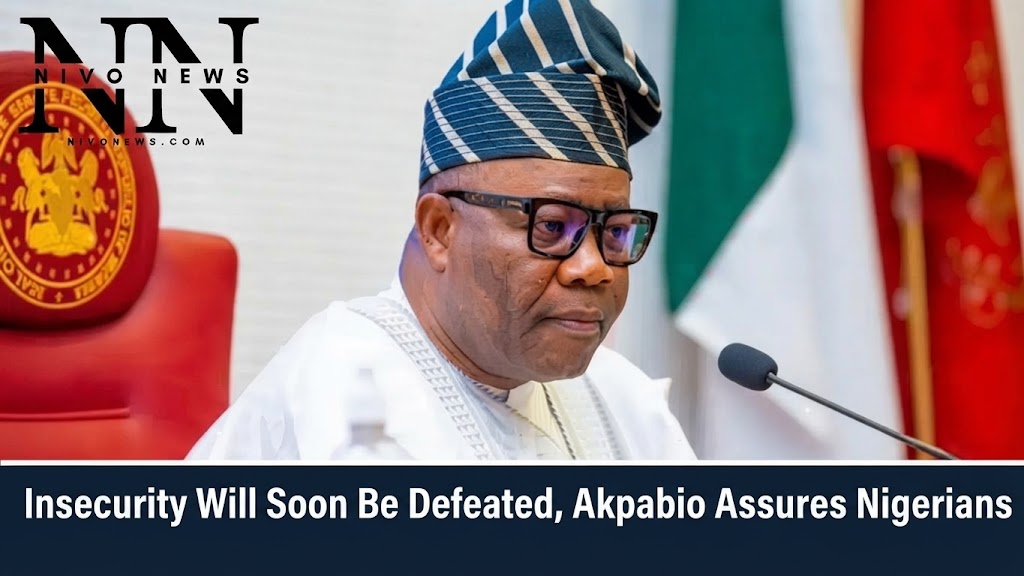
Makinde made the statement on Wednesday, May 13, during the International Tourism Summit Oyo State 2026, held at the International Conference Centre, University of Ibadan.

The summit, themed “From Groundwork to Governance: Building Tourism That Endures,” focused on creating sustainable tourism structures for long-term development.

According to a statement by his Special Adviser on Media, Sulaimon Olanrewaju, the governor said his administration has made strategic investments in infrastructure, security, policy reforms, and economic enablers to support the growth of tourism in the state.

He explained that ongoing road projects across Oyo would improve access to communities, towns, and tourist attractions, making the state more attractive to investors and visitors.

Makinde noted that improved road connectivity is central to both the state’s tourism ambitions and broader economic agenda.

“Some of you here were part of the tour of the Oke Ogun Zone. I hope you can now see why Oyo is set to become the tourism capital of South-West Nigeria in the coming years,” he said.

He also highlighted the quality of infrastructure in the state, boasting that travelers can drive nearly 180 kilometres from Moniya on state roads without encountering a pothole.

Addressing investor concerns about policy continuity after his tenure, Makinde assured stakeholders that his government is building systems designed to outlast political transitions.

“Leadership changes, but systems endure. Our focus has been deliberate. We are not just starting projects; we are creating structures that will sustain them,” he stated.

As part of this long-term vision, the governor announced the establishment of a committee to develop a 25-year tourism master plan for Oyo State.

He also disclosed that development plans are being prepared for major tourism assets such as Eleyele Lake, while the government has signed a 15-year concession agreement with SystemSpecs for the management of Bower’s Tower.

Makinde said these initiatives provide investors with a stable and predictable environment anchored on long-term frameworks.

Former Ekiti State Governor, Kayode Fayemi, who also spoke at the summit, commended Makinde’s infrastructure strides and commitment to tourism development.

Fayemi, however, stressed the need to institutionalise tourism policies so they are not tied to any individual administration.

He also advocated for the creation of a South-West Tourism Circuit to connect major tourist destinations across the region.

Kola Lawal, who presented the state’s 25-year tourism master plan framework, said the blueprint is aimed at attracting investment while promoting Oyo’s rich cultural and heritage assets.

Filmmaker Kunle Afolayan and Whatadeal Africa Managing Director, Obafela Bank-Olemoh, also praised the government’s infrastructural improvements, particularly in road development.

Meanwhile, Commissioner for Culture and Tourism, Wasiu Olatubosun, said the tourism framework would ensure proper coordination, consistency, and sustainable growth for the sector.

Advertisement

latest

PDP Begins Screening Of Presidential And Governorship Aspirants Ahead Of Elections.

Published

on

The Abdulrahman Mohammed-led National Working Committee (NWC) of the Peoples Democratic Party (PDP) has scheduled Thursday for the screening of its presidential and governorship aspirants ahead of the 2027 general elections.....KINDLY READ THE FULL STORY HERE▶

News reports that the party announced the development in a statement released in Abuja by its National Director of Publicity, Chinwe Nnorom, on behalf of the National Publicity Secretary, Jungudo Mohammed.

According to the statement, governorship aspirants will be screened by 12 noon at the PDP National Secretariat Annex, Legacy House, Maitama, Abuja, while presidential aspirants are expected to appear before the screening panel at 2 pm at the same venue.

The party also named former Abia State Governor, Okezie Ikpeazu, as chairman of the presidential screening committee, with Hassan Sokodobo serving as secretary.

Other members of the committee include Abba Isawa, George Sekibo, Sodipo Semiu, Chinelo Chidebelu, Nasiru Mohammed, Zainab Kure, and Lindsey Sora.

For the governorship screening committee, former Kaduna State Governor, Ahmed Makarfi, was appointed chairman, while George Ariolu will serve as secretary.

Meanwhile, the Tanimu Turaki-led interim NWC had earlier on Wednesday extended the deadline for the purchase of nomination and expression of interest forms for the 2027 elections to May 15.

It also shifted the deadline for submission of completed forms to May 18, while the screening of aspirants was fixed for May 19.

The interim leadership explained that the adjustments were made following requests from stakeholders and aspirants across the country.

Continue Reading

latest

Breaking: Court Orders Permanent Forfeiture Of Ex-AGF’s ₦1.9bn Properties.

Published

on

The Federal High Court in Abuja has ordered the permanent forfeiture of assets worth billions of naira linked to former Acting Accountant General of the Federation, Chukwunyere Anamekwe Nwabuoku.....KINDLY READ THE FULL STORY HERE▶

Justice James Omotosho delivered the ruling on Wednesday after granting an application by the Economic and Financial Crimes Commission (EFCC), which sought the confiscation of assets traced to the convicted former AGF.

The court ruled that the properties and funds were proceeds of unlawful activities.

The forfeited assets include shares valued at ₦1.9 billion, cash totalling ₦288.5 million, and a luxury five-bedroom duplex located in Abuja.

Justice Omotosho ordered that all the assets be permanently handed over to the Federal Government.

Nwabuoku was earlier convicted on March 23, 2026, on a nine-count charge involving money laundering and abuse of office.

Following the conviction, the EFCC filed a motion on April 1, 2026, requesting the final confiscation of the identified assets.

Court records showed that the ₦288.5 million cash assets were linked to accounts belonging to several companies, including Temeeo Synergy Concept Limited, Turge Global Investment Limited, Laptev Bridge Limited, and Arrafura Transnational Afro Ltd.

Part of the funds also included ₦220 million reportedly returned by Nwabuoku into the EFCC Recovery Account at the Central Bank of Nigeria.

The court further ordered the seizure of a five-bedroom duplex situated at No. 20 City Gate Estate, Kukwaba, Abuja.

In addition, shares in various companies owned by the former AGF, valued at about ₦1.94 billion as of March 29, 2026, were also forfeited.

Justice Omotosho held that the court was satisfied the assets were derived from unlawful activities, relying on the earlier conviction judgment.

He therefore ruled that all funds, properties, and shares be permanently forfeited to the Federal Government of Nigeria.

Continue Reading

latest

South Africa Under Fire As Xenophobic Violence Sparks Fresh Debate On Botha’s Claim.

Published

on

In 1988, amid mounting global opposition to apartheid, South Africa’s then State President, Pieter Willem Botha, was widely reported to have made controversial remarks suggesting that Black Africans were not capable of self-governance.....KINDLY READ THE FULL STORY HERE▶

Although never confirmed in an official transcript, the alleged statement circulated widely and was deeply provocative. It claimed, among other things, that Black people lacked the “mental capacity” to govern effectively, and that granting them power or independence would lead to corruption, tribal conflict, and societal breakdown. A longer version attributed to an earlier 1985 speech went further, portraying Black Africans as inherently inferior in intelligence, discipline, and governance ability.

Botha, a key figure in the apartheid era, was known for introducing “reform apartheid”—a system that slightly relaxed certain racial restrictions while preserving white minority control. His administration legalized interracial marriage, eased aspects of residential segregation, and granted limited political representation to Coloured and Indian South Africans. However, he firmly opposed Black majority rule, resisted negotiations with the African National Congress, and kept Nelson Mandela imprisoned for much of his leadership.

Whether or not the exact words attributed to him are accurate, they reflect the ideological foundation of apartheid, which justified white dominance on the claim that Black Africans were unfit to govern themselves.

More than 30 years after the fall of apartheid and South Africa’s transition to democracy, these alleged remarks have resurfaced in public debate. However, they are now being referenced not by defenders of apartheid ideology, but by critics reacting to ongoing xenophobic violence within South Africa.

Since 2008, South Africa has experienced recurring waves of attacks targeting African migrants. Businesses owned by Nigerians, Somalis, Zimbabweans, and Mozambicans have been looted and destroyed, while foreign nationals have faced assault, displacement, and in some cases, death. Major outbreaks in 2019, and later in 2021 and 2023, saw widespread violence in cities such as Johannesburg, Pretoria, Durban, and across Gauteng, often justified by perpetrators as responses to unemployment and crime.

Ironically, the victims are fellow Africans—citizens of the same continental institutions such as the African Union and participants in the African Continental Free Trade Area. This contradiction has deepened concern about the persistence of exclusionary attitudes within a post-apartheid society.

It is within this context that Botha’s alleged statement has re-entered public discussion. Some commentators argue that the recurring xenophobic attacks reflect deeper structural issues in governance, social cohesion, and economic inequality, not just within South Africa, but across parts of the continent.

Africa, despite being rich in resources and home to the world’s youngest population, continues to face significant development challenges. High unemployment, weak institutions, and limited industrial growth remain widespread. These conditions are rooted in historical legacies such as colonialism, which disrupted indigenous systems and created extractive economies, as well as post-independence struggles including political instability, debt burdens, and ethnic tensions.

Across the continent, these challenges have contributed to recurring instability, including civil wars, coups, corruption scandals, insurgencies, and fragile governance structures. South Africa, despite its comparatively advanced economy and institutions, also struggles with inequality, unemployment, and high crime rates, which often fuel resentment toward foreign nationals.

In such environments, migrants frequently become scapegoats for broader economic frustrations. When the state fails to deliver jobs, safety, and opportunity, tensions are often redirected toward outsiders.

At the heart of Botha’s alleged argument lies a question about the strength of institutions. Effective governance goes beyond elections; it requires functioning systems that uphold the rule of law, deliver services, and ensure accountability. Where these institutions are weak, informal power structures and social tensions tend to fill the vacuum.

South Africa’s xenophobic episodes highlight these institutional gaps. Weak enforcement, slow prosecution of offenders, and occasional political rhetoric have contributed to a sense of impunity in some communities, allowing violence to persist.

However, it is important to distinguish between criticism of governance and endorsement of apartheid-era ideology. Botha’s worldview was rooted in racial supremacy and has been thoroughly discredited by history. Black-majority nations have demonstrated their capacity for governance, with several African countries achieving notable progress in stability and development.

Still, many nations on the continent continue to face serious governance and development challenges, often struggling to achieve the level of prosperity envisioned by early independence leaders. This gap between aspiration and reality continues to shape debates about Africa’s political and economic future.

The recent xenophobic violence in South Africa raises difficult questions about continental unity, economic integration, and social cohesion. If African solidarity breaks down within national borders, it complicates broader efforts such as the African Continental Free Trade Area and the vision of a unified, prosperous Africa.

The solution, however, is not to validate apartheid-era thinking, but to confront the underlying issues driving instability. Strengthening institutions, reducing unemployment, improving governance, and promoting tolerance remain essential steps toward lasting stability.

It is also crucial to avoid generalizations. Many South Africans have condemned xenophobic violence, offered protection to migrants, and called for unity. Likewise, Africa is not a monolith—different countries experience varying levels of stability and progress.

Ultimately, the continent’s challenge is not racial capacity, but institutional development and governance effectiveness. Progress depends on building systems that protect all residents, uphold justice, and create opportunity regardless of nationality.

Botha’s alleged remarks were rooted in prejudice and designed to justify exclusion. History has disproved them. Yet the persistence of xenophobic violence and governance struggles across parts of Africa ensures that the debate about capacity, institutions, and development continues.

The way forward lies not in revisiting divisive claims, but in addressing the real issues that undermine stability. Africa’s future will be defined not by inherited narratives, but by its ability to build functioning states, inclusive economies, and cohesive societies.

Continue Reading

Trending

Copyright © 2023 NIVONEWS