
latest
Navy Busts Fraudulent Shipping Agent, Clears Officers Of Alleged Misconduct.


The Nigerian Navy has arrested a suspected fraudulent shipping agent, Mr. Nsikak Sunday Ekpo, and handed him over to the Criminal Investigation Department (CID) of the Nigeria Police Force in Calabar for further investigation and possible prosecution.....KINDLY READ THE FULL STORY HERE▶
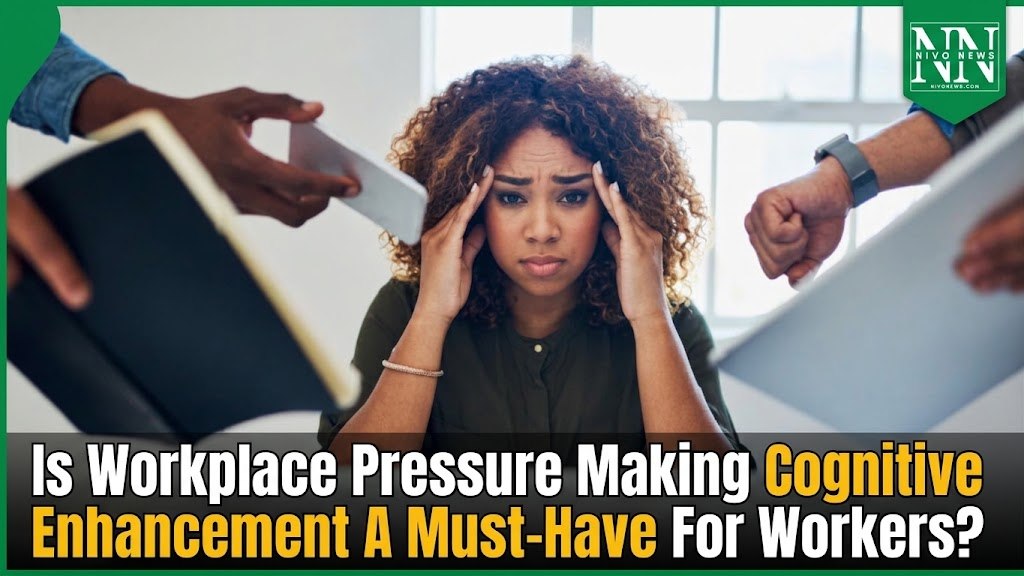
No one is being forced to take smart drugs, and no employer has officially instructed workers to use chemicals to improve their concentration. However, a subtle form of pressure may be emerging in some highly competitive workplaces: the fear that employees who do not enhance their cognitive abilities could struggle to keep up with colleagues who do.....KINDLY READ THE FULL STORY HERE▶
Cognitive enhancement is generally presented as an individual decision. A person may choose to take stimulants, experiment with nootropic substances or use brain-stimulation devices, accepting the potential benefits and risks associated with each option. In theory, this represents personal freedom.
In reality, however, decisions are often shaped by the environment in which people operate.
Consider hospitals where medical professionals work exhausting overnight shifts and mistakes can have serious consequences, law firms where promotions depend on billable hours, or newsrooms where employees face relentless deadlines. If some workers begin using cognitive enhancers to remain alert and productive, the standard for acceptable performance may gradually rise.
As a result, colleagues may feel pressured to follow their example, not because they genuinely want to enhance their mental abilities, but because they fear losing their jobs, income or opportunities for career advancement.
Ethicists sometimes describe this situation as indirect coercion. Although nobody explicitly orders workers to use cognitive enhancers, the conditions around them can make refusing seem like a professional risk.
Workplaces have repeatedly turned optional habits into unwritten expectations.
Constant availability through email, for example, may have started as a convenient communication tool but has gradually become an expectation in many professional settings. Likewise, caffeine consumption has become so widespread that its routine use often goes unquestioned.
Cognitive enhancement could follow a similar path, evolving from an unusual practice into a common habit and eventually something employees feel they are expected to adopt.
However, there is an important difference. Cognitive enhancers may involve prescription medications, uncertain long-term consequences and medical risks that go beyond those associated with ordinary coffee consumption.
Given these potential dangers, it becomes increasingly important to ask whether workers are genuinely free to decline enhancement without facing negative consequences.
The pressure to enhance cognitive performance is unlikely to affect every worker equally.
Employees in insecure jobs, junior positions or highly competitive industries may have less freedom to resist workplace expectations. Those who cannot easily move to another employer or who depend on promotions to improve their financial circumstances may be more inclined to experiment with cognitive enhancers, even when they have concerns about their safety.
The issue also raises questions about economic inequality. Workers who can afford better-quality products and appropriate medical guidance may enjoy certain advantages, while those with fewer resources could resort to cheaper alternatives that carry greater risks simply to remain competitive.
In this way, cognitive enhancement could reinforce existing inequalities, creating further divisions between employees with different levels of access to resources.
For cognitive enhancement to remain a genuine personal choice, several safeguards may be necessary.
Clear workplace policies: Employers should explicitly state that workers will not be penalised, overlooked for promotion or otherwise disadvantaged because they choose not to use cognitive enhancers.
Prioritising working conditions over chemicals: When exhaustion and excessive workloads encourage employees to seek enhancement, employers should consider improving staffing levels, adjusting schedules and reducing unreasonable demands rather than relying on medication to compensate for poor working conditions.
Providing reliable information: Workers deserve access to accurate, independent information about the potential benefits, limitations and health risks of cognitive enhancement, rather than relying exclusively on marketing claims.
Establishing legal and ethical guidelines: Policymakers and professional organisations can develop appropriate standards, particularly in industries where safety, public health and public trust are at stake.
Supporters of cognitive enhancement argue that adults should have the freedom to improve their mental performance. That principle deserves respect, provided individuals understand the potential risks and consequences of their choices.
However, a choice becomes less meaningful when refusing to participate carries professional or financial penalties.
The challenge for employers, regulators and society is to ensure that cognitive enhancement remains a voluntary option rather than becoming an unwritten condition for retaining employment or advancing a career.
Ultimately, the issue extends beyond whether people should be allowed to enhance their minds. It also concerns whether they can freely decide not to do so.
This is the fourth article in a series examining the ethical and policy implications of cognitive enhancement. The next instalment will explore whether students who use smart drugs to prepare for examinations are exercising personal choice or engaging in academic cheating.

A chiropractor, Dr Onuoha Okeigwe, has accused social media personality Blessing Okoro, popularly known as Blessing CEO, of collecting ₦69.15 million from him after allegedly misrepresenting herself as the owner of a property.....KINDLY READ THE FULL STORY HERE▶
Okeigwe made the allegation on Monday at the Lagos State Special Offences Court in Ikeja while being cross-examined by defence counsel in the ongoing trial of the influencer before Justice Rahman Oshodi.
He is the first prosecution witness called in the case.
The witness told the court that he paid the money after Blessing CEO allegedly convinced him, through WhatsApp messages and face-to-face meetings, that the property belonged to her.
“Blessing presented herself, claiming to be the owner of the property, and falsely collected money from me. She impersonated the owner of the property,” Okeigwe said.
He added that their communication continued even after he had made the payment.
When questioned about the transaction documents, Okeigwe told the court that he could not interpret legal terminology because he was a chiropractor, not a lawyer.
However, he maintained that he had presented evidence to support his allegation that the defendant misrepresented herself as the property owner.
The witness also disagreed with defence counsel’s suggestion that Exhibit C was the only document he had submitted, insisting that he tendered Corporate Affairs Commission records and other relevant materials.
He further told the court that the alleged representation of ownership went beyond their WhatsApp conversations.
Okeigwe disclosed that he had also instituted a separate civil case against the influencer, seeking to recover more than ₦100 million spent renovating the building for a medical facility he intended to establish there.
He explained that the criminal case concerns the ₦69.15 million allegedly paid for the property, while the civil suit seeks to recover the renovation expenses and damages.
The Economic and Financial Crimes Commission (EFCC), through its Lagos Zonal Directorate 1, arraigned Blessing CEO on June 9, 2026, on two counts bordering on obtaining by false pretence and stealing involving ₦69,150,000.
The social media personality pleaded not guilty to the charges.
Justice Oshodi adjourned the case until January 12, 2027, for the prosecution to call additional witnesses.

An independent investigative committee probing the deaths of 37 suspected illegal miners in Niger State is set to submit its report to the Minister of Interior on Tuesday, October 27, 2026.....KINDLY READ THE FULL STORY HERE▶
The report is expected to be presented at 12 noon in the Honourable Minister’s Conference Room at the Ministry of Interior. Journalists have been asked to be seated by 11:35 a.m.
The investigation was launched following the deaths of 37 suspected illegal miners while in the custody of the Nigeria Security and Civil Defence Corps (NSCDC).
The NSCDC initially attributed the incident to a suspected disease outbreak. However, its national headquarters later clarified that the cause of death had not been conclusively established and would require medical and laboratory confirmation.
Meanwhile, the Federal Government has vowed that anyone found responsible for the deaths of the suspects in NSCDC custody will face justice.
The Minister of Information and National Orientation, Mohammed Idris, conveyed the government’s position while expressing condolences to Niger State Governor Mohammed Umaru Bago, the state government and residents, traditional leaders, the people of Wushishi, and the families and loved ones of the deceased.
Idris assured Nigerians that the government considers every citizen’s life important and would ensure that the circumstances surrounding the deaths were investigated thoroughly, transparently and impartially.
He added that immediate measures had been taken to establish the facts surrounding the incident.
As part of the response, the Minister of Interior, Olubunmi Tunji-Ojo, suspended the Niger State NSCDC Commandant, Suberu Siyaka Aniviye, while a full-scale investigation into the incident was initiated.
The committee’s report is expected to shed further light on the circumstances surrounding the deaths and help establish accountability.
-

 latest1 year ago
“Social Media Erupts As Jim Iyke Declares Rita Dominic Nollywood’s Most Beautiful”
-
 latest3 years ago
Edo Political Showdown: Oshiomhole Appears At Presidential Villa As Tinubu Hands APC Gubernatorial Flag To Okpebholo (Photos & Video)
-
 entertainment3 years ago
Love Knows No Age American Woman Defends Marriage To Young Nigerian Man “I’m Not 70”
-
 latest3 years ago
Olumide Akpata Strikes Again: Drops Killer Track, Sends Edo State Into Frenzy!(Video)
-
 Politics3 years ago
Nigerians React As Pastor Adeboye Foresees Passing Away On A Sunday After Enjoying A Satisfying Meal Of Pounded Yam
-
 latest3 years ago
FG Identifies 31 States At Risk Of Heavy Flooding In 2024: See Full List
-
 Politics3 years ago
BREAKING: Inspector-General Of Police Summons Top Police Commanders For Crucial-Security Challenges
-
 latest3 years ago
5 NYSC Corpers Perish In Fatal Road Accident Returning From Camp