
latest
NNPC Revenue Hits ₦2.68tn As Profit Crashes 64% In February.


Nigerian National Petroleum Company Limited posted ₦2.68 trillion in revenue for February 2026, reflecting a 4.2 percent increase from the ₦2.57 trillion recorded in January.....KINDLY READ THE FULL STORY HERE▶
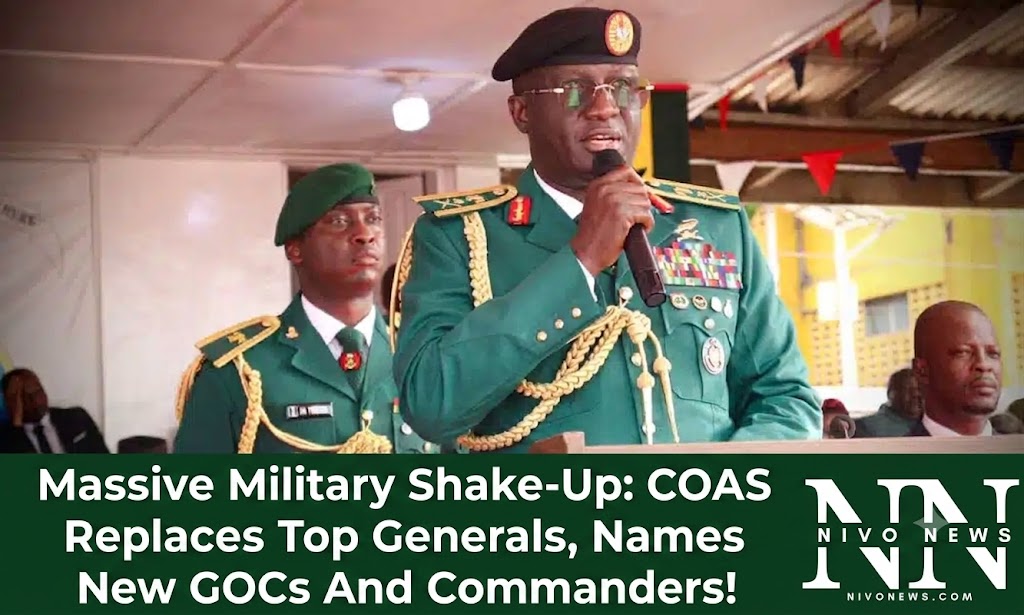
To bolster national security and enhance operational efficiency, Chief of Army Staff (COAS) Lieutenant General Waidi Shaibu has authorized a significant reshuffling of senior officers, impacting various command, operational, and staff roles. According to Acting Director of Army Public Relations, Colonel Appolonia Anele, this strategic reorganization aims to strengthen the Army’s capacity to tackle evolving security threats nationwide.....KINDLY READ THE FULL STORY HERE▶
-
Operational Commands: Major General WM Dangana replaces Major General EF Oyinlola as General Officer Commanding (GOC) 3 Division and Commander of JTF Operation ENDURING PEACE. Additionally, Major General EI Okoro succeeds Major General EE Emeka as GOC 6 Division and Land Component Commander of JTF South-South Operation DELTA SAFE.
-
Administrative and Support Roles: Major General JR Lar is now Commander of the Army Headquarters Garrison, while Brigadier General OM Oyekola has been named the Acting Military Secretary (Army). Brigadier General I Waziri will continue serving as Chief of Staff in the Office of the COAS.
-
Tactical and Specialized Units: Brigadier General IB Buhari has been appointed Commander of Headquarters 63 Brigade, and Brigadier General K Rabiu takes charge of Headquarters 31 Artillery Brigade. Furthermore, Major General SA Emmanuel was named Commander of the Nigerian Army Space Command to bolster technology-driven operations, while Major General O Adegbe becomes the Director of Intelligence and Security at Defence Headquarters.
-
Education and Institutional Development: New leadership appointments were also made for the National Defence College, where Major General KE Chigbu is now Deputy Commandant. Other roles include Major General SD Makolo as Commandant of the Nigerian Army Armour School, Major General SO Adejimi as Commandant of the Nigerian Army School of Supply and Transport, Major General FS Etim as Chief of Training at TRADOC NA, and Brigadier General U Ahmad as Commandant of the Depot Nigerian Army in Zaria.
-
Corporate Leadership: Major General KO Ukandu has been appointed Managing Director/CEO of Post Housing Development Limited (PHDL), and Major General AI Allison will lead Defence Properties Limited as Managing Director.
In his directive, the COAS tasked these officers with demonstrating professionalism, innovation, and leadership as they fulfill their mandate to protect Nigeria’s sovereignty and support civil authority. The Nigerian Army emphasized that this restructuring is part of a broader commitment to creating a combat-ready, professional, and people-oriented force dedicated to national security objectives.

Ahead of the final group stage fixtures scheduled for Saturday, 12 countries have officially been eliminated from the 2026 FIFA World Cup. Following the matches played on Friday, Iraq, Uruguay, Saudi Arabia, and New Zealand became the latest teams to be knocked out of the competition.....KINDLY READ THE FULL STORY HERE▶
-
Iraq: Their tournament run ended after a 5–0 loss to Senegal, a win that keeps Senegal’s hopes alive for a knockout spot as one of the best third-placed teams.
-
Uruguay: The two-time world champions were eliminated following a 1–0 defeat to Spain.
-
Saudi Arabia: Despite managing a 0–0 draw against Cape Verde, the team was unable to remain in the competition.
-
New Zealand: A 5–1 loss to Belgium confirmed their exit, while simultaneously strengthening Belgium’s position to advance.
By the conclusion of the group stage, 16 teams in total will fail to progress to the knockout phase. The full list of eliminated nations includes:
-
Haiti, Turkey, Tunisia, Jordan, Panama, Qatar, Czech Republic, Curacao, Iraq, Uruguay, Saudi Arabia, and New Zealand.
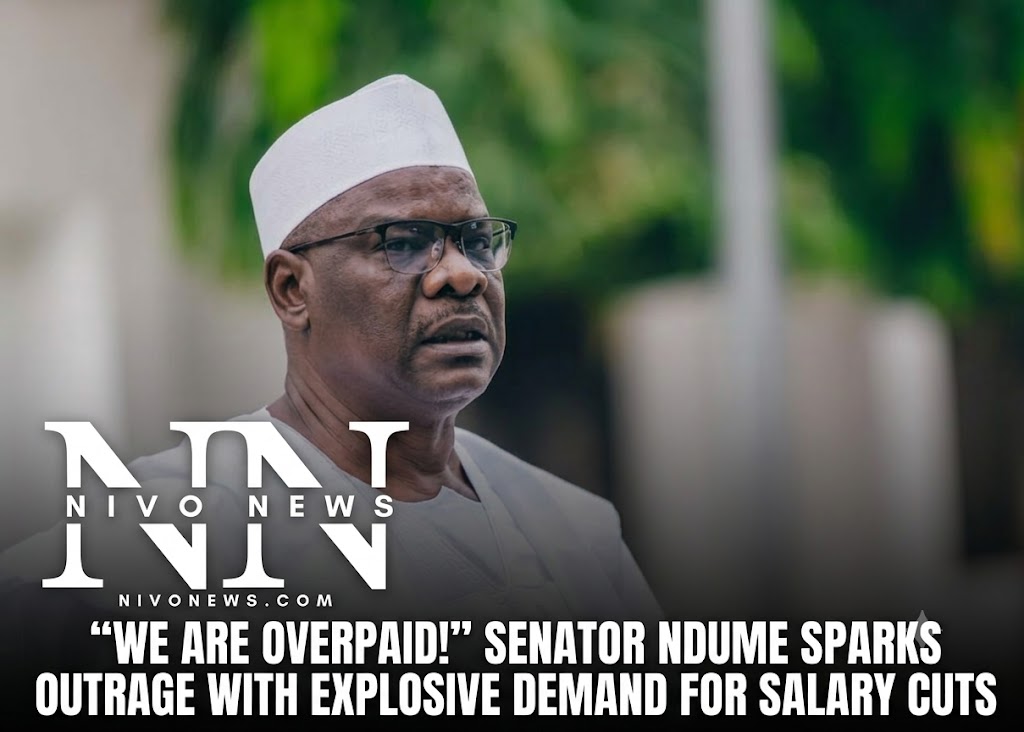
Senator Ali Ndume, representing Borno South, has sparked a conversation on fiscal responsibility by admitting that National Assembly members are currently overcompensated. During a recent appearance on Trust TV’s Daily Politics on Friday, June 26, 2026, the senator argued that Nigeria’s spending priorities require a significant shift to better support military and security agencies, which are currently struggling with funding.....KINDLY READ THE FULL STORY HERE▶
Ndume contended that the high costs associated with maintaining government officials and lawmakers contrast sharply with the inadequate rewards for soldiers and police officers who risk their lives daily. Emphasizing that any serious dialogue on security funding must address the overall cost of governance, he maintained that he and his colleagues receive pay that exceeds what is appropriate.
In a candid admission regarding the cost of governance, Senator Ali Ndume stated that Nigerian lawmakers are currently being overpaid. Speaking on Trust TV’s Daily Politics on June 26, 2026, the Borno South representative urged the government to prioritize the funding of security agencies over the high salaries and allowances of top officials. Ndume stressed that those on the front lines, such as soldiers and police officers, deserve better support, and he reiterated his long-standing position that the current remuneration for public officeholders, including himself, is excessive.
-

 latest10 months ago
“Social Media Erupts As Jim Iyke Declares Rita Dominic Nollywood’s Most Beautiful”
-
 latest2 years ago
Edo Political Showdown: Oshiomhole Appears At Presidential Villa As Tinubu Hands APC Gubernatorial Flag To Okpebholo (Photos & Video)
-
 entertainment2 years ago
Love Knows No Age American Woman Defends Marriage To Young Nigerian Man “I’m Not 70”
-
 latest2 years ago
Olumide Akpata Strikes Again: Drops Killer Track, Sends Edo State Into Frenzy!(Video)
-
 Politics3 years ago
Nigerians React As Pastor Adeboye Foresees Passing Away On A Sunday After Enjoying A Satisfying Meal Of Pounded Yam
-
 latest2 years ago
FG Identifies 31 States At Risk Of Heavy Flooding In 2024: See Full List
-
 Politics3 years ago
BREAKING: Inspector-General Of Police Summons Top Police Commanders For Crucial-Security Challenges
-
 latest2 years ago
5 NYSC Corpers Perish In Fatal Road Accident Returning From Camp