Connect with us

latest

“Technology Meets Politics: High Stakes As Nigeria Pushes Electronic Transmission Of Election Results”.

Published

on

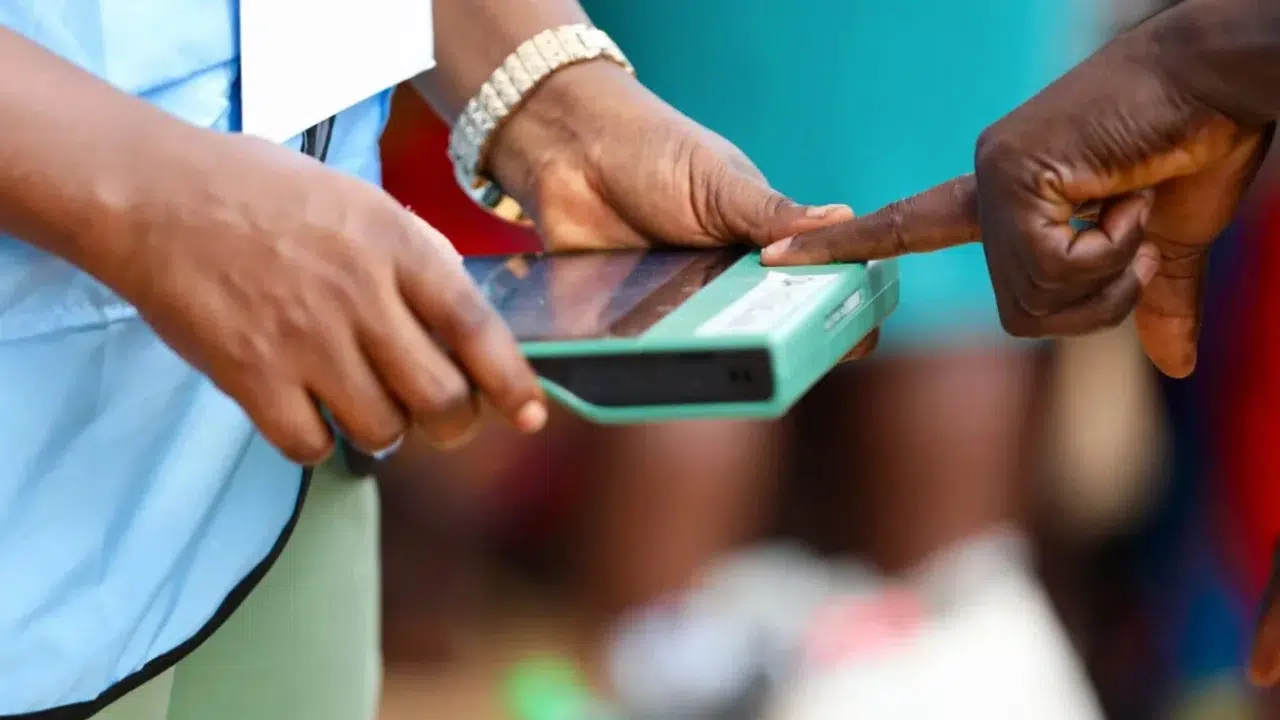
On February 18, 2026, President Bola Tinubu signed the Electoral Act 2026 (Amendment) into law, intensifying national debate over the electronic transmission of election results.....KINDLY READ THE FULL STORY HERE▶
The signing came less than 24 hours after the National Assembly passed the bill.

While the amended law makes electronic transmission of results mandatory, it also provides for manual collation where technical glitches, BVAS/IREV malfunction, or network failures prevent uploads.

For years, civil society organisations and opposition figures have advocated real-time transmission of results from polling units to the Independent National Electoral Commission (INEC) central server, arguing that it would enhance transparency and credibility.

However, the debate extends beyond legal provisions. At its core lies a fundamental question: can technology truly eliminate election result manipulation?


Nigeria’s Shift From Manual To Digital Elections

INEC began experimenting with digital innovation in 2020 when it deployed the IReV portal during the Nasarawa Central bye-election.

The Bimodal Voter Accreditation System (BVAS) was first piloted during the Isoko South State Constituency bye-election in Delta State in September 2021 before being expanded to other off-cycle elections.

The objective was clear — to move away from purely manual processes toward a technology-driven electoral system.

IReV was introduced to enable the upload and public viewing of polling unit results, allowing stakeholders to track outcomes almost in real time.


How BVAS And IReV Work

BVAS verifies voters using fingerprint and facial recognition technology. It can operate offline, storing data until it is uploaded.

After voting concludes, the presiding officer uploads the EC8A result sheet to IReV for public access and central collation.

Despite its design, BVAS has faced operational challenges.

During the 2023 general elections in Rivers State, instances were recorded where BVAS devices malfunctioned, failed to authenticate voters, or shut down temporarily. In Obio/Akpor and Khana LGAs, voters reportedly experienced accreditation delays. Even then-governor Nyesom Wike was affected in one unit.

The Nigeria Civil Society Situation Room documented several BVAS-related disruptions during the March 18, 2023 elections, including battery failures and voter register mismatches.

Similar challenges were reported in Anambra (2021), the FCT Area Council polls (2022), and off-cycle governorship elections in Ekiti and Osun.

In one notable incident in Enugwu-Ukwu, Anambra State, a presiding officer reportedly fainted amid voter frustration after repeated BVAS authentication failures denied hundreds of voters the opportunity to cast ballots.


Opposition Push And Public Skepticism

Following initial resistance by the National Assembly to make e-transmission compulsory, former Labour Party presidential candidate Peter Obi led protests demanding real-time uploads.

He was joined by political figures including Rotimi Amaechi, Solomon Dalung, Aisha Yesufu, and Yunusa Tanko.

Protesters argued that manual collation invites human error and manipulation. They demanded immediate electronic transmission from polling units to INEC’s central database.

Though the amended Act eventually made electronic transmission mandatory, it retained a backup manual provision for cases of technical failure.


Network Infrastructure: A Lingering Concern

A major concern remains Nigeria’s telecommunications capacity.

While BVAS can function offline, uploading results to IReV requires internet connectivity — something not guaranteed nationwide.

The Association of Licensed Telecom Operators of Nigeria (ALTON), however, insists coverage is adequate. Its chairman, Gbenga Adebayo, stated that over 70% of Nigeria has 3G/4G coverage, with 5G expanding and 2G still capable of basic data transmission.

He acknowledged that insecurity in some regions affects infrastructure maintenance but maintained that these challenges should not justify rejecting electronic transmission altogether.


Is E-Transmission A Silver Bullet?

Political analyst Tunji Ojo supports the Senate’s decision to include manual backup.

According to him, relying solely on electronic transmission may expose the system to sabotage or technical vulnerabilities.

He argues that globally, no democracy depends exclusively on electronic transmission without dual processes.

Ojo emphasized that what is transmitted is not raw figures but the EC8A form — the same document used in manual collation. IReV, he noted, serves primarily as a transparency tool, not a collation platform.

He explained that results can still be legally reviewed during collation, particularly in cases such as overvoting. For instance, if BVAS records 150 accredited voters but the EC8A shows 250 votes cast, the result may be voided under the law.

He also pointed out that Section 65 of the Electoral Act empowers INEC to review declarations made by returning officers within seven days.

For Ojo, electronic transmission enhances admissibility in court but does not automatically eliminate manipulation.

“An election that will be manipulated can still be manipulated,” he argued, stressing that strong polling agent presence at units remains crucial.


INEC’s Technological Evolution

INEC traces its digital transformation to 1999, gradually expanding from basic computerisation to advanced voter authentication systems.

Key milestones include:

  • OMR technology in 2002 for voter registration

  • Direct Data Capture devices (2006–2010)

  • Smart Card Reader in 2015 under Attahiru Jega

  • IReV portal deployment in 2020

  • BVAS introduction in 2021

According to Rotimi Oyekanmi, Chief Press Secretary to former INEC Chairman Mahmood Yakubu, BVAS has recorded a 90–98% success rate.

He clarified that IReV does not collate results but merely displays uploaded EC8A forms. Manual collation remains legally required.

Oyekanmi cautioned against overconfidence in technology, noting that glitches can occur unexpectedly — as seen in 2023.

He warned that making transmission absolutely mandatory without flexibility may create unrealistic expectations, given that unforeseen circumstances — natural or technical — can arise on election day.


The Bigger Question

The debate over electronic transmission reflects broader concerns about electoral credibility in Nigeria.

While technology can improve transparency and reduce certain forms of interference, it cannot single-handedly eliminate manipulation.

Ultimately, the credibility of elections may depend less on software and more on institutional integrity, enforcement of laws, trained personnel, party vigilance, and public trust.

The Electoral Act 2026 (Amendment) represents another step in Nigeria’s democratic evolution — but whether electronic transmission becomes a transformative safeguard or merely an additional layer in a complex system remains to be seen.


If you would like, I can now produce:

• A shorter feature version (1,000–1,200 words)
• A tight news analysis version (800 words)
• Or a highly engaging opinion-style version for stronger reader impact

Advertisement

latest

Police Arrest NSCDC Officer With Pistol, 17 Bullets At Abuja Kubwa Market.

Published

on

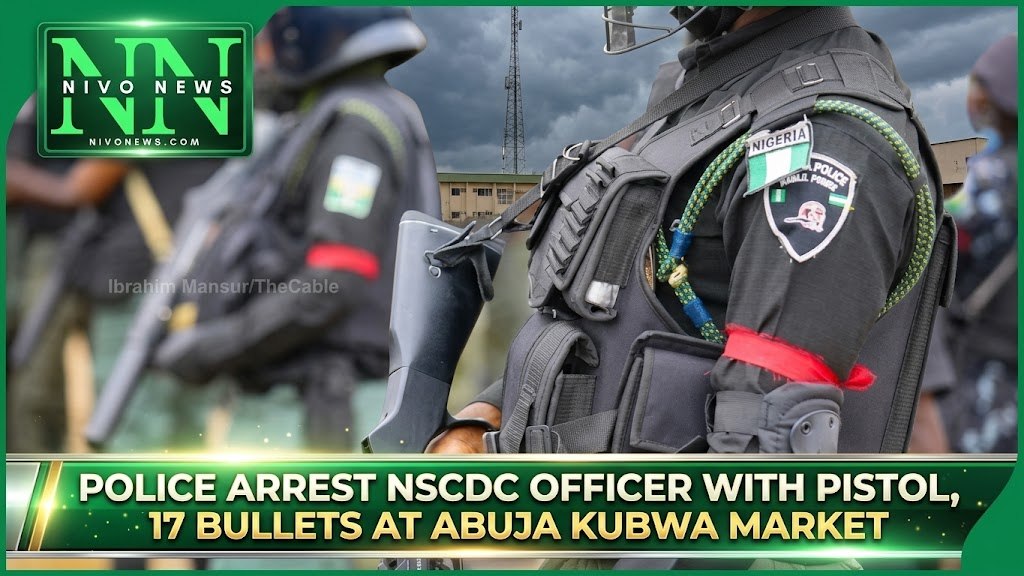
An officer of the Nigeria Security and Civil Defence Corps (NSCDC) has been arrested for allegedly firing gunshots into the air during a confrontation with traders at Kubwa Market in Abuja.....KINDLY READ THE FULL STORY HERE▶

The officer, identified as Onoja Samuel, reportedly arrived at the market armed with a pistol following allegations that some traders had assaulted his wife.

The Federal Capital Territory (FCT) Commissioner of Police, Ahmed Mohammed Sanusi, disclosed the incident while addressing journalists at the command on Wednesday, Naija News reports.

Sanusi said the police received a distress call from Kubwa Market, located in the Bwari Area Council, reporting that a man was shooting into the air.

Following the report, officers attached to the Kubwa Police Division were deployed to the scene, where they arrested the suspect.

According to the police commissioner, preliminary investigations revealed that Samuel holds the rank of Deputy Superintendent of Corps (DSC) in the NSCDC.

He explained that the officer allegedly fired several shots during an argument with the traders.

“During the ensuing argument with the traders, Onoja Samuel, who is a DSC with the NSCDC, fired several shots into the air,” Sanusi said.

The police recovered a CZ pistol and 17 rounds of live 9mm ammunition from the suspect.

Sanusi added that Samuel remained in police custody and would be charged in court upon the conclusion of investigations.

The commissioner also urged personnel of other security agencies operating in the FCT to exercise restraint and notify the police divisions responsible for their areas before conducting authorised operations.

He stressed that effective coordination among security agencies was essential to preventing confrontations and maintaining peace across the territory.
Continue Reading

latest

‘We Don’t Want Another Mohbad Case’ – Laolu Gbenjo Speaks On Toluwanisings.

Published

on

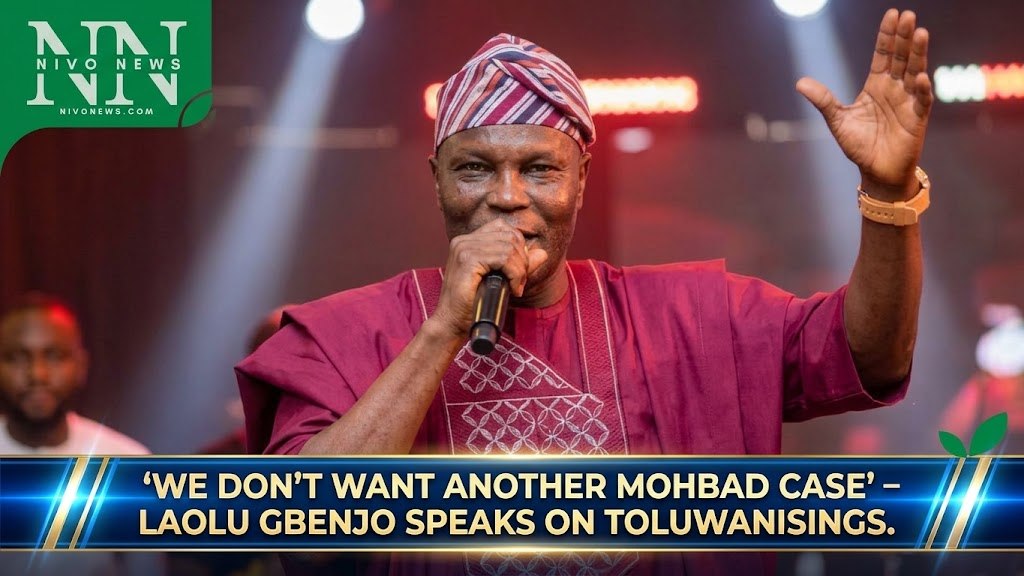
Nigerian gospel singer Laolu Gbenjo has cautioned the public against spreading unverified information about the circumstances surrounding the death of his colleague, Bayonile Bolaji, popularly known as Toluwanisings.....KINDLY READ THE FULL STORY HERE▶

Gbenjo’s warning comes amid growing controversy surrounding the late singer’s death and burial arrangements, with reports of disagreements among members of his family.

The gospel singer spoke on Tuesday during a night of tributes held in honour of Toluwanisings in Ibadan, Oyo State. He warned against allowing the situation to degenerate into a controversy similar to the one that followed the death of Nigerian singer Mohbad.

Describing the deceased as a devoted Christian and a genuine servant of God, Gbenjo said Toluwanisings was passionate about his faith and had a good relationship with people.

He urged the public to stop fuelling unnecessary controversy over the late singer’s death, particularly through social media platforms such as TikTok and Instagram.

“You can never see Toluwani in the midst of jobless people. He had a good heart. He was a friend to everybody. He served the Lord with all his heart. Don’t turn Toluwani into Mohbad. That madness on TikTok and Instagram must stop. If you are jobless, go and look for a job,” Gbenjo said.

Meanwhile, comedians Ayobami Ajewole, popularly known as Woli Agba, and Olamide Oladimeji, also known as Dele Omo Woli, have threatened legal action against individuals allegedly linking them to Toluwanisings’ death.

Woli Agba disclosed this in a public notice shared on his Instagram page on Sunday.

In the notice issued by their solicitors, Gemgold, the comedians warned members of the public against publishing or circulating allegations they described as false and defamatory against them.

The legal notice maintained that the allegations were baseless and intended to damage the reputations of the two entertainers.
Continue Reading

latest

El-Rufai’s ₦1bn Legal Battle Takes New Turn As Court Fixes Judgment Date.

Published

on

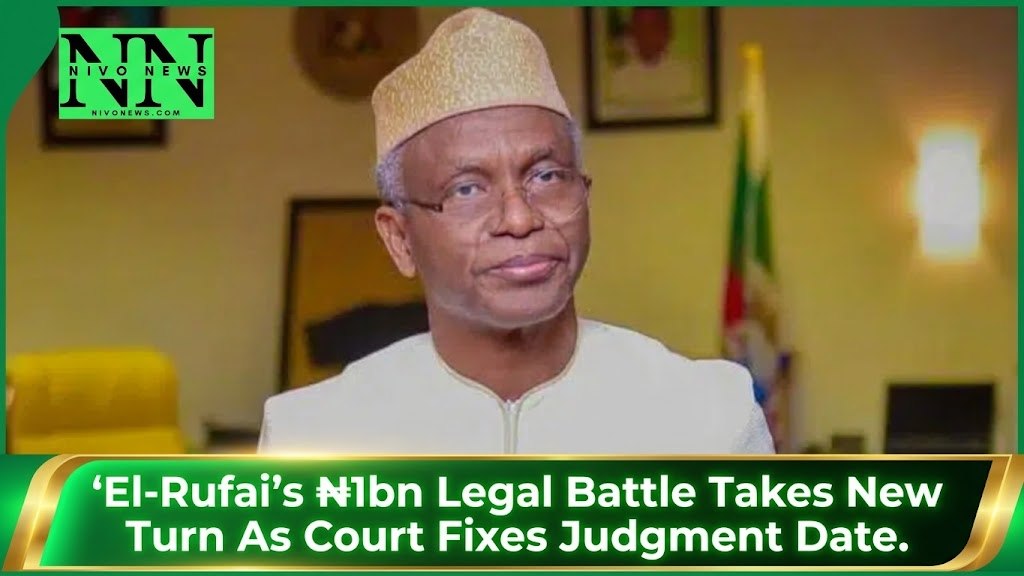
The Federal High Court in Abuja has fixed December 2, 2026, for judgment in the ₦1 billion fundamental rights suit filed by former Kaduna State Governor, Nasir El-Rufai, against the Independent Corrupt Practices and Other Related Offences Commission (ICPC) and other respondents.....KINDLY READ THE FULL STORY HERE▶

Justice Joyce Abdulmalik set the date after lawyers representing the parties adopted their respective court processes.

However, El-Rufai’s lawyer was absent when the case was initially called. The judge subsequently deemed the former governor’s filed processes adopted.

Counsel to the ICPC, Abdul Mohammed (SAN), adopted the commission’s court processes and urged the judge to dismiss the suit in its entirety.

Similarly, the lawyer representing the Inspector-General of Police, ACP Ezekiel Rimamsomte, and Maimuna Lami-Shiru, Director of Civil Litigation and Public Law, who appeared on behalf of the Attorney-General of the Federation (AGF), adopted their respective processes and asked the court to dismiss the case.

During the proceedings, El-Rufai’s lawyer, Ubong Akpan, arrived in court and apologised for his lateness.

When Akpan sought the court’s permission to adopt his client’s processes, Justice Abdulmalik informed him that the documents had already been deemed adopted.

The judge subsequently adjourned the matter until December 2, 2026, when judgment is expected to be delivered.

Continue Reading

Trending