
latest
Breaking: FG Plans ₦900B Borrowing From Local Market This Month.


The Federal Government plans to raise ₦900 billion from the domestic debt market through its January 2026 bond auction, doubling the ₦450 billion targeted in the same period last year.....KINDLY READ THE FULL STORY HERE▶
Offer documents from the Debt Management Office (DMO) show that the January 2026 auction will feature three reopened Federal Government of Nigeria (FGN) bonds totaling ₦900 billion, marking a 100% year-on-year increase in the size of the January offer.
The move highlights rising fiscal pressures and the government’s growing reliance on the local bond market to meet funding needs. In contrast, the January 2025 auction reflected a more restrained borrowing approach despite high interest rates at the time.
In the 2025 auction, the DMO offered three bonds across five-year, seven-year, and ten-year tenors, targeting a total of ₦450 billion:
-
₦100bn from a five-year bond due April 2029 (19.30% coupon)
-
₦150bn from a seven-year bond due February 2031 (18.50% coupon)
-
₦200bn from a ten-year bond due January 2035
The smaller offer reflected lower funding requirements then.
For January 2026, the government aims to raise:
-
₦300bn from a reopening of the 18.50% FGN February 2031 bond
-
₦400bn from a reopening of the 19.00% FGN February 2034 bond
-
₦200bn from a reopening of the 22.60% FGN January 2035 bond
This represents a larger scale and a shift toward longer-dated instruments, with ten-year bonds accounting for ₦600 billion, or about two-thirds of the total, compared with just ₦200 billion in 10-year paper in January 2025.
Borrowing Costs Remain High
Coupon rates remain elevated, reflecting tight monetary conditions, persistent inflation, and investors’ demand for higher yields. Notably, the 22.60% coupon on the January 2035 bond is a significant increase over comparable tenors a year ago, highlighting the rising cost of borrowing.
The DMO stated that bonds will be sold at ₦1,000 per unit, with a minimum subscription of ₦50.001 million. Interest will be paid semi-annually, and principal will be repaid in full at maturity under a bullet repayment structure. For reopened bonds, prices will be determined by the yield that clears the auction volume, plus accrued interest.
Despite the larger January auction, Finance Minister and Coordinating Minister of the Economy Wale Edun said the government plans to rely more on domestic resources and reduce borrowing dependence.
Speaking to Bloomberg Television at the World Economic Forum in Davos, Edun said the administration’s priority is revenue generation.
“The focus now is on revenue and domestic resource mobilisation. We’re hoping to rely less on borrowing,” he said.
Edun added that Nigeria could still access international bond markets if necessary, but the government’s main focus remains strengthening domestic revenue sources. He highlighted ongoing efforts to improve tax collection and enhance fiscal sustainability, which are critical to reducing long-term debt dependence and stabilising public finances.
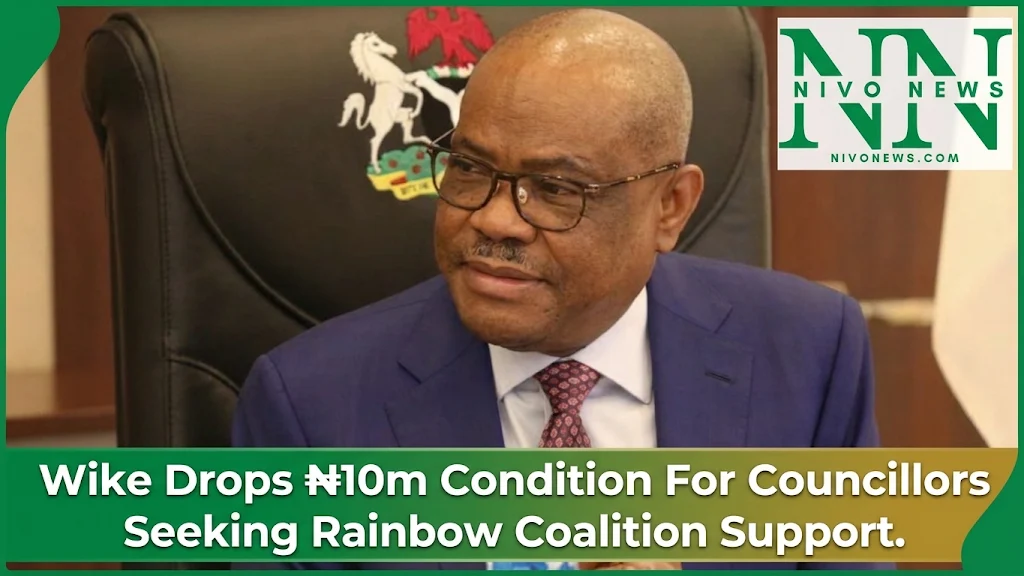
The Minister of the Federal Capital Territory (FCT), Nyesom Wike, has announced a ₦10 million financial incentive for every councillor who successfully delivers his political ward for President Bola Tinubu in the January presidential election.....KINDLY READ THE FULL STORY HERE▶
Wike made the announcement on Monday while addressing political stakeholders, traditional rulers and other political actors in Kwali.
He explained that the initiative was part of a wider grassroots mobilisation strategy by the Rainbow Coalition to secure support for Tinubu ahead of the election.
The minister urged councillors to work with political leaders and mobilise voters in their respective wards, stressing that those who successfully deliver their wards would receive ₦10 million.
Wike said, “For the councillors, you have a task. I will hold a meeting with you again and I will now say the way I am going to mobilize you but I will give you a bet, like what is happening in the stars, it’s a competition.
“Anybody who delivers his ward, if you deliver your ward, that is what the Rainbow Coalition has decided to do as mobilization and support for Mr President.
“We have to start in the FCT. The Rainbow Coalition all over the federation, as a form of mobilization for Mr President to win this election, we are saying that any councillor that delivers his ward will come and take ₦10 million.
“We want to mobilize for Mr President. So, go to your wards, go and see your leaders. I know only you cannot do it but we are using you as instrumentality to your leaders. Go and meet your leaders and say, ‘Look, there is something that has come. We must not allow this thing to go. Let’s deliver our ward for Mr President’,” he urged.
Meanwhile, the FCT minister also addressed concerns about the welfare and remuneration of councillors in the territory.
The Chairman of the National Councillors Forum of Nigeria (FCT Chapter), Gambo Hamza, had raised concerns over their earnings, disclosing that councillors receive a monthly salary of ₦260,000.
Reacting, Wike described the amount as unacceptable and promised to engage the Permanent Secretary and relevant administrative offices to review their remuneration.
He also pledged to explore ways of addressing bureaucratic challenges affecting efforts to improve the welfare of councillors and strengthen local governance.
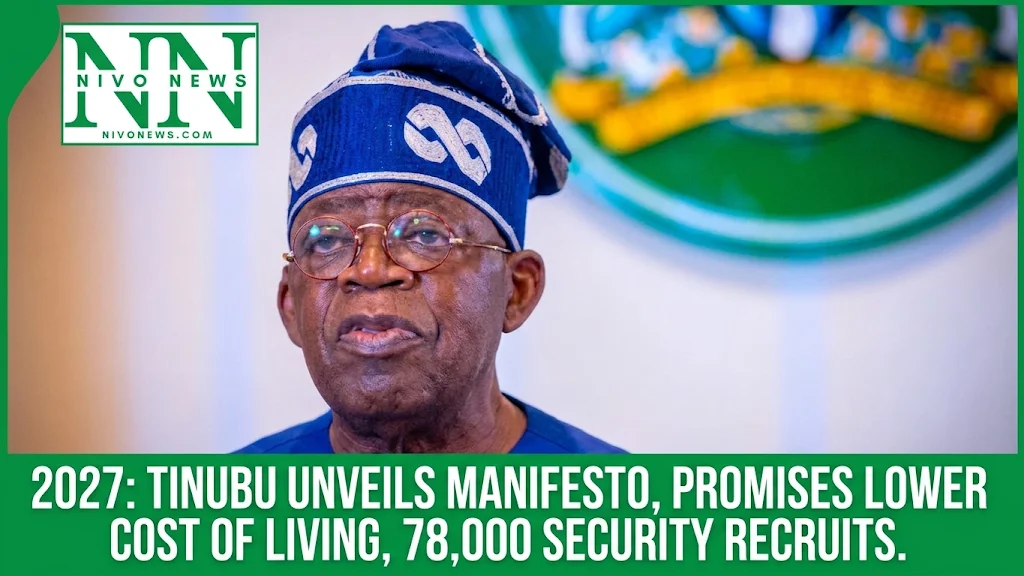
President Bola Tinubu has promised Nigerians safer communities, improved protection against terrorism, banditry and kidnapping, as well as a more responsive police service if re-elected in 2027.....KINDLY READ THE FULL STORY HERE▶
Tinubu made the pledge in the All Progressives Congress (APC) 2027 Presidential Election Manifesto, titled From Reform to Prosperity Agenda 2027–2031, obtained by The PUNCH.
The ruling party is scheduled to unveil the manifesto at 11 a.m. on Tuesday, November 10, 2026, at the Shehu Musa Yar’Adua Centre in Abuja.
As part of his proposed security reforms, Tinubu pledged to recruit an additional 28,000 military personnel and 50,000 police officers to strengthen the country’s security architecture and combat terrorism, banditry and kidnapping.
The President also promised to improve the safety of Nigerians in their homes, workplaces, schools, farms and commercial centres, while strengthening border security and ensuring citizens can live, work and travel without fear.
He said his administration would strengthen the Armed Forces and other security agencies, improve intelligence gathering and deploy modern technology to tackle insecurity across the country.
According to the manifesto, the proposed measures would prioritise the protection of farmers, schoolchildren, traders and other citizens through improved border surveillance, community policing and emergency response systems.
The document stated that between 2027 and 2031, the government would complete and equip four new Army divisions in Makurdi, Ilorin, Jalingo and Benin City, while recruiting and training the 28,000 additional military personnel already approved.
It also proposed sustained intelligence-led military operations against insurgent and kidnapping networks, alongside improved surrender, rehabilitation and reintegration programmes for former combatants.
The APC further pledged to establish specialised zonal counter-terrorism units and strengthen security around schools, markets, places of worship and major transport routes.
The manifesto also outlined plans to expand peace-building, trauma support and deradicalisation programmes, as well as facilitate the safe return of internally displaced persons to their communities.
On policing, Tinubu promised to train and deploy 50,000 newly recruited officers and expand recruitment and tactical training towards achieving a police-to-citizen ratio of one officer to 400 people.
The proposed police reforms would also include digital record-keeping systems, body cameras for officers, geographic mapping tools, emergency response channels and modern forensic facilities to improve crime detection and prevention.
The document further proposed recruiting 30,150 personnel into the Nigeria Security and Civil Defence Corps (NSCDC) to take over static security duties from the police. It also promised to work with federal and state lawmakers, as well as governors, to establish a legal framework for accountable state and community policing.
Tinubu said his administration would introduce integrated security command systems to improve intelligence gathering, identify threats early and strengthen cooperation among security agencies.
The manifesto also proposed boosting local defence production through technology partnerships, including the manufacturing of ammunition, protective equipment, armoured vehicles and tactical drones.
Other planned measures include salary increases and improved welfare packages for security personnel, better housing, faster payment of insurance and pensions to families of fallen officers, and the rehabilitation of police barracks.
The APC candidate also pledged to modernise fire stations, strengthen maritime surveillance and cybersecurity, deploy drones for emergency response and enrol 95 per cent of Nigerians in the National Identity Database.
On border security, the manifesto proposed completing electronic surveillance coverage of mapped borders, expanding electronic gates and passenger-data systems, and strengthening patrols and intelligence-sharing.
It also promised wider deployment of Mining Marshals, Forest Guards and Agro-Rangers to protect mining locations, agricultural communities, grazing routes and forest reserves.
The document further outlined plans to implement the National Protection Policy and Strategy for Critical National Assets, with real-time surveillance of energy pipelines, electricity grids, railways, schools and health facilities.
Healthcare, economy and education
Beyond security, Tinubu’s manifesto contains several promises on healthcare, economic growth, housing, education and electricity.
Under the healthcare component, the President pledged to increase the proportion of functional primary healthcare centres nationwide from 53 per cent to 90 per cent by 2031.
He also promised to expand active health insurance coverage from more than 23 million enrollees to 40 per cent of Nigerians, while reducing out-of-pocket healthcare spending from 71 per cent to below 50 per cent of total health expenditure.
The proposed healthcare reforms include upgrading secondary health facilities across local government areas, improving referral systems, expanding maternal and child healthcare programmes, and providing regular electricity to more health facilities through solar installations.
Tinubu also promised to extend the Maternal and Multiple Interventions in Maternal Mortality Reduction Initiative (MAMII) for free emergency obstetric care from 172 local government areas to all 774 LGAs.
On the economy, the President pledged to achieve annual economic growth of six per cent, facilitate the construction of 200,000 affordable homes and sustain a downward trend in inflation and food prices by 2031.
The manifesto also outlines plans to recruit and train 20,000 additional teachers, reduce the number of out-of-school children, improve learning outcomes and expand electricity generation towards 10,000 megawatts.
Tinubu said his second term would focus on translating the economic reforms and foundations established during his first tenure into tangible improvements in the lives of Nigerians.
He added that the administration’s proposed prosperity agenda would extend to households, markets, farms and workplaces across the country.
On the expected outcomes by 2031, the manifesto listed safer communities, lower living costs, improved food security, reliable electricity, more jobs, higher incomes, quality education and accessible healthcare.
It also pledged to halve youth unemployment, expand access to affordable credit to half of all economically active Nigerians, reduce post-harvest losses and improve the movement of goods across states.
For education and healthcare, the document promised to halve the number of out-of-school children, deploy 20,000 additional teachers, expand health insurance coverage and ensure that at least 90 per cent of primary healthcare facilities are functional by 2031.

FC Porto youngster Rodrigo Mora has explained why he has no intention of taking over Cristiano Ronaldo’s iconic number 7 shirt following the Portugal captain’s retirement from international football.....KINDLY READ THE FULL STORY HERE▶
The 19-year-old, who recently shared the Portugal dressing room with Ronaldo, described it as a great privilege to have played alongside the former Real Madrid and Manchester United forward.
Ronaldo recently brought his international career to an end after years of representing Portugal, leaving behind the famous number 7 jersey.
However, Mora has ruled out wearing the shirt, insisting that he is comfortable with his current number 86.
According to Tribuna, the young midfielder described Ronaldo as a role model and praised his contributions to Portuguese football.
“I was extremely lucky to play with Cristiano and share the dressing room with him, as he is everyone’s role model.
“He has retired from international football, and Portugal thanks him greatly for everything he has given,” Mora said.
Asked whether he would like to take over Ronaldo’s number 7 shirt, the Porto youngster firmly dismissed the possibility.
“No, no, no, I don’t think about that, it is far too much for me, the number 86 suits me,” he added.
Ronaldo leaves behind an outstanding record with the Portuguese national team, having become the country’s all-time leading goalscorer.
The Al-Nassr forward also captained Portugal to victory at the 2016 European Championship and two UEFA Nations League titles.
Meanwhile, Mora, born in 2007, is regarded as one of the most promising young talents in Portuguese football. The attacking midfielder developed through Porto’s academy before gradually establishing himself in the club’s senior team.
-

 latest1 year ago
“Social Media Erupts As Jim Iyke Declares Rita Dominic Nollywood’s Most Beautiful”
-
 latest3 years ago
Edo Political Showdown: Oshiomhole Appears At Presidential Villa As Tinubu Hands APC Gubernatorial Flag To Okpebholo (Photos & Video)
-
 entertainment3 years ago
Love Knows No Age American Woman Defends Marriage To Young Nigerian Man “I’m Not 70”
-
 latest3 years ago
Olumide Akpata Strikes Again: Drops Killer Track, Sends Edo State Into Frenzy!(Video)
-
 Politics3 years ago
Nigerians React As Pastor Adeboye Foresees Passing Away On A Sunday After Enjoying A Satisfying Meal Of Pounded Yam
-
 latest3 years ago
FG Identifies 31 States At Risk Of Heavy Flooding In 2024: See Full List
-
 Politics3 years ago
BREAKING: Inspector-General Of Police Summons Top Police Commanders For Crucial-Security Challenges
-
 latest3 years ago
5 NYSC Corpers Perish In Fatal Road Accident Returning From Camp