
latest
2026 Tax Reforms Aim To Protect SMEs And Low-Income Nigerians, Experts Explain.


.....KINDLY READ THE FULL STORY HERE▶
According to Nivo News, the recently unveiled 2026 tax reforms in Nigeria have sparked protests from opposition parties, including the African Democratic Congress (ADC), Peoples Democratic Party (PDP), and Labour Party (LP), alongside notable figures such as Solomon Dalung, Kenneth Okonkwo, and activist Aisha Yesufu. The group, identifying as the Nigeria Opposition Movement, called for a suspension of the reforms, claiming they are exploitative, and urged Nigerians to join their petition against the policy.

The World Health Organisation (WHO) Regional Director for Africa, Mohamed Janabi, has announced that Nigeria currently has no Ebola cases following the evacuation of the index patient and her husband to Switzerland.....KINDLY READ THE FULL STORY HERE▶
Reports indicate that the patient was airlifted out of Nigeria aboard a medical air ambulance through the private jet wing of the Nnamdi Azikiwe International Airport in Abuja.
In a statement posted on his X account on Monday, Janabi said Nigeria would continue monitoring 52 contacts, while Switzerland would take responsibility for the patient’s ongoing medical care and monitor her husband.
He disclosed that the evacuation took place earlier in the morning, adding that both the patient and her husband are Swiss citizens.
According to Janabi, the patient was clinically stable following successful treatment by Nigerian medical teams, who managed her through the acute phase of the illness and stabilised her condition before the evacuation.
The WHO regional director commended the Federal Government, healthcare workers, clinicians, emergency responders and other partners for their contributions to Nigeria’s Ebola response.
He said the successful management of the patient demonstrated Africa’s expertise, resilience and leadership in public health, particularly when countries collaborate to tackle health emergencies.
However, Janabi emphasised that the evacuation did not mean vigilance could be relaxed, stressing the importance of continued contact monitoring and other public health response measures.
He reiterated that Nigeria would maintain close surveillance of 52 contacts, while Switzerland would oversee the patient’s continued treatment and monitor the 53rd contact, her husband.
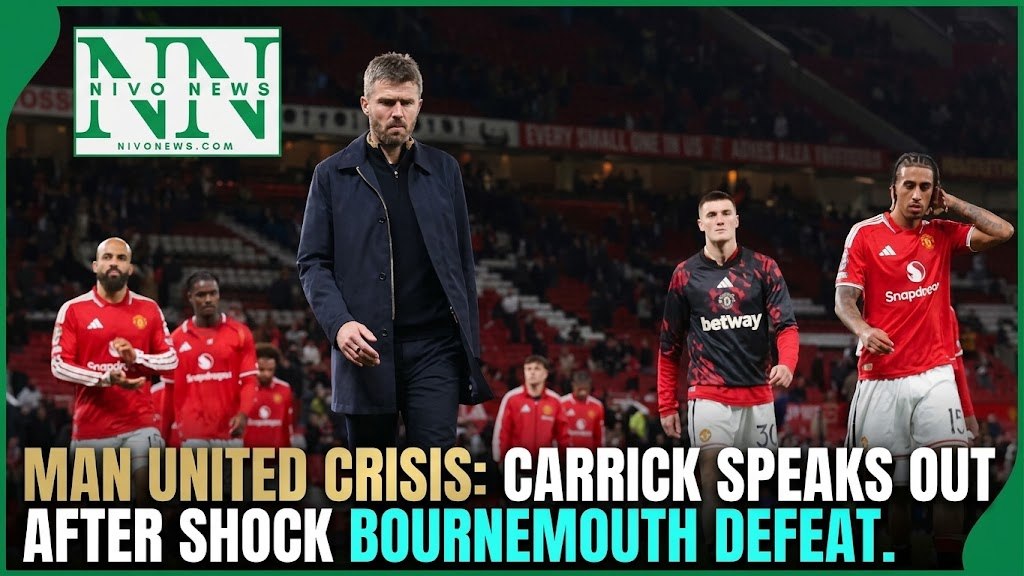
Manchester United head coach Michael Carrick has said he does not expect to be sacked within the next 24 hours following his side’s disappointing 3-0 home defeat to Bournemouth in the Premier League on Saturday.....KINDLY READ THE FULL STORY HERE▶
The loss at Old Trafford has intensified scrutiny of Carrick as Manchester United continue to struggle with inconsistent performances and results this season.
According to football transfer expert Fabrizio Romano, who shared the manager’s comments on X on Sunday, Carrick acknowledged the uncertainty surrounding his future but maintained that he would continue carrying out his duties as usual.
“I totally understand the situation. I’m not expecting anything in particular, to be honest. I’m carrying on as normal and, you know, I love this place,” he said.
The former Manchester United midfielder also reaffirmed his commitment to the club, insisting that he would continue to act in what he considers the team’s best interests despite the mounting pressure.
Bournemouth’s victory further compounded United’s recent difficulties, marking their third defeat in four home matches and extending their winless run across all competitions to eight games.
Meanwhile, reports indicate that co-owner Sir Jim Ratcliffe and other senior club officials are considering possible replacements as they assess Carrick’s future at Old Trafford.
Former Bayern Munich manager Julian Nagelsmann and ex-Newcastle United boss Eddie Howe have reportedly emerged as leading candidates for the position.
However, Manchester United director of football Jason Wilcox and chief executive Omar Berrada are expected to make the final recommendation before presenting their preferred candidate to Ratcliffe.
The club has yet to announce any decision regarding Carrick’s future, leaving uncertainty over who will lead the team into their next Premier League fixture against Chelsea.
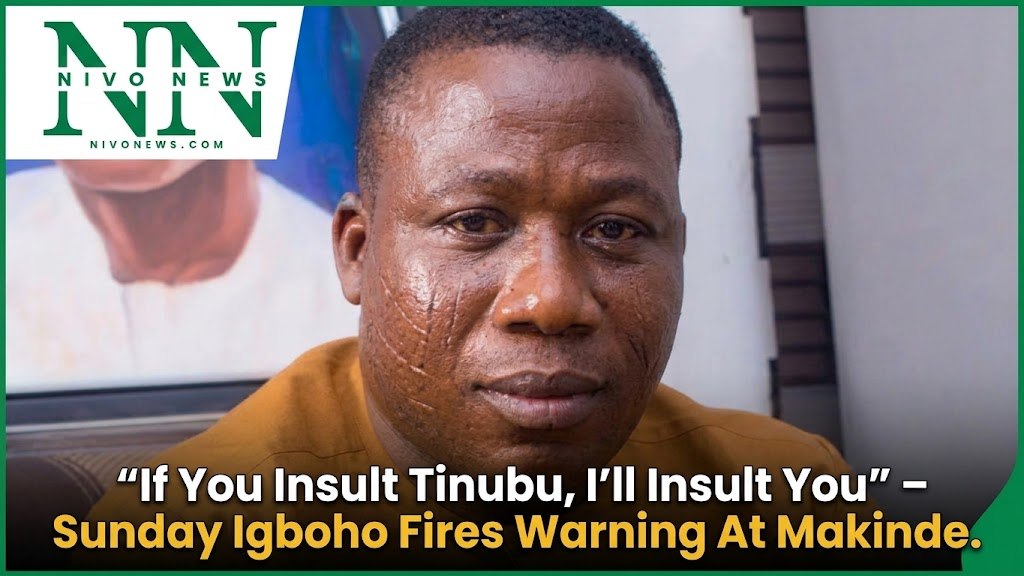
Yoruba Nation activist Sunday Adeyemo, popularly known as Sunday Igboho, has criticised Oyo State Governor Seyi Makinde over his alleged mockery of President Bola Tinubu.....KINDLY READ THE FULL STORY HERE▶
According to reports, Igboho condemned Makinde’s conduct during a public event, describing it as childish and disrespectful to the President.
Makinde had challenged rival presidential candidates to demonstrate their physical stamina after jumping off a stage during a campaign meeting in Akure, Ondo State, on October 22.
The governor made the demonstration at the APM South-West Presidential Campaign Town Hall Meeting held at the Ondo State International Conference Centre, popularly known as The Dome.
While addressing supporters, Makinde said he would focus on candidates’ energy levels and ability to withstand the demands of leadership rather than making age a major issue ahead of the 2027 presidential election.
Reacting to the incident, Igboho accused the Oyo governor of making fun of Tinubu and warned that he would respond to anyone who insulted the President.
In a statement on Sunday, the Yoruba Nation activist said Makinde’s actions amounted to disrespect towards the President.
“He was jumping around like a frog and a mad man, insulting Tinubu, saying Tinubu can’t jump like him as if he doesn’t have a father.
“If you insult Tinubu, I will insult you back. Anyone who wants to live long should not mock an elderly person for any reason,” Igboho said.
-

 latest1 year ago
“Social Media Erupts As Jim Iyke Declares Rita Dominic Nollywood’s Most Beautiful”
-
 latest3 years ago
Edo Political Showdown: Oshiomhole Appears At Presidential Villa As Tinubu Hands APC Gubernatorial Flag To Okpebholo (Photos & Video)
-
 entertainment3 years ago
Love Knows No Age American Woman Defends Marriage To Young Nigerian Man “I’m Not 70”
-
 latest3 years ago
Olumide Akpata Strikes Again: Drops Killer Track, Sends Edo State Into Frenzy!(Video)
-
 Politics3 years ago
Nigerians React As Pastor Adeboye Foresees Passing Away On A Sunday After Enjoying A Satisfying Meal Of Pounded Yam
-
 latest3 years ago
FG Identifies 31 States At Risk Of Heavy Flooding In 2024: See Full List
-
 Politics3 years ago
BREAKING: Inspector-General Of Police Summons Top Police Commanders For Crucial-Security Challenges
-
 latest3 years ago
5 NYSC Corpers Perish In Fatal Road Accident Returning From Camp