
latest
Confusion In NASS As Reps, Senate Approve Different Oil Price Benchmarks.

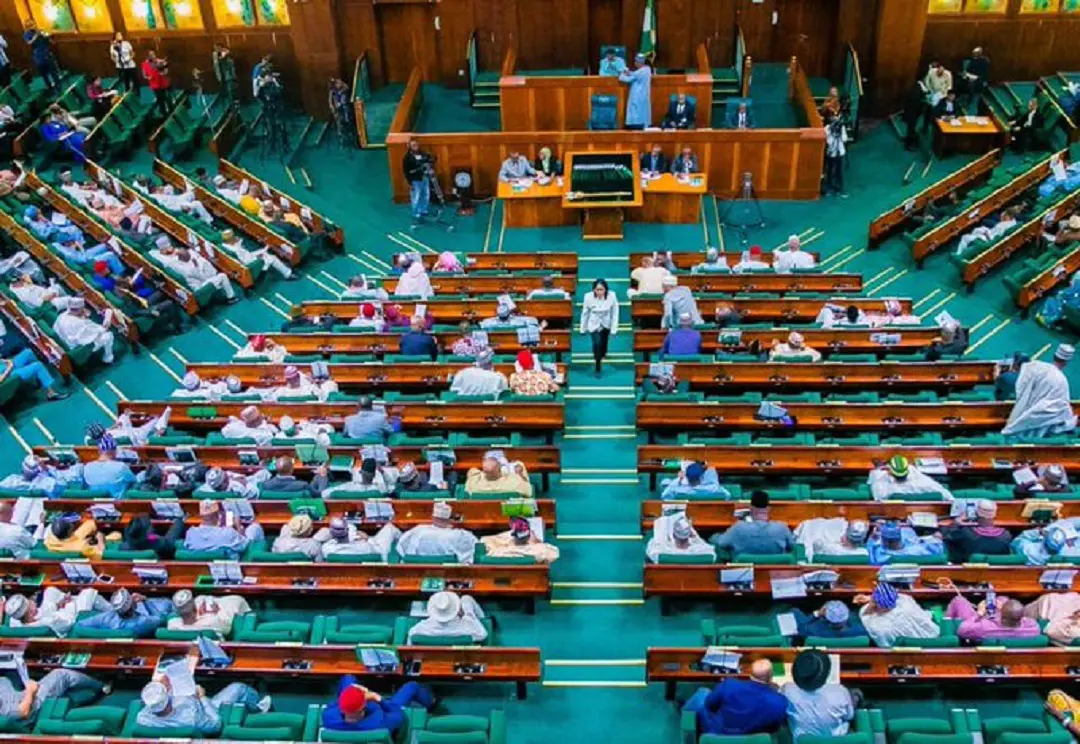
According to Nivo News, confusion has emerged within the National Assembly as the House of Representatives and the Senate approved different crude oil price benchmarks for the 2026–2028 Medium Term Expenditure Framework and Fiscal Strategy Paper (MTEF/FSP).....KINDLY READ THE FULL STORY HERE▶
On Thursday, the House of Representatives approved the framework with a crude oil benchmark of $64.85 per barrel, aligning with the figure earlier proposed by the Executive. The decision comes despite concerns over volatility in the global oil market and has set the stage for a divergence with the Senate ahead of President Bola Ahmed Tinubu’s presentation of the N54.4 trillion 2026 budget scheduled for Friday, December 19.
The House’s position contrasts with that of the Senate, which had earlier reviewed and reduced the crude oil benchmark for 2026 to $60 per barrel, creating conflicting fiscal assumptions between the two legislative chambers as preparations for the 2026 budget gather momentum.
Notably, the House Committee on Finance and National Planning had initially recommended a lower benchmark of $60 per barrel for 2026, arguing that a more conservative estimate would help shield government revenues from potential global oil price fluctuations. However, defending the House’s final decision, Speaker Tajudeen Abbas warned that adopting a lower benchmark without thorough modelling of its implications on revenue, borrowing and government expenditure could lead to funding shortfalls.
He cautioned that any resulting gaps in financing could ultimately be addressed through increased domestic revenue mobilisation or additional borrowing. Meanwhile, the Senate maintained its adjusted projections, retaining oil price benchmarks of $65 per barrel for 2027 and $70 per barrel for 2028, while insisting that its revisions were aimed at protecting the economy from external shocks and ensuring more realistic revenue forecasts.

For those tracking the parallel market (often referred to as Aboki FX), the dollar-to-naira exchange rate on Friday, May 29, 2026, was reported as follows:....KINDLY READ THE FULL STORY HERE▶
-
Lagos Parallel Market Rates: Bureau De Change (BDC) sources indicated that traders were selling the dollar at ₦1,385 and buying at ₦1,375.
-
Central Bank of Nigeria (CBN) Position: It is important to note that the CBN does not officially recognize the parallel market. The apex bank advises individuals seeking foreign exchange to conduct transactions through their respective commercial banks.
-
Official CBN Rates: The CBN recorded a daily high of ₦1,375 and a low of ₦1,372 for the dollar.
Market Note: Please be aware that actual transaction rates may vary from these figures depending on the specific dealer or location.
latest
The Secret Invasion: Bandits Use South-West Forests To Bypass Security—Total Panic Grips Region!.

Investigations have revealed that the vast forest belts and porous borders spanning Oyo, Osun, Ogun, and Ekiti states have been converted into strategic infiltration routes for bandits and kidnappers entering Nigeria’s South-West region.....KINDLY READ THE FULL STORY HERE▶
Sources, including hunters, local residents, and operatives of the Oodua Peoples Congress (OPC), report that armed criminal groups are fleeing intensified military offensives in the North and exploiting the weak surveillance within these expansive forest reserves. These contiguous routes are used to launch coordinated attacks and abduct residents before the perpetrators vanish into the difficult-to-police terrain.
Specifically, the Old Oyo National Park, which links Oyo and Kwara states, alongside the forests connecting Osun and Ekiti via the Imesi-Ile axis, have emerged as severe security liabilities. While security forces have managed to dislodge some suspects, the sheer scale of these forest reserves makes effective monitoring nearly impossible. Areas once designated for agriculture and hunting are now reported to be safe passages for groups involved in kidnapping and violent crime.
This security deterioration coincides with a surge in violent attacks and abductions across Oyo, Ogun, Ondo, Osun, and Ekiti states. A critical example occurred on May 15, when bandits targeted three schools in the Oriire Local Government Area of Oyo State, killing teachers and abducting 47 pupils and staff members. The attackers reportedly used the Old Oyo National Park corridor for their escape, reinforcing fears about the vulnerability of rural communities.
Spanning approximately 2,512 square kilometers, the Old Oyo National Park is part of a massive vegetation corridor that stretches from Kainji National Park in Niger State, through Kwara State, and into the South-West. Security operatives, speaking anonymously, confirm that criminals are exploiting this contiguous density to move undetected and transport victims between locations.
Confirming the origin of these threats, the Defence Headquarters recently attributed the Oyo school abductions to terrorists from the Jama’atu Ahlis Sunna Lidda’awati wal-Jihad (JAS) group. Maj. Gen. Michael Onoja, Director of Defence Media Operations, stated that these groups have been displaced from other regions by high-intensity military operations and are now moving into new territories.

The Central Bank of Nigeria (CBN) has extended the enforcement deadline for its mandatory PoS geo-fencing policy to August 1, 2026. Originally introduced in August 2025, this initiative requires all PoS terminals to be geo-tagged to enhance transaction monitoring and combat fraud. In a recent circular signed by Rakiya Yusur, Director of the Payments System Supervision Department, the CBN also announced an increase in the allowable geo-fence radius from 10 metres to 70 metres to provide operators with more flexibility. Financial institutions—including banks, mobile money operators, and super agents—must submit proof of compliance by July 31, 2026, and resolve any outstanding technical issues with the National Central Switch before the new enforcement date.....KINDLY READ THE FULL STORY HERE▶
In a bid to support smoother implementation, the CBN has pushed back the enforcement of its PoS terminal geo-fencing regulations to August 1, 2026. The policy, which aligns Nigeria’s payment systems with ISO 20022 standards, aims to secure digital payments by restricting terminals to registered locations. Significant updates to the framework include expanding the terminal radius from 10 metres to 70 metres. The regulator noted that this extension follows stakeholder consultations and is intended to give financial institutions adequate time to complete necessary technical upgrades. Affected entities are mandated to provide evidence of compliance by the end of July 2026.
Option 3: Short and Direct
The Central Bank of Nigeria has granted financial institutions more time to comply with its PoS geo-fencing requirements, setting the new enforcement date for August 1, 2026. The updated policy now permits a 70-metre radius for terminals, a significant increase from the previous 10-metre limit. Aimed at reducing fraud and improving oversight, the measure requires all relevant financial institutions to ensure their terminals are properly geo-tagged. Proof of compliance must be submitted to the CBN by July 31, 2026, alongside the resolution of any pending operational challenges.
-

 latest9 months ago
“Social Media Erupts As Jim Iyke Declares Rita Dominic Nollywood’s Most Beautiful”
-
 latest2 years ago
Edo Political Showdown: Oshiomhole Appears At Presidential Villa As Tinubu Hands APC Gubernatorial Flag To Okpebholo (Photos & Video)
-
 entertainment2 years ago
Love Knows No Age American Woman Defends Marriage To Young Nigerian Man “I’m Not 70”
-
 latest2 years ago
Olumide Akpata Strikes Again: Drops Killer Track, Sends Edo State Into Frenzy!(Video)
-
 Politics2 years ago
Nigerians React As Pastor Adeboye Foresees Passing Away On A Sunday After Enjoying A Satisfying Meal Of Pounded Yam
-
 latest2 years ago
FG Identifies 31 States At Risk Of Heavy Flooding In 2024: See Full List
-
 Politics2 years ago
BREAKING: Inspector-General Of Police Summons Top Police Commanders For Crucial-Security Challenges
-
 latest2 years ago
5 NYSC Corpers Perish In Fatal Road Accident Returning From Camp