
latest
Rising Killings: DSS Boss Rushes To Villa For Late-Night Meeting With Tinubu.

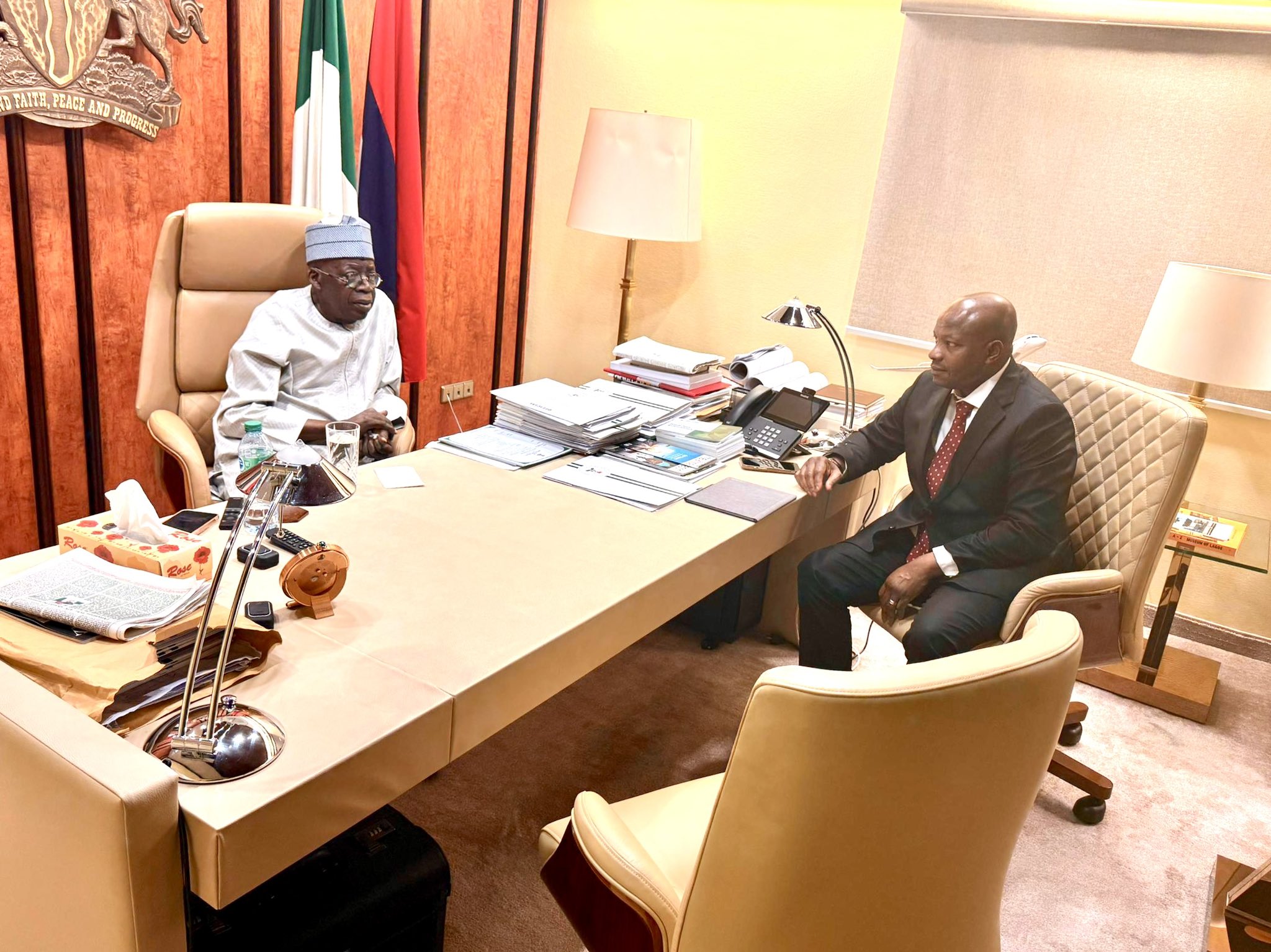
President Bola Ahmed Tinubu on Friday night held a closed-door meeting with the Director-General of the Department of State Services (DSS), Tosin Adeola Ajayi, during which he received an extensive security briefing.....KINDLY READ THE FULL STORY HERE▶
According to Nivo News, the development was confirmed by Tinubu’s Special Adviser on Information and Strategy, Bayo Onanuga, who noted that the interaction took place at the Presidential Villa in Abuja.
While the specifics of the briefing were not disclosed, Onanuga indicated that the DSS boss provided a detailed evaluation of the nation’s rising security concerns and the counter-strategies currently being implemented across the country. He explained that the meeting forms part of the administration’s ongoing consultations with security chiefs as government steps up operations against banditry, terrorism, and other evolving threats.
The briefing followed a series of violent incidents across northern Nigeria, including recent school abductions in Niger and Kebbi states, attacks on worship centres in Kwara, and increasing security fears in Plateau and Nasarawa.
The meeting also came shortly after the Minister of Information and National Orientation, Mohammed Idris, acknowledged the escalating death toll nationwide but maintained that government is taking “significant steps” to confront the crisis. Speaking during a television appearance, he admitted that lives have been lost but stressed that authorities are not ignoring the situation.
Idris attributed the persistent violence to religious tension, economic hardship, and age-long communal clashes, particularly in the Middle Belt. He rejected claims of a targeted Christian extermination, insisting that extremist attacks have affected both Muslims and Christians. He added that the insurgency in the North-East has been an ongoing challenge for over sixteen years and is not defined by religious bias.

The civil society organisation, Citizen Community Aid and Development Initiative (CCADI), has raised concerns over electoral violence targeting women in Rivers State, warning that intimidation, harassment and other forms of political violence are weakening women’s participation and representation ahead of the 2027 general elections.....KINDLY READ THE FULL STORY HERE▶
The organisation made this known in a policy brief presented on Thursday at its Multi-Stakeholders’ Information Dissemination Meeting on the Status of Electoral Violence Against Women in Rivers State.
The brief blamed the persistent violence surrounding elections in the state since the return to democratic rule in 1999 on what it described as corrupt members of the political class seeking to capture political power for personal wealth accumulation rather than public service.
It described the prevailing political atmosphere as a major threat to democratic participation, arguing that the zero-sum nature of politics in Rivers State has encouraged electoral violence, restricted civic space and significantly reduced women’s involvement in the political process.
According to CCADI, women’s participation and representation in politics have continued to decline since 1999, describing the trend as a major setback for democratic inclusion.
“The curve of women’s participation and representation in politics, elections and governance keeps sloping downwards since the start of this current democratic governance experiment in 1999, signalling a monumental backsliding,” the brief stated.
The organisation cited the list of candidates for the June 20, 2026, bye-elections in Rivers State, noting that none of the four candidates was a woman. It described this as evidence of the continued exclusion of women from the electoral process.
The brief also revealed that women occupy only six of the 32 seats in the Rivers State House of Assembly, representing 18 per cent of its membership, based on figures attributed to the Independent National Electoral Commission (INEC).
It warned that the poor representation of women in politics also limits their access to strategic public offices, economic opportunities, security structures and environmental emergency response mechanisms.
CCADI identified online and physical attacks by political opponents, sexual harassment, verbal abuse, bullying and doxxing as some of the challenges confronting women in the state’s political environment.
It said these practices had discouraged many women from contesting elective positions and prevented some from emerging as candidates during party primaries.
“These violent acts have contributed to deterring and preventing women from emerging as candidates from the primary elections for different positions (such as Presidential, Governorship, Senate, House of Representatives, House of Assembly) of their various parties for the 2027 election cycle in Rivers State,” the brief stated.
As part of its efforts to document incidents and promote timely intervention, the organisation disclosed that it had recruited, trained and deployed female election observers across the three senatorial districts of Rivers State.
The observers are expected to monitor and report cases of electoral violence against women before, during and after elections to facilitate prompt institutional responses.
CCADI also revealed that it had commissioned two investigative reports to examine incidents of violence against women in the state ahead of the 2027 general elections.
Among its preliminary findings was the alleged systematic exclusion of the incumbent senator representing Rivers West, Dr Ipalibo Banigo, a former deputy governor of the state, from the 2027 senatorial race by what it described as a male-dominated political structure.
The reports also documented an incident in which a female political party candidate in Eleme Local Government Area was allegedly denied access to a public facility for a scheduled campaign activity.
Other concerns included reported disruptions of campaign activities, destruction of campaign materials belonging to different political parties, and growing pressure from family members, communities and traditional institutions on female aspirants to abandon their political ambitions.
In response, CCADI called on political parties, candidates, members and supporters to adopt a zero-tolerance approach to electoral violence, particularly attacks directed at women.
It urged security agencies, especially the Nigeria Police Force, to act on available early-warning reports to prevent violence and respond swiftly to reported incidents.
The organisation also recommended amendments to the 2026 Electoral Act to introduce tougher penalties for perpetrators of electoral violence, including disqualification from political and electoral participation.
Furthermore, CCADI called for the passage of the Special Seats for Women Bill, arguing that the proposed legislation would improve women’s participation and representation in elective offices while reducing their vulnerability to electoral violence.
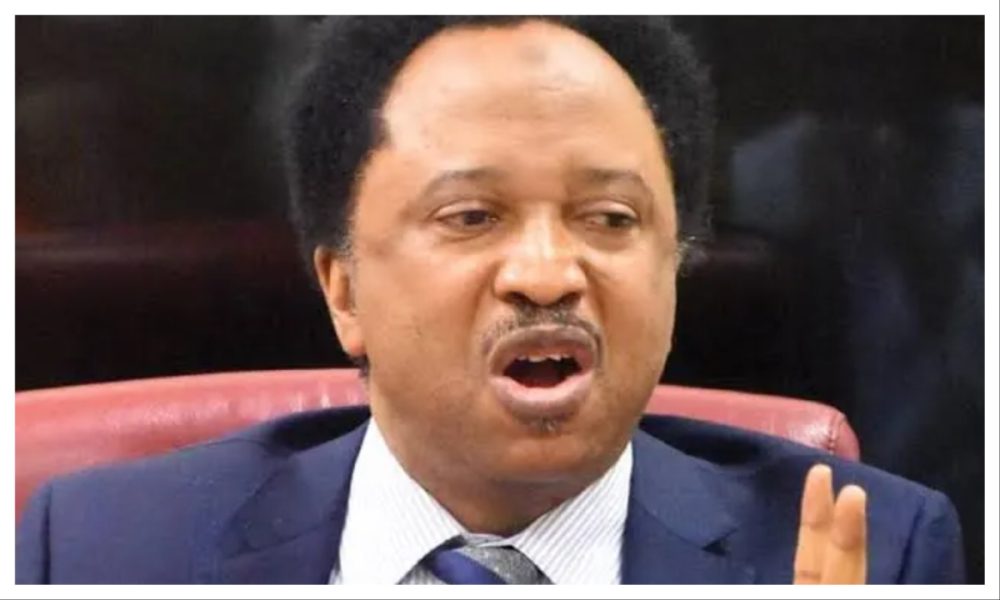
Former Kaduna Central senator, Shehu Sani, has criticised what he described as the absence of public outrage over an attack on a mosque in Zamfara State, where a worshipper was reportedly killed and several others abducted.....KINDLY READ THE FULL STORY HERE▶
Suspected bandits stormed the mosque during the early morning Subhi prayer on Sunday in Kaura town, Kaura Namoda Local Government Area of the state.
According to a report by security alert platform Bakatsine on X, the attackers killed one of the worshippers, identified as Nasiru Sani Kaura, and abducted several others.
Reacting to the incident in a Facebook post on Sunday, Sani questioned why the attack had not attracted widespread public condemnation.
“Why is it that no one is condemning or cursing the bandits for their genocide? Why is it that everyone is ignoring this story?” he asked.
The former lawmaker also questioned the religious identity of the attackers, asking, “What is the religion of these bandits if they have any?”
Expressing concern over the continued violence across the country, Sani further asked, “Have we all run out of anger or run out of tears?”
He urged Nigerians to recognise bandits and terrorists as a common threat, irrespective of religious differences.
“Can we now begin to reason that bandits and terrorists are common evils to us all?” he added.
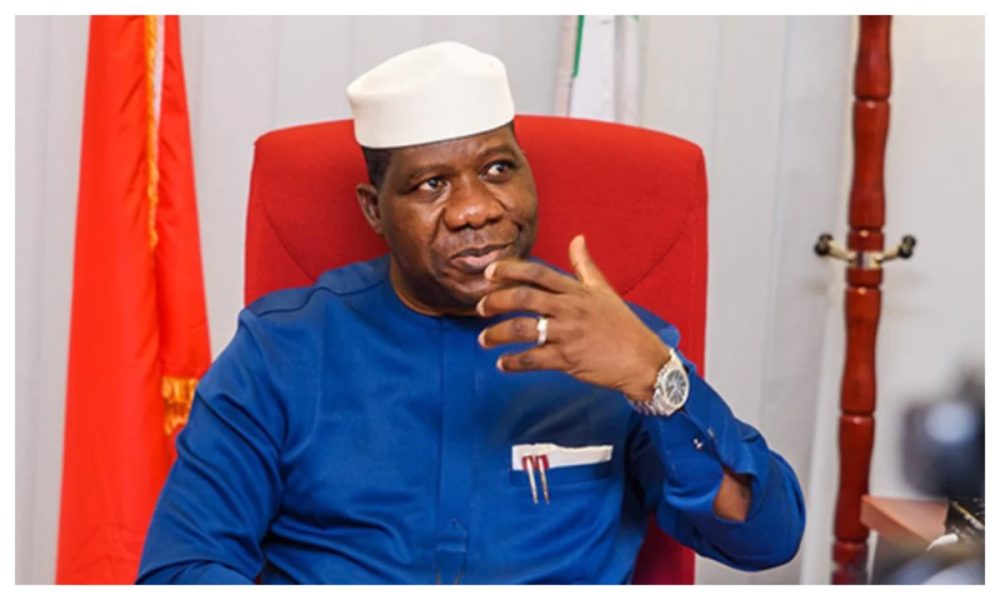
The National Assembly is set to transmit the State Police (Constitution Alteration) Bill to President Bola Tinubu for assent this week, Senate Leader Opeyemi Bamidele has disclosed.....KINDLY READ THE FULL STORY HERE▶
Bamidele made this known in a statement issued on Sunday by his Media Directorate.
He explained that the process would proceed despite four state Houses of Assembly yet to submit their reports on the proposed constitutional amendment.
According to him, the National Assembly expects the remaining states to communicate their decisions before lawmakers resume plenary on November 17, 2026.
“The absence of the remaining reports will not stop the National Assembly from proceeding with the process,” Bamidele stated.
He disclosed that at least 32 state Houses of Assembly had approved the proposed amendment, surpassing the constitutional requirement of 24 states.
The Senate Leader described the development as a significant step towards establishing state police, following more than 15 years of unsuccessful efforts to reform Nigeria’s policing system.
He said, “We are now under obligation to transmit the State Police (Constitution Alteration) Bill, 2026 to the President and Commander-in-Chief of the Armed Forces, Bola Ahmed Tinubu, for assent.
“This is a responsibility we must consciously discharge on behalf of our constituents and in the interest of national peace, progress and stability.”
The proposed constitutional amendment seeks to establish a Federal Police Service alongside State Police Services, providing a legal framework for decentralised policing across the country.
Bamidele clarified that the proposal was not designed to create ethnic or state armies but to introduce state-led, community-based policing under clearly defined constitutional safeguards.
-

 latest1 year ago
“Social Media Erupts As Jim Iyke Declares Rita Dominic Nollywood’s Most Beautiful”
-
 latest3 years ago
Edo Political Showdown: Oshiomhole Appears At Presidential Villa As Tinubu Hands APC Gubernatorial Flag To Okpebholo (Photos & Video)
-
 entertainment3 years ago
Love Knows No Age American Woman Defends Marriage To Young Nigerian Man “I’m Not 70”
-
 latest3 years ago
Olumide Akpata Strikes Again: Drops Killer Track, Sends Edo State Into Frenzy!(Video)
-
 Politics3 years ago
Nigerians React As Pastor Adeboye Foresees Passing Away On A Sunday After Enjoying A Satisfying Meal Of Pounded Yam
-
 latest3 years ago
FG Identifies 31 States At Risk Of Heavy Flooding In 2024: See Full List
-
 Politics3 years ago
BREAKING: Inspector-General Of Police Summons Top Police Commanders For Crucial-Security Challenges
-
 latest3 years ago
5 NYSC Corpers Perish In Fatal Road Accident Returning From Camp