
latest
Vote-Buying Storm: How Cash-For-Ballots Is Crippling Nigeria’s Democracy.


According to Nivo News, concerns over vote-buying continue to cast a troubling shadow on Nigeria’s democracy, posing one of the gravest threats to the integrity of elections. Analysts warn that when an election is compromised, it becomes as fragile as a structure built with counterfeit materials—destined to collapse with time. The responsibility for election credibility, they note, rests on all stakeholders, from politicians and electoral officials to security agencies, voters, and party representatives.....KINDLY READ THE FULL STORY HERE▶
Experts stress that vote-buying—an act of influencing voters’ choices through monetary inducement—has deeply infiltrated the country’s electoral culture. It has not only eroded the sanctity of the ballot box but has also become a strategic weapon wielded by desperate contenders seeking to tilt outcomes. While many Nigerians consider the practice immoral, its enticement often proves irresistible. There are also instances where allegations of vote-buying are deployed as political blackmail to delegitimise otherwise credible polls.
Despite the Independent National Electoral Commission’s efforts to enhance transparency, vote-buying continues to dent Nigeria’s electoral scorecard. Observers say the practice has evolved into a sophisticated enterprise that may persist unless stakeholders pursue genuine reforms aimed at eliminating the vice. The electoral umpire, however, remains largely powerless against the monetisation of votes—a tactic many politicians deploy as a last resort when seeking victory.
Security agencies have tried to curb the trend, but results have been limited. Vote-buying operations are often discreet, occurring far from polling centres and outside public view. Even though numerous arrests have been made over offences such as ballot snatching, thuggery, falsified results, and disruptions at collation centres, vote-buyers often escape punishment. Past prosecutions have rarely advanced in court.
Observers link the rising prevalence of vote-buying to the widening disconnect between politicians and the electorate. As competition for political office intensified over the years, politicians and their agents increasingly turned to financial inducements as a means of connecting with voters. Expectations of cash, food items, and even clothing have become commonplace during campaigns, giving rise to the popular mobilisation slogan “di’bo koo se’be” (vote so you can cook soup).
While vote-buying is not unique to Nigeria, it remains a deeply entrenched practice that distorts electoral predictions and undermines confidence in outcomes. Political agents equipped with voter registers identify targets, often negotiating directly with residents within their communities. In many cases, voters exploit the process, dealing with multiple agents although only able to cast a single vote—ultimately favouring the highest bidder.
Poverty plays a significant role, as lower-income voters are more susceptible to inducements. Wealthy individuals and political patrons also influence the process by funding operations and distributing money to community members who look up to them. The rise of electronic transfers has further modernised the scheme, making the transactions less detectable.
However, challenges persist regarding compliance. Some voters accept money but still vote according to their conscience, leaving vote-buyers with no legal recourse. Others breach electoral guidelines by photographing their marked ballots as proof of loyalty to the politician who paid them.
Analysts believe the consequences of vote-buying are severe and far-reaching. It compromises integrity, obscures the true popular choice, distorts voter autonomy, and produces leaders who view public office as an investment to be recouped—fuelling corruption and governance failures.
Although the Economic and Financial Crimes Commission intensifies monitoring during elections, the agency lacks the manpower and resources to cover all polling units nationwide. Experts maintain that eliminating vote-buying requires collective action from candidates, political parties, government institutions, security agencies, traditional authorities, and voters.
INEC has reiterated the need for a dedicated electoral offences tribunal to fast-track prosecutions, placing the responsibility on the National Assembly to act. Analysts insist, however, that the most sustainable solution lies in voter education. They argue that a more enlightened electorate will be less vulnerable to inducement, ultimately strengthening the pillars of democracy and ensuring that elections reflect the genuine will of the people.
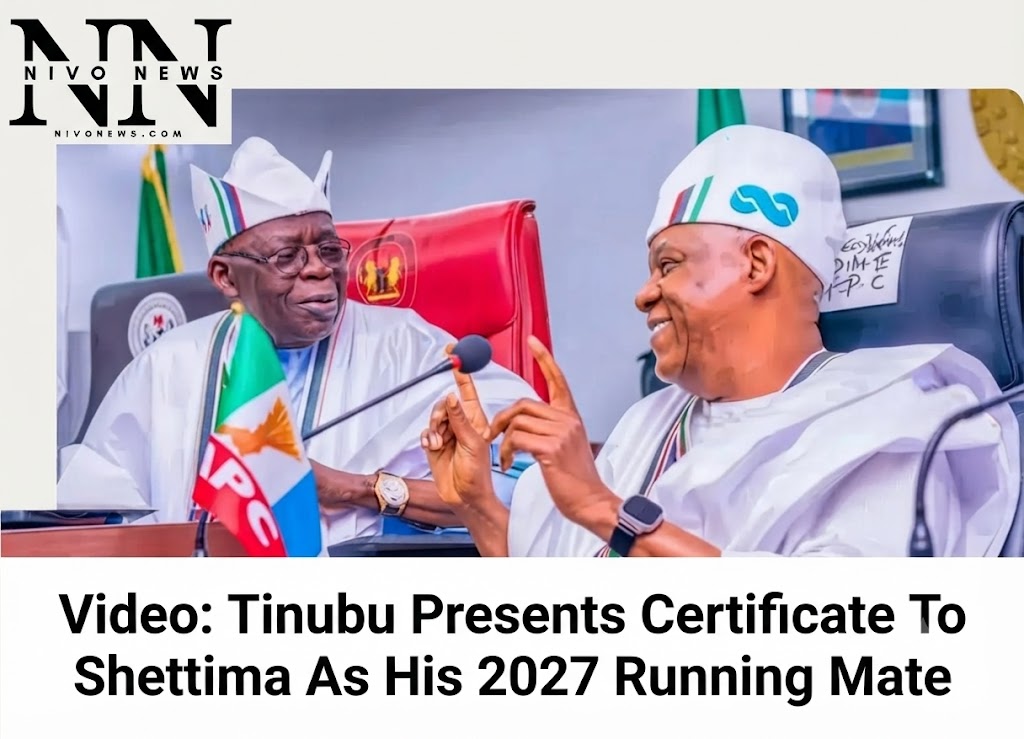
President Bola Tinubu has formally confirmed Vice President Kashim Shettima as his running mate for the 2027 presidential election by presenting him with an official certificate. The event occurred at the President’s office in the Aso Rock Villa, Abuja, and was highlighted in a video shared on X (formerly Twitter) by presidential media aide, Dada Olusegun.....KINDLY READ THE FULL STORY HERE▶
This development follows the All Progressives Congress (APC) national leadership’s formal announcement last Friday, which named both President Tinubu and Vice President Shettima as the party’s presidential and vice-presidential candidates for 2027. The announcement was made during a stakeholder meeting in Abuja attended by several key figures, including:
-
The National Working Committee (NWC): Led by National Chairman, Prof. Nentawe Yilwatda, who officially confirmed the party’s decision to field the pair.
-
The Progressive Governors Forum (PGF): Led by its Chairman and Imo State Governor, Senator Hope Uzodinma.
-
Special Adviser to the President on Political Matters: Ibrahim Kabir Masari, who made the formal announcement of their candidacy.
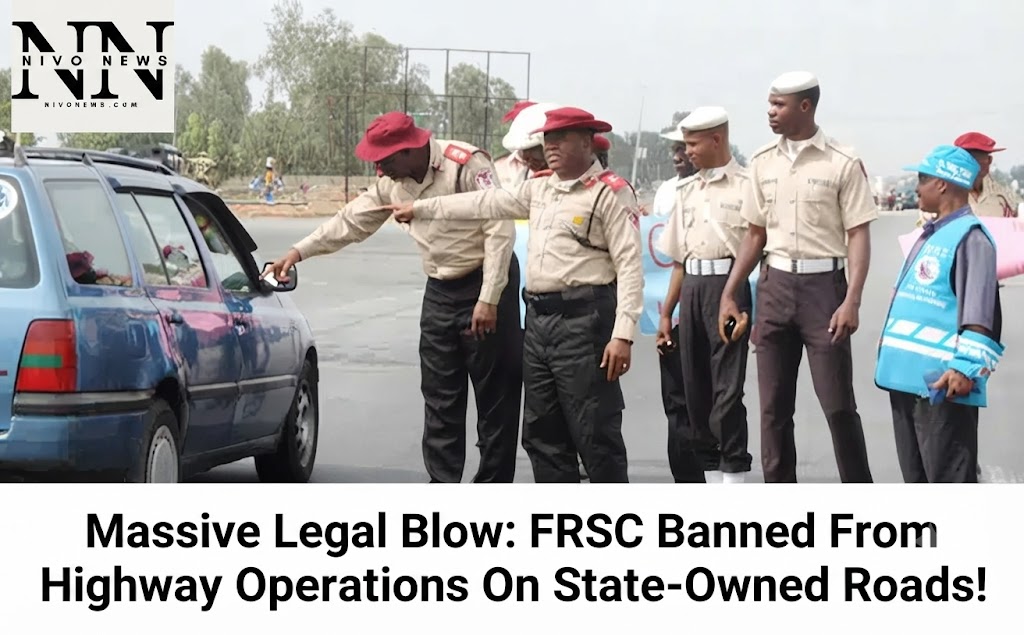
The Federal High Court in Kano has delivered a landmark ruling declaring that the Federal Road Safety Corps (FRSC) does not have the legal authority to conduct operations on state and local government roads. Presided over by Justice M. S. Shuaibu, the court ruled that the FRSC’s activities within the Kano metropolis were unconstitutional and exceeded the commission’s statutory powers.....KINDLY READ THE FULL STORY HERE▶
-
Violation of Rights: The court determined that the FRSC infringed upon motorists’ constitutional rights to personal liberty and freedom of movement, as protected under Sections 35 and 41 of the 1999 Constitution, by stopping, questioning, and delaying them without lawful authority.
-
Legal Mandate: Justice Shuaibu affirmed that the FRSC’s enabling law restricts its enforcement powers to federal highways and does not authorize routine checks on township roads.
-
Injunction and Damages: The court granted a perpetual injunction to prevent FRSC officers from further harassing or stopping motorists on Kano State roads. Additionally, the FRSC was ordered to pay ₦800,000 in damages and costs, and to issue a public apology to the applicant, Abba Hikima, in a national newspaper.
The lawsuit was initiated by Kano-based lawyer Abba Hikima following an incident in July 2025, where he was stopped by FRSC officers for routine questioning despite committing no traffic offence. By granting all requested reliefs, the court has placed clear limits on the FRSC’s jurisdiction and reinforced constitutional protections for road users in areas outside federal highways.
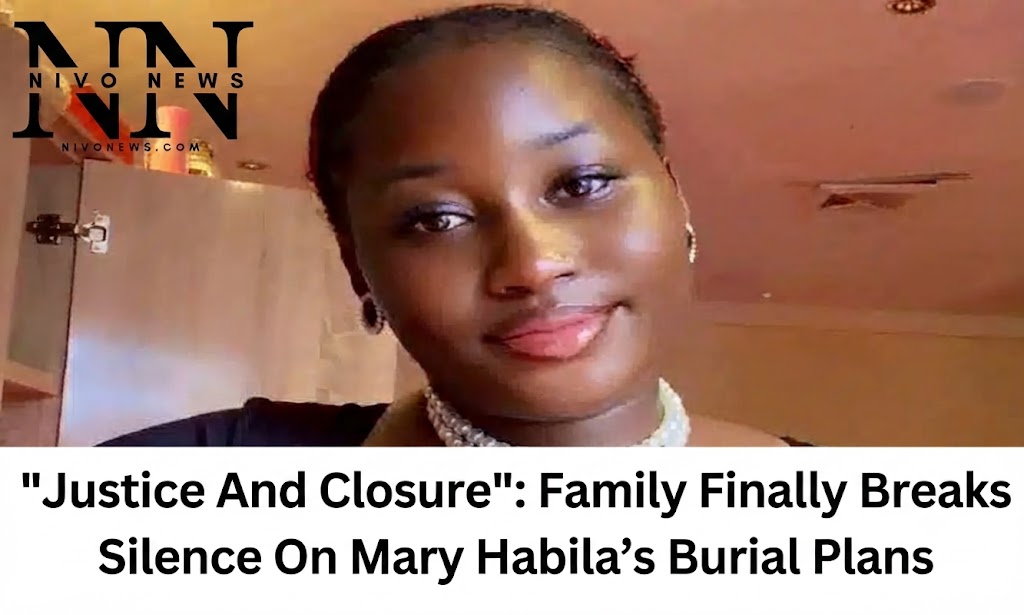
The burial of 26-year-old Mary Habila, previously set for Friday, July 17, has been postponed indefinitely. The family of the deceased, represented by Elisha Haruna, issued a statement apologizing for the change and promised to announce a new date once arrangements are finalized.....KINDLY READ THE FULL STORY HERE▶
The delay stems from the Ebonyi State Police Command’s refusal to release Habila’s body, insisting that an autopsy must be conducted to determine the cause of death despite the family’s objections. The death occurred at the residence of the Minister of Works, David Umahi, in Uburu, Ebonyi State.
Regarding the situation, Minister David Umahi has denied any involvement in Habila’s death, describing efforts to link him to the incident as “politics taken too far”. Key points from the Minister’s response include:
-
The Minister stated that Habila was like a daughter to him and that he had personally funded treatment for her past medical challenges.
-
He claimed that Habila had complained of nosebleeds during a phone call with her boyfriend shortly before she was discovered dead.
-
Umahi maintained that there is no evidence of foul play in the incident.
-

 latest11 months ago
“Social Media Erupts As Jim Iyke Declares Rita Dominic Nollywood’s Most Beautiful”
-
 latest2 years ago
Edo Political Showdown: Oshiomhole Appears At Presidential Villa As Tinubu Hands APC Gubernatorial Flag To Okpebholo (Photos & Video)
-
 entertainment2 years ago
Love Knows No Age American Woman Defends Marriage To Young Nigerian Man “I’m Not 70”
-
 latest2 years ago
Olumide Akpata Strikes Again: Drops Killer Track, Sends Edo State Into Frenzy!(Video)
-
 Politics3 years ago
Nigerians React As Pastor Adeboye Foresees Passing Away On A Sunday After Enjoying A Satisfying Meal Of Pounded Yam
-
 latest2 years ago
FG Identifies 31 States At Risk Of Heavy Flooding In 2024: See Full List
-
 Politics3 years ago
BREAKING: Inspector-General Of Police Summons Top Police Commanders For Crucial-Security Challenges
-
 latest2 years ago
5 NYSC Corpers Perish In Fatal Road Accident Returning From Camp