
latest
EFCC Under Olukoyede’s Leadership Breaks Record With ₦566bn Loot Recovery, 7,503 Convictions.

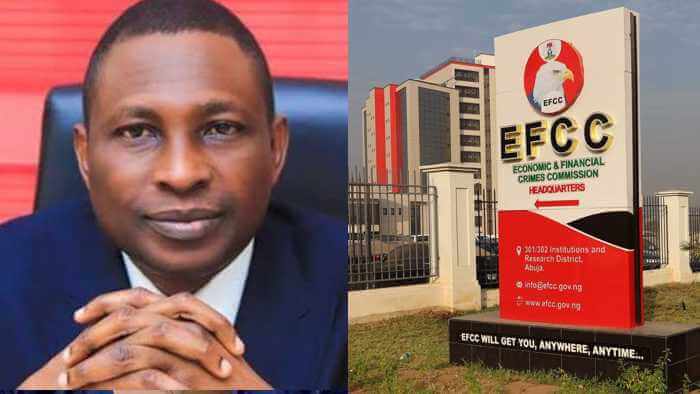
According to Nivo News, the Executive Chairman of the Economic and Financial Crimes Commission (EFCC), Ola Olukoyede, has announced that the Commission, under his leadership, has recorded unprecedented progress in the war against corruption, recovering over ₦566 billion and $411 million within the last two years.....KINDLY READ THE FULL STORY HERE▶
Olukoyede made the revelation on Thursday, October 23, 2025, during a press briefing at the EFCC headquarters in Abuja, marking his second year in office. Appointed in October 2023, the EFCC boss noted that the period had been defined by far-reaching reforms and exceptional results across all operational areas.
Speaking through the EFCC’s Director of Public Affairs, Commander CE Wilson Uwujaren, Olukoyede disclosed that between October 2023 and September 2025, the Commission received more than 19,000 petitions, carried out 29,240 investigations, filed 10,525 cases in court, and secured 7,503 convictions.
He revealed that during the same period, the EFCC recovered ₦566,319,820,343.40, $411,566,192.32, £71,306.25, €182,877.10, and other foreign currencies, alongside 1,502 non-monetary assets, including 402 properties in 2023, 975 in 2024, and 125 so far in 2025. Among these assets, he said, were major recoveries such as 753 duplexes in Lokogoma, Abuja, and the forfeiture of Nok University, now renamed the Federal University of Applied Sciences, Kachia, Kaduna State.
Olukoyede described the recoveries as concrete evidence of the EFCC’s renewed commitment to tracking, confiscating, and returning illicit assets to the Nigerian state and victims of financial crimes. He also listed several high-profile prosecutions, including those involving former governors Willie Obiano, Abdulfatah Ahmed, Darius Ishaku, Theodore Orji, and Yahaya Bello, as well as ex-ministers Olu Agunloye, Mamman Saleh, Hadi Sirika, Charles Ugwu, and former CBN Governor Godwin Emefiele.
He further recalled that in December 2024, the Commission arrested 792 suspects in Lagos for investment and cryptocurrency-related fraud, including 192 foreigners who were later prosecuted and deported — a move he said underscored Nigeria’s zero tolerance for cybercrime.
Olukoyede added that the EFCC also revived several longstanding corruption cases, including those involving Fred Ajudua, former PDP Chairman Haliru Bello Mohammed, ex-NSA Sambo Dasuki, and former NSITF boss Ngozi Olojeme.
The anti-graft chief revealed that part of the recovered funds had been reinvested into key national projects such as the Students Loan Scheme and Consumer Credit Scheme, with ₦100 billion deployed so far. He noted that agencies including the NDDC, AMCON, FIRS, and NHIA had also benefited from the returned assets.
Olukoyede highlighted that some recovered properties had been allocated to government bodies for official use, in line with the EFCC’s policy of ensuring assets are productively utilized.
He also pointed to the establishment of the Task Force on Naira Abuse and Dollarisation of the Economy, which he said had made a significant impact in sanitizing currency operations and stabilizing the naira.
According to him, the Commission’s efforts in combating cybercrime were not limited to enforcement but also focused on prevention, citing initiatives like the National Cybercrime Dialogue in January 2024 and the Cybercrime Summit in October 2024, which was graced by First Lady Senator Oluremi Tinubu, who launched the Cybercrime Response Centre.
Olukoyede emphasized that international cooperation remained central to the EFCC’s success, with strengthened ties to the FBI, UK’s NCA, INTERPOL, and law enforcement agencies in Canada, Spain, Korea, Germany, and Japan. He disclosed that these partnerships had led to joint investigations and recovery of stolen assets for victims abroad.
“In 2024, we hosted the former FBI Director, Christopher Wray, and the NCA’s Director General, Graeme Biggar — a testament to the EFCC’s growing global recognition,” he added.
Olukoyede also detailed key internal reforms within the Commission, including the creation of the Directorate of Fraud Risk Assessment and Control (FRAC), the renaming of the Department of Internal Affairs to the Department of Ethics and Integrity, and the establishment of new Zonal Directorates in Ekiti, Anambra, and Katsina States, bringing the total to 17.
He said the EFCC Academy in Giri is currently under development, featuring a Cybercrime Research Centre as one of its flagship facilities, alongside the introduction of specialized units like the Digital Transformation and Innovation Unit and the Visa Fraud Section.
Olukoyede reaffirmed his commitment to integrity and professionalism, stating that “you cannot fight corruption with corruption.” He disclosed that all EFCC staff were directed to declare their assets upon his assumption of office, adding that 55 officers had been dismissed over misconduct, including one facing prosecution for tampering with exhibits.
While stressing accountability, he noted that deserving officers had been rewarded with promotions, CNG buses, and allowances.
He concluded by reaffirming his stance on prevention as a cornerstone of the Commission’s operations, describing it as a more cost-effective strategy than enforcement. “That is why we established FRAC to monitor the budget performance of MDAs using risk-based systems,” he stated.
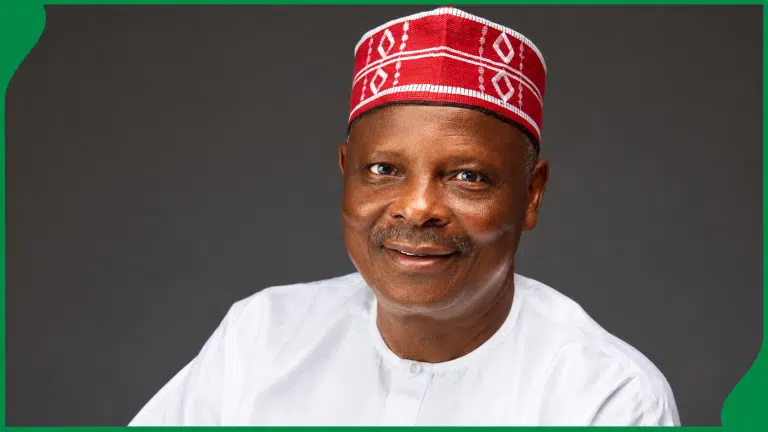
The Kano State Government has reacted to reports of an alleged attack on the convoy of Rabiu Kwankwaso, the Nigeria Democratic Congress (NDC) vice-presidential candidate.....KINDLY READ THE FULL STORY HERE▶
Earlier reports claimed that suspected thugs attacked Kwankwaso’s convoy in Bichi Local Government Area of Kano State on Sunday evening.
However, the state Commissioner for Information, Sanusi Bature Dawakin Tofa, dismissed the allegation, describing the reported incident as fabricated to attract public sympathy.
The commissioner made the claim in a post on his Facebook page on Sunday, accusing the Kwankwasiyya movement of inventing the alleged attack and challenging its members to provide evidence.
“In an attempt to generate public sympathy, the Kwankwasiyya team has framed themselves a fictitious attack in Bichi, no pictures, no videos,” he wrote.
Similarly, Ibrahim Adam, Special Adviser to Governor Abba Kabir Yusuf on New Media, questioned the authenticity of the reported incident.
In a separate Facebook post, Adam accused the Kwankwasiyya movement of using the allegation to gain public sympathy.
“Dear Kwankwasiyya, where are the pictures or videos of the attack? Cheap political blackmail to gain public sympathy,” he stated.
Meanwhile, a video of Kwankwaso addressing youths during his visit to Bichi has emerged. The footage was shared by his media aide, Safullahi Hassan.
In the video, the NDC vice-presidential candidate urged the youths to remain alert and prepared, warning them against becoming complacent.
“I am telling you to continue to be prepared. Young people, do not relent in dealing with these people. This is the time when anyone who tells us to ‘fold up’ should be told ‘never’, and they will realise that we are fully prepared,” he said.
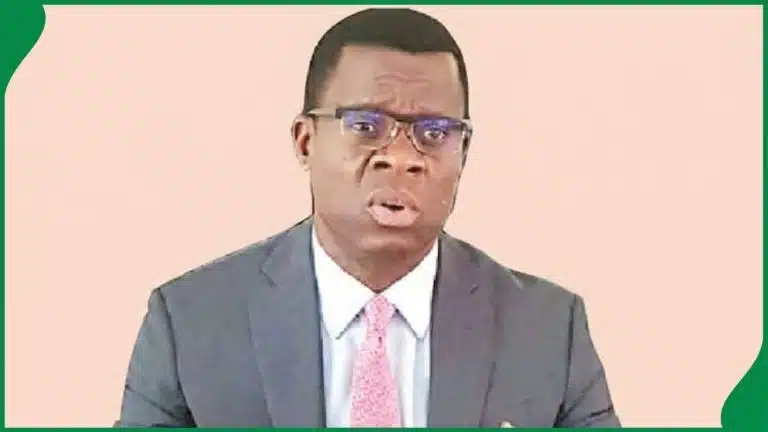
Former Independent National Electoral Commission (INEC) Resident Electoral Commissioner, Mike Igini, has called on United States President Donald Trump to impose visa restrictions and freeze the assets of Nigerian electoral officials found guilty of electoral fraud.Igini made the appeal in a letter dated November 15, urging the US government to target individuals involved in manipulating election results and undermining Nigeria’s democratic process.....KINDLY READ THE FULL STORY HERE▶
The former INEC commissioner argued that such measures would discourage electoral malpractice and promote accountability among officials responsible for conducting elections in the country.
He also maintained that Nigerians were not leaving the country because they lacked love for their homeland, but because decades of electoral malpractice, corruption, insecurity and weak accountability had eroded public confidence in government.
According to him, these challenges have forced thousands of professionals, students and families to seek refuge in the United States.
Igini said imposing sanctions on officials found culpable of electoral misconduct would send a strong message that anyone who undermines democracy would face consequences.
“Officials who engaged in the deliberate manipulation of results, falsification of electoral records or other serious electoral offences established by credible evidence … should face appropriate individual consequences, including visa restrictions and, where legally justified, targeted financial sanctions and asset freezes,” he stated.
He added: “Border enforcement alone cannot solve this. We must address the cause at the source.
“Nigeria has the population, oil, gas and talent to be one of the richest nations on earth. But [it has been] undermined by [a] leadership recruitment process that has rendered the country a plundered wilderness, littered with the debris of missed opportunities.”
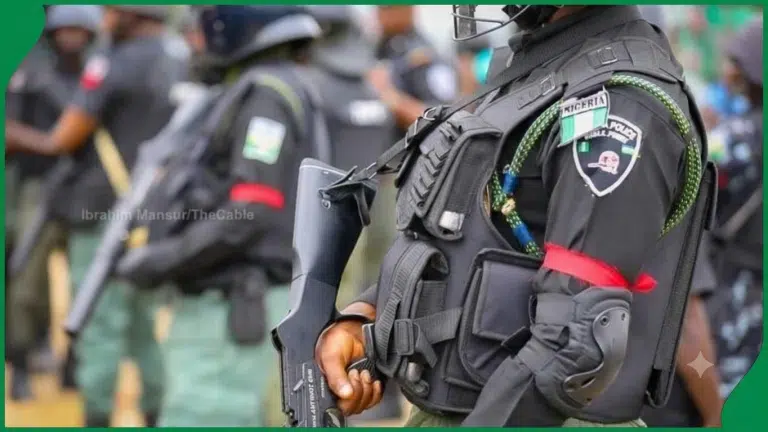
The Kogi State Command of the Nigeria Police Force has explained why members of the state’s Vigilante Service are undergoing firearms training in Ankpa Local Government Area, dismissing allegations that the exercise is politically motivated.....KINDLY READ THE FULL STORY HERE▶
According to the police, the training was organised by the Kogi State Vigilante Service (KSVS) to equip its personnel with the skills required to handle and operate newly acquired firearms safely.
The command disclosed this in a statement issued on Sunday by its spokesperson, Salisu Afusat, following the circulation of a viral video on social media suggesting that the exercise had a political motive.
Afusat said preliminary investigations established that the training was legitimate and involved members of the KSVS Mining and Boundary Vigilante Group.
She explained that the exercise had been ongoing for four days as part of efforts to strengthen security operations across the state.
“The command wishes to clarify that the allegation is false and does not reflect the true nature or purpose of the exercise,” she stated.
The police spokesperson added that relevant security authorities had been informed before the training commenced. She said details of the programme, including the names and photographs of personnel selected to participate, were also submitted.
Afusat further disclosed that the individual who recorded and shared the viral video told investigators that his intention was to draw the attention of security agencies to the exercise for verification.
According to her, the individual acted in line with the security awareness principle of ‘See Something, Say Something’.
However, the command urged residents to exercise caution when sharing information on social media, warning that unverified reports could cause unnecessary panic, tension and public unrest.
It advised members of the public to report suspicious activities to the appropriate security agencies for investigation rather than circulate unconfirmed claims.
The police also acknowledged the contributions of the Kogi State Vigilante Service to security operations across the state, particularly its joint activities with the police and other security agencies.
Afusat assured residents that the command would continue to monitor the activities of the vigilante service to ensure compliance with the law.
-

 latest1 year ago
“Social Media Erupts As Jim Iyke Declares Rita Dominic Nollywood’s Most Beautiful”
-
 latest3 years ago
Edo Political Showdown: Oshiomhole Appears At Presidential Villa As Tinubu Hands APC Gubernatorial Flag To Okpebholo (Photos & Video)
-
 entertainment3 years ago
Love Knows No Age American Woman Defends Marriage To Young Nigerian Man “I’m Not 70”
-
 latest3 years ago
Olumide Akpata Strikes Again: Drops Killer Track, Sends Edo State Into Frenzy!(Video)
-
 Politics3 years ago
Nigerians React As Pastor Adeboye Foresees Passing Away On A Sunday After Enjoying A Satisfying Meal Of Pounded Yam
-
 latest3 years ago
FG Identifies 31 States At Risk Of Heavy Flooding In 2024: See Full List
-
 Politics3 years ago
BREAKING: Inspector-General Of Police Summons Top Police Commanders For Crucial-Security Challenges
-
 latest3 years ago
5 NYSC Corpers Perish In Fatal Road Accident Returning From Camp