
latest
EFCC Under Olukoyede’s Leadership Breaks Record With ₦566bn Loot Recovery, 7,503 Convictions.

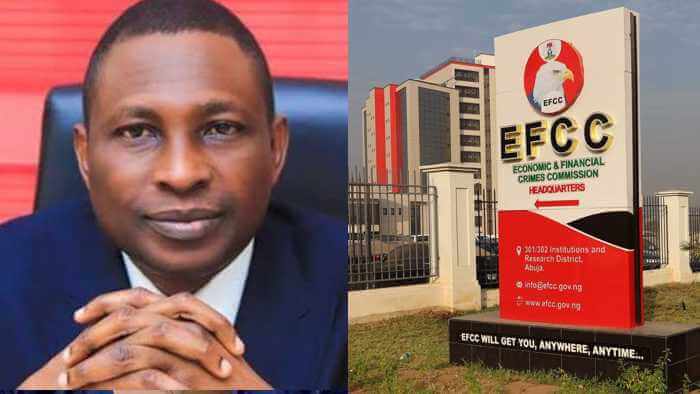
According to Nivo News, the Executive Chairman of the Economic and Financial Crimes Commission (EFCC), Ola Olukoyede, has announced that the Commission, under his leadership, has recorded unprecedented progress in the war against corruption, recovering over ₦566 billion and $411 million within the last two years.....KINDLY READ THE FULL STORY HERE▶
Olukoyede made the revelation on Thursday, October 23, 2025, during a press briefing at the EFCC headquarters in Abuja, marking his second year in office. Appointed in October 2023, the EFCC boss noted that the period had been defined by far-reaching reforms and exceptional results across all operational areas.
Speaking through the EFCC’s Director of Public Affairs, Commander CE Wilson Uwujaren, Olukoyede disclosed that between October 2023 and September 2025, the Commission received more than 19,000 petitions, carried out 29,240 investigations, filed 10,525 cases in court, and secured 7,503 convictions.
He revealed that during the same period, the EFCC recovered ₦566,319,820,343.40, $411,566,192.32, £71,306.25, €182,877.10, and other foreign currencies, alongside 1,502 non-monetary assets, including 402 properties in 2023, 975 in 2024, and 125 so far in 2025. Among these assets, he said, were major recoveries such as 753 duplexes in Lokogoma, Abuja, and the forfeiture of Nok University, now renamed the Federal University of Applied Sciences, Kachia, Kaduna State.
Olukoyede described the recoveries as concrete evidence of the EFCC’s renewed commitment to tracking, confiscating, and returning illicit assets to the Nigerian state and victims of financial crimes. He also listed several high-profile prosecutions, including those involving former governors Willie Obiano, Abdulfatah Ahmed, Darius Ishaku, Theodore Orji, and Yahaya Bello, as well as ex-ministers Olu Agunloye, Mamman Saleh, Hadi Sirika, Charles Ugwu, and former CBN Governor Godwin Emefiele.
He further recalled that in December 2024, the Commission arrested 792 suspects in Lagos for investment and cryptocurrency-related fraud, including 192 foreigners who were later prosecuted and deported — a move he said underscored Nigeria’s zero tolerance for cybercrime.
Olukoyede added that the EFCC also revived several longstanding corruption cases, including those involving Fred Ajudua, former PDP Chairman Haliru Bello Mohammed, ex-NSA Sambo Dasuki, and former NSITF boss Ngozi Olojeme.
The anti-graft chief revealed that part of the recovered funds had been reinvested into key national projects such as the Students Loan Scheme and Consumer Credit Scheme, with ₦100 billion deployed so far. He noted that agencies including the NDDC, AMCON, FIRS, and NHIA had also benefited from the returned assets.
Olukoyede highlighted that some recovered properties had been allocated to government bodies for official use, in line with the EFCC’s policy of ensuring assets are productively utilized.
He also pointed to the establishment of the Task Force on Naira Abuse and Dollarisation of the Economy, which he said had made a significant impact in sanitizing currency operations and stabilizing the naira.
According to him, the Commission’s efforts in combating cybercrime were not limited to enforcement but also focused on prevention, citing initiatives like the National Cybercrime Dialogue in January 2024 and the Cybercrime Summit in October 2024, which was graced by First Lady Senator Oluremi Tinubu, who launched the Cybercrime Response Centre.
Olukoyede emphasized that international cooperation remained central to the EFCC’s success, with strengthened ties to the FBI, UK’s NCA, INTERPOL, and law enforcement agencies in Canada, Spain, Korea, Germany, and Japan. He disclosed that these partnerships had led to joint investigations and recovery of stolen assets for victims abroad.
“In 2024, we hosted the former FBI Director, Christopher Wray, and the NCA’s Director General, Graeme Biggar — a testament to the EFCC’s growing global recognition,” he added.
Olukoyede also detailed key internal reforms within the Commission, including the creation of the Directorate of Fraud Risk Assessment and Control (FRAC), the renaming of the Department of Internal Affairs to the Department of Ethics and Integrity, and the establishment of new Zonal Directorates in Ekiti, Anambra, and Katsina States, bringing the total to 17.
He said the EFCC Academy in Giri is currently under development, featuring a Cybercrime Research Centre as one of its flagship facilities, alongside the introduction of specialized units like the Digital Transformation and Innovation Unit and the Visa Fraud Section.
Olukoyede reaffirmed his commitment to integrity and professionalism, stating that “you cannot fight corruption with corruption.” He disclosed that all EFCC staff were directed to declare their assets upon his assumption of office, adding that 55 officers had been dismissed over misconduct, including one facing prosecution for tampering with exhibits.
While stressing accountability, he noted that deserving officers had been rewarded with promotions, CNG buses, and allowances.
He concluded by reaffirming his stance on prevention as a cornerstone of the Commission’s operations, describing it as a more cost-effective strategy than enforcement. “That is why we established FRAC to monitor the budget performance of MDAs using risk-based systems,” he stated.
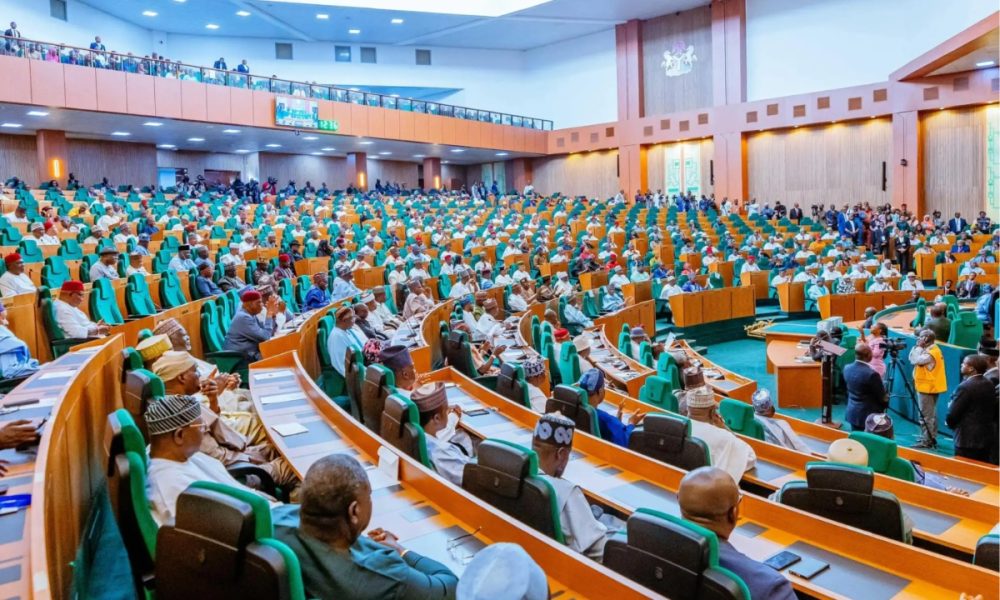
The House of Representatives Committee on University Education has commenced an investigation into alleged financial irregularities involving nine federal universities and other tertiary institutions, demanding explanations from their managements over the utilisation of public funds.....KINDLY READ THE FULL STORY HERE▶
The committee also ordered the Vice-Chancellor of the University of Lagos (UNILAG), Professor Folasade Ogunsola, to submit the institution’s budget records for 2024, 2025 and 2026 and appear before lawmakers next week over an alleged ₦7.1 billion discrepancy in its financial records.
The committee chairman, Abubakar Fulata, disclosed this on Saturday in a statement issued after an oversight visit to universities and inter-university centres across the South-West.
According to him, the exercise revealed inconsistencies in financial reports, inadequate transparency and possible violations of budgetary regulations in some of the institutions.
Fulata questioned how certain universities arrived at their reported revenue and expenditure figures, particularly where the amounts declared did not tally.
He said, “In some cases, the documents submitted contradict each other. You claimed to have generated N9bn and spent N10bn—where did you get the N1bn from?
“In another instance, you will see N12bn generated as income and only N8bn spent, without any information regarding the whereabouts of the balance of N4bn.”
The lawmaker urged vice-chancellors and their management teams to uphold transparency and accountability, stressing that public universities must properly account for both government allocations and internally generated revenue.
He noted that effective financial management was crucial to improving the quality of university education and ensuring that public funds were spent on approved projects and programmes.
The committee chairman also insisted that preparations for the 2027 general elections would not distract lawmakers from carrying out their constitutional oversight responsibilities.
He said the committee would continue monitoring public institutions to ensure that no sector was neglected because of election-related activities.
The lawmakers also urged university authorities to comply with the federal character principle in staff recruitment and student admissions to promote fairness and equitable representation.
As part of its directives, the committee instructed the University of Lagos, Obafemi Awolowo University, Ile-Ife, Federal University Oye-Ekiti, Federal University of Technology, Akure, and Federal University of Health Sciences, Ila-Orangun, to update their financial records and submit comprehensive reports on the implementation of their 2024, 2025 and 2026 budgets.
Ogunsola was reportedly unavailable during the committee’s visit to UNILAG. Officials who represented her were also unable to provide satisfactory explanations for the alleged ₦7.1 billion excess recorded in the institution’s 2024 and 2025 financial records or supply additional details requested by the lawmakers.
Other institutions visited by the committee included the University of Ibadan, Adeyemi Federal University of Education, Ondo, Federal University of Agriculture and Development Studies, Iragbiji, Federal University of Technology and Environmental Studies, Iyin-Ekiti, and the Nigeria French Language Village, Badagry.
The committee explained that the exercise was part of the National Assembly’s constitutional responsibility to scrutinise public expenditure, assess budget implementation and ensure that government institutions properly utilise funds allocated to them.
It added that the investigation was aimed at strengthening financial accountability and addressing administrative shortcomings that could undermine the delivery of quality university education.
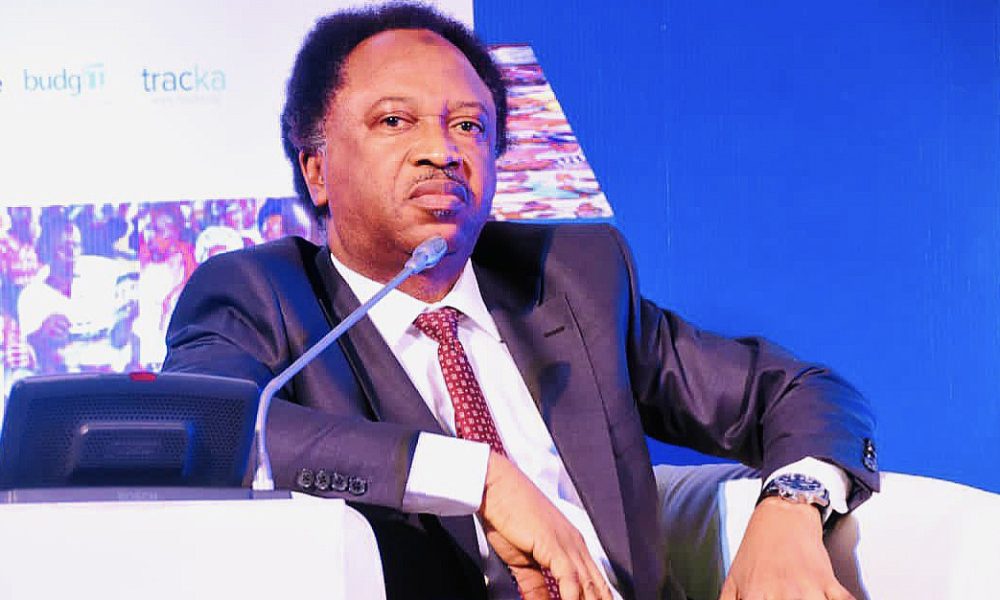
Former Kaduna Central Senator, Shehu Sani, has expressed support for Nigeria’s ambassador to South Africa, Femi Fani-Kayode, describing him as the right person to manage the country’s diplomatic relations with South Africa amid the ongoing controversy over his treatment by the South African authorities.....KINDLY READ THE FULL STORY HERE▶
Sani argued that South Africa needed a representative who could respond appropriately to different situations, depending on the approach adopted by the other party.
The former lawmaker made the remarks in a post shared on his X handle on Sunday.
“Fani Kayode is the best choice for South Africa at this material time. They need someone who can switch to any mode when the occasion demands for it. If you speak diplomacy you get diplomacy, if you speak ‘sakiya’ you get ‘Sakiya’,” he wrote.
His comments come amid rising diplomatic tensions between Nigeria and South Africa following allegations by the Nigerian High Commission and the South African Presidency over the reported exclusion of Nigeria’s ambassador from a livestream of a diplomatic ceremony.
Fani-Kayode had accused the South African Presidency of deliberately leaving Nigeria’s delegation out of the livestream of the presentation of his letter of credence to President Cyril Ramaphosa on Friday.
The ceremony, which took place in Pretoria, involved 15 ambassadors presenting their letters of credence to the South African leader.
The allegation sparked an exchange of claims between the Nigerian High Commission and the South African Presidency, triggering reactions from Nigerians and South Africans across social media platforms on Saturday.
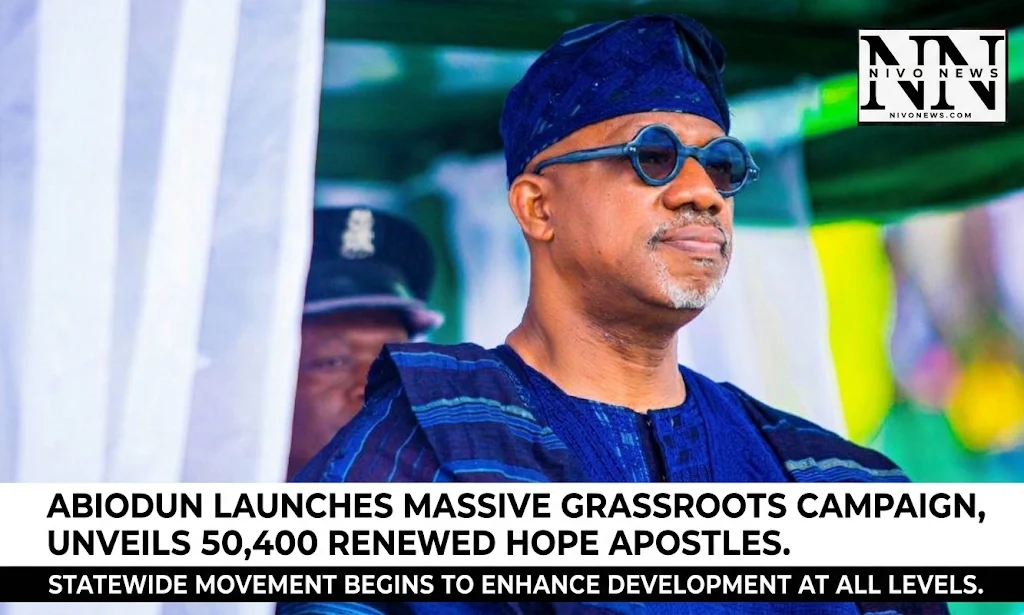
Ogun State Governor, Prince Dapo Abiodun, has inaugurated 50,400 grassroots political mobilisers, known as Renewed Hope Apostles, across the state as part of the All Progressives Congress (APC)’s strategy to secure victory in the 2027 general elections.....KINDLY READ THE FULL STORY HERE▶
The initiative will see the canvassers conduct coordinated door-to-door campaigns across Ogun State’s 236 wards, with the aim of strengthening grassroots engagement, expanding the party’s support base and informing voters about the achievements of APC-led governments at the federal, state and local government levels.
Abiodun announced the initiative during a series of strategic meetings with party leaders and stakeholders across the state’s 20 local government areas. The meetings were attended by local government and ward executives, council chairmen, councillors, governorship and other party candidates, party elders, governors’ liaison officers and political appointees.
The governor explained that the Renewed Hope Apostles would serve as the party’s grassroots communication and mobilisation network, taking information about government policies, programmes and achievements directly to residents.
He said the initiative was also aimed at tackling misinformation and ensuring that voters understood how government policies and projects affected their daily lives.
“We have called them the Renewed Hope Apostles. They will now begin to propagate so that the people can be better informed because when there is no information, there is misinformation, and that is what we are addressing.
“In the first instance, in Ogun East, we have 15,000 of them, and across the state, we have 50,400. We expect them to multiply and spread the gospel of the party’s performance,” he said.
Abiodun disclosed that the canvassers were selected from different local government areas and organised around polling units to ensure that the campaign reached voters at the community level.
According to him, the recruitment and verification process lasted approximately three months, during which the necessary details of the participants were compiled and verified to establish an effective and accountable mobilisation structure.
He added that the canvassers would be equipped with information about the achievements of President Bola Tinubu’s administration and the Ogun State Government to enable them to explain the impact of APC policies to residents.
Abiodun highlights Tinubu’s projects in Ogun
Speaking on the impact of the Tinubu administration on Ogun State, the governor listed the reconstruction of the Sagamu-Ijebu-Ode-Ore Road, the Lagos-Calabar Coastal Highway, the facilitation of the Gateway Deep Sea Port, the revival of the Ogun LNG project and the establishment of a major Customs facility in the state.
He said the projects, alongside other federal interventions, were improving Ogun’s economic prospects, attracting investments, creating employment opportunities and strengthening its position as one of Nigeria’s leading industrial destinations.
Abiodun described the economic and policy decisions introduced by Tinubu as necessary measures that had helped stabilise the national economy and placed it on a path towards sustainable growth.
Ogun government lists achievements across sectors
The governor also highlighted the achievements of his administration in infrastructure, housing, education, healthcare, agriculture, energy and economic empowerment.
He disclosed that his government had constructed more than 1,700 kilometres of roads across the state’s three senatorial districts, rehabilitated and constructed over 1,600 schools, and provided more than 7,000 housing units currently occupied by residents.
In the health sector, Abiodun said 160 Primary Healthcare Centres had been equipped and upgraded as part of his administration’s plan to establish at least one functional primary healthcare facility in each of the state’s 236 wards.
He added that contracts had recently been awarded for the construction of new hospitals in Odogbolu, Isara and Itori, while the Olabisi Onabanjo University Teaching Hospital had been repositioned to improve healthcare delivery.
The governor also announced the completion of the 250-bed Gateway Medical Centre of Excellence in Abeokuta, which he said had been abandoned by previous administrations.
On electricity, Abiodun said his government had established two independent power plants in Abeokuta to support industrial and social activities.
He further disclosed that more than 20,000 farmers had benefited from the distribution of agricultural inputs, including pesticides, fertilisers, seedlings and tractors.
According to him, over 60,000 women had received support through the Oko Owo Dapo initiative, while cooperative societies and artisans had benefited from more than ₦1 billion in financial assistance to expand their businesses.
In education, the governor said his administration had recruited and deployed more than 7,000 teaching personnel to address manpower shortages in public primary and secondary schools.
Abiodun also highlighted the state’s aviation project, noting that beyond developing a world-class airport, his administration had established an airline whose aircraft had commenced international operations from Lagos to Bangui.
Abiodun urges APC members to unite ahead of 2027
The governor charged the newly inaugurated Renewed Hope Apostles to carry out their duties with commitment, discipline and a clear understanding of the party’s achievements.
He said their responsibility was to engage voters, address their concerns and mobilise support for the APC ahead of the 2027 elections.
Abiodun also appealed to party leaders and members to set aside personal differences and work together to secure the party’s electoral success.
He maintained that unity and effective grassroots coordination were essential to achieving the party’s objectives.
“A divided party cannot win an election. We must work together as a team, strengthen our relationships and ensure that every member understands the importance of this assignment,” he said.
The governor explained that the meetings with party stakeholders were also designed to strengthen internal cohesion, review mobilisation strategies and establish a common direction ahead of the elections.
Prominent APC leaders, including the state chairman, Chief Yemi Sanusi; Director-General of the Presidential and Governorship Campaign Council, Senator Lekan Mustapha; Deputy Director-General, Dr Apaye; Ogun East Senatorial Chairman, Chief Adeleke Adedotun; and APC Chairman in Odeda Local Government, Hon. Musulumi Saka, pledged their support for the party’s success.
They assured the governor of their readiness to mobilise members and supporters across their constituencies in support of President Tinubu, Governor Abiodun and other APC candidates.
The inauguration and stakeholder engagements have so far covered Remo North, Sagamu, Ikenne, Ijebu North East, Ijebu-Ode, Odogbolu, Ijebu East, Ijebu North, Ifo, Ewekoro, Abeokuta North, Abeokuta South, Odeda and Obafemi-Owode local government areas.
The engagements form part of a wider political outreach programme by Abiodun, who has also held consultations with religious organisations, traders, artisans, traditional worshippers, labour leaders and cooperative societies to build broader support for the APC ahead of the 2027 general elections.
-

 latest1 year ago
“Social Media Erupts As Jim Iyke Declares Rita Dominic Nollywood’s Most Beautiful”
-
 latest3 years ago
Edo Political Showdown: Oshiomhole Appears At Presidential Villa As Tinubu Hands APC Gubernatorial Flag To Okpebholo (Photos & Video)
-
 entertainment3 years ago
Love Knows No Age American Woman Defends Marriage To Young Nigerian Man “I’m Not 70”
-
 latest3 years ago
Olumide Akpata Strikes Again: Drops Killer Track, Sends Edo State Into Frenzy!(Video)
-
 Politics3 years ago
Nigerians React As Pastor Adeboye Foresees Passing Away On A Sunday After Enjoying A Satisfying Meal Of Pounded Yam
-
 latest3 years ago
FG Identifies 31 States At Risk Of Heavy Flooding In 2024: See Full List
-
 Politics3 years ago
BREAKING: Inspector-General Of Police Summons Top Police Commanders For Crucial-Security Challenges
-
 latest3 years ago
5 NYSC Corpers Perish In Fatal Road Accident Returning From Camp