
latest
From Murderers To Politicians: Tinubu’s Pardon List Stirs National Shock And Anger.

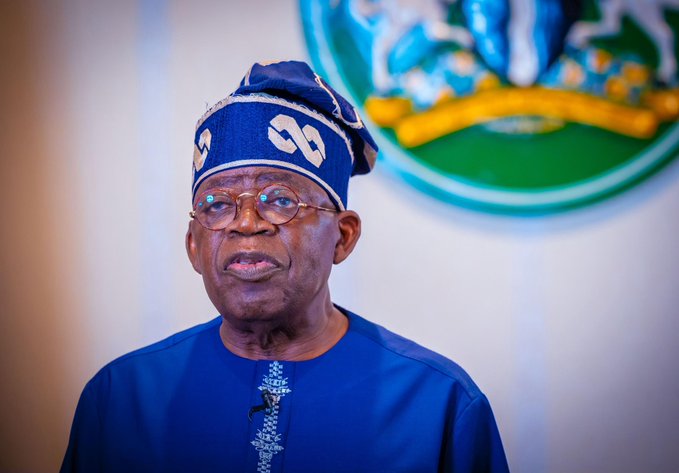
According to Nivo News, widespread controversy has trailed the recent presidential pardon granted by President Bola Tinubu to 175 individuals, including some convicted of serious crimes. The list, released in the second week of October 2025, has ignited national debate over the balance between mercy, justice, and accountability.....KINDLY READ THE FULL STORY HERE▶
While the exercise falls under the President’s constitutional powers as enshrined in Section 175 of the 1999 Constitution, many Nigerians have expressed outrage over the identities of some beneficiaries. The list reportedly includes high-profile figures, illegal miners, white-collar offenders, and convicts of capital crimes.
Among those granted clemency are the late Major General Mamman Jiya Vatsa, executed for his alleged role in a 1986 coup plot, and environmental activist Ken Saro-Wiwa alongside the Ogoni Eight, who were controversially executed in 1995. Others include Maryam Sanda, who was sentenced to death in 2020 for killing her husband but received clemency after showing remorse and good conduct, as well as former lawmaker Farouk Lawan and fraud convict Nwogu Peters, who were pardoned for their reform efforts.
Seven death-row inmates, including Emmanuel Baba and Moses Ayodele Olurunfemi, had their sentences commuted to life imprisonment due to good behaviour, while convicts like Professor Magaji Garba and Major S.A. Akubo benefited from reduced sentences because of age, ill health, or educational accomplishments.
However, what should have been a moment of compassion quickly became a lightning rod for criticism. Nigerians have accused the government of selective justice, arguing that the pardon favours influential figures over ordinary citizens. Nollywood actress Kemi Afolabi cautioned Nigerians against tolerating abuse, while former Vice President Atiku Abubakar accused the president of “undermining the sanctity of justice” and promoting lawlessness. Labour Party’s Gbadebo Rhodes-Vivour described the move as a “priority mismatch,” claiming it benefits serious offenders more than first-time minor convicts.
Legal experts have also weighed in. Human rights lawyer Inibehe Effiong labelled the pardon an “abuse of constitutional privilege,” while Femi Falana urged the government to withdraw and review the list, stressing that it seems to protect politically exposed persons and convicted drug traffickers under the guise of mercy.
The debate recalls Nigeria’s history of controversial pardons — from Yakubu Gowon’s 1975 amnesty for Obafemi Awolowo and political detainees, to Goodluck Jonathan’s 2013 pardon of his ally Diepreye Alamieyeseigha, and Muhammadu Buhari’s 2022 clemency for former governors Joshua Dariye and Jolly Nyame. Critics argue the practice has gradually shifted from promoting national healing to shielding the powerful.
Adding his voice, former IPAC chairman Peter Ameh condemned the recent pardon, calling it a “total disregard for Nigeria’s constitutional democracy.” He argued that granting mercy to hardened criminals sends the wrong message to young Nigerians and disrespects law-abiding citizens. Ameh warned that such actions could embolden criminality and erode public faith in justice.
He further urged citizens to actively hold leaders accountable beyond election periods, stressing that civic participation is essential for transparency and governance reform. Ameh emphasized that disengagement from government affairs only strengthens impunity, urging Nigerians to use lawful means such as peaceful protests to demand accountability.
As the outrage continues, the controversy surrounding President Tinubu’s pardon raises a critical question — can mercy coexist with accountability without compromising justice?
latest
Boots On The Ground! Nigeria Unleashes 86 Combat-Ready Troops To Guinea-Bissau In High-Stakes ECOWAS Mission!
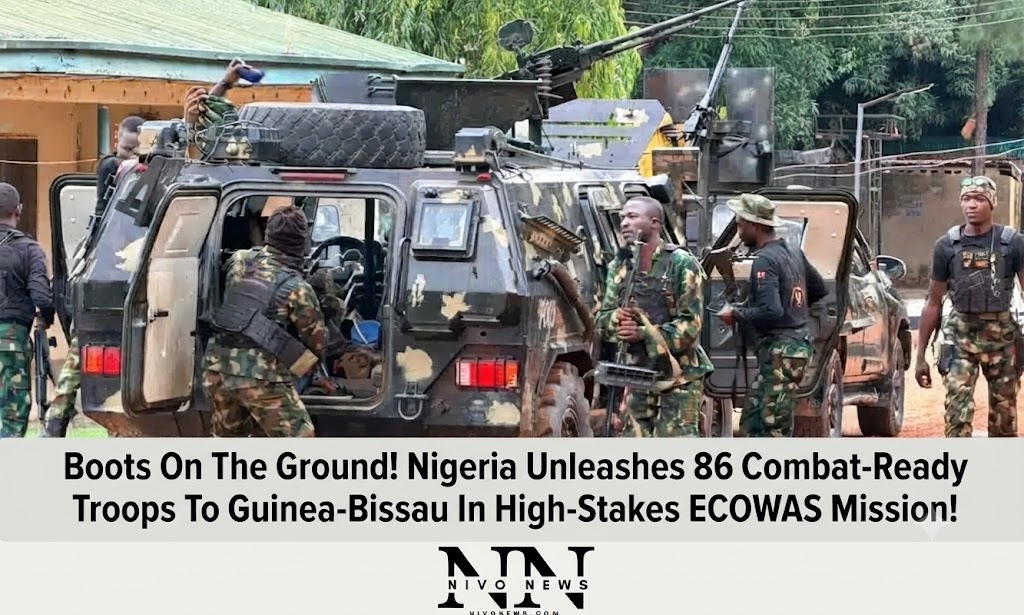
The Nigerian Army has deployed 86 personnel to the ECOWAS Stabilisation Support Mission in Guinea-Bissau as part of Nigeria’s continued contribution to regional peace and security operations.....KINDLY READ THE FULL STORY HERE▶
reports that the troops, designated Nigerian Company 5 under the mission, departed the Nnamdi Azikiwe International Airport, Abuja, aboard a Nigerian Air Force C-130 Hercules aircraft.
The Army, in a statement posted on its official social media platforms on Saturday, said the personnel arrived safely in Guinea-Bissau and had commenced their assignment under the mandate of the Economic Community of West African States.
Before their departure from the Nigerian Army Peacekeeping Forward Operating Base in Abuja, the Chief of Operations, Maj. Gen. Mayirenso Saraso, urged the troops to maintain professionalism, discipline and operational excellence throughout the mission.
Saraso, represented by the Director of Peace Support Operations, Brig. Gen. M.M. Idris, charged them to serve as worthy representatives of the Nigerian Army, the Armed Forces of Nigeria and the country.
He also directed the personnel to respect the laws and customs of Guinea-Bissau while carrying out their duties.
The troops were warned against sexual exploitation and abuse, substance abuse, indiscipline and irresponsible use of social media.
The Army said the deployment reflected Nigeria’s continued commitment to regional stability and its leadership role in ECOWAS peace support operations.
It added that Nigeria remained one of Africa’s major contributors to regional and international peacekeeping missions, drawing on decades of experience under ECOWAS, the African Union and the United Nations.
According to the statement, the latest deployment also highlighted Nigeria’s strategic role in conflict prevention, peacebuilding and post-conflict stabilisation across the continent.
The ECOWAS Stabilisation Support Mission in Guinea-Bissau was established to support security sector reforms and preserve political stability following years of political crises and military interventions.
The mission succeeded the ECOWAS Mission in Guinea-Bissau, which was deployed after the country’s 2012 coup.
It forms part of efforts by the regional bloc to protect constitutional order and prevent instability in Guinea-Bissau from developing into a wider security threat.
Nigeria has previously contributed troops, logistics and military leadership to peace missions in Liberia, Sierra Leone, The Gambia and Guinea-Bissau.
latest
2027 SHOCKWAVE: Sule Lamido Drops Bombshell On Nigeria’s Next President—Must Be Young And Energetic!.

During a visit to Sintilmawa village in Ringim Local Government Area, Peoples Democratic Party (PDP) governorship candidate in Jigawa State, Mustapha Sule Lamido, called on young voters to leverage their population majority to unseat the older political generation in the 2027 general elections.....KINDLY READ THE FULL STORY HERE▶
Speaking during a visit to Sintilmawa village in the Ringim Local Government Area—where he was represented by Comrade Aminu Abdullahi Ringim—Lamido emphasized that both Jigawa State and Nigeria require dynamic, youthful leadership attuned to contemporary needs. He argued that traditional leadership models have fallen short of fulfilling the expectations of the younger generation.
Highlighting that young citizens make up a substantial majority of the electorate, Lamido encouraged active participation in the democratic process to shape the nation’s future.
Echoing these sentiments, Comrade Aminu stressed that the trajectory of the state and the country rests heavily on youth involvement, urging young voters to move past passive participation and actively steer the choice of future representatives.
The Jigawa State Police Command has called on locals to remain calm upon hearing gunfire, as a routine shooting range exercise is underway for personnel in the Birnin Kudu Local Government Area.....KINDLY READ THE FULL STORY HERE▶
In an official statement released to DAILY POST, the Police Public Relations Officer, SP Lawan Shiisu Adam, explained that the training is designed to boost the combat readiness, operational effectiveness, and overall professionalism of officers. The exercise, scheduled for Sunday, August 2, 2026, is being conducted at the CP AT Abdullahi Shooting Range located in Tsohon Gari as part of ongoing firearms proficiency programs.
Authorities have reassured residents of Tsohon Gari and neighboring communities that the training is strictly supervised and will take place in a secure, controlled environment. However, the public has been advised to steer clear of the immediate vicinity of the range to maintain safety and allow the exercise to proceed smoothly.
Concluding the statement, the command thanked the residents of Jigawa State for their ongoing cooperation and support, reiterating its dedication to public safety and professional excellence.
-

 latest11 months ago
“Social Media Erupts As Jim Iyke Declares Rita Dominic Nollywood’s Most Beautiful”
-
 latest2 years ago
Edo Political Showdown: Oshiomhole Appears At Presidential Villa As Tinubu Hands APC Gubernatorial Flag To Okpebholo (Photos & Video)
-
 entertainment2 years ago
Love Knows No Age American Woman Defends Marriage To Young Nigerian Man “I’m Not 70”
-
 latest2 years ago
Olumide Akpata Strikes Again: Drops Killer Track, Sends Edo State Into Frenzy!(Video)
-
 Politics3 years ago
Nigerians React As Pastor Adeboye Foresees Passing Away On A Sunday After Enjoying A Satisfying Meal Of Pounded Yam
-
 latest2 years ago
FG Identifies 31 States At Risk Of Heavy Flooding In 2024: See Full List
-
 Politics3 years ago
BREAKING: Inspector-General Of Police Summons Top Police Commanders For Crucial-Security Challenges
-
 latest2 years ago
5 NYSC Corpers Perish In Fatal Road Accident Returning From Camp