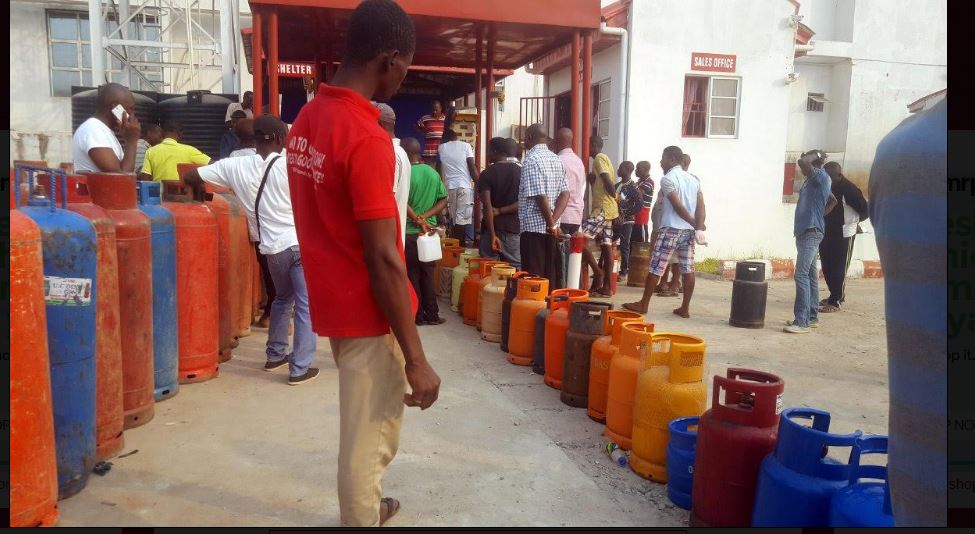
Nigeria — Cooking gas shortage has swept through major Nigerian cities this week, pushing the cost of a 12.5-kilogram cylinder of Liquefied Petroleum Gas (LPG) to ₦25,000, up from approximately ₦17,500 just days earlier. Households already strained by inflation and foreign exchange instability say the surge is making a basic necessity almost unaffordable.....KINDLY READ THE FULL STORY HERE▶
What’s Behind the Spike
Leaders of the Nigerian Association of Liquefied Petroleum Gas Marketers (NALPGAM) point to disruptions in supply triggered by the industrial action of the Petroleum and Natural Gas Senior Staff Association (PENGASSAN). According to them, many dealers were unable to restock their LPG cylinders during the strike period.
Dangote Petroleum Refinery, one of Nigeria’s major domestic suppliers, has been highlighted as particularly affected. Delays and limitations in its distribution network have led to shortages in local markets.
How It’s Affecting People
Consumers in cities like Lagos, Port Harcourt, Abuja, and surrounding regions report:
- Long queues forming daily at refilling stations; some spend hours only to find there is no gas.
- Some vendors now charge ₦1,500 to ₦2,000 per kilogram of gas, depending on the location. That means refilling even small cylinders has become expensive.
- Many households are rationing usage, combining cooking gas with cheaper—but less clean—alternatives such as charcoal, firewood, or kerosene.
Expert Views & Government Response
NALPGAM’s Executive Secretary, Mr. Bassey Essien, said that this extreme price hike is mostly “a function of demand and supply,” with the PENGASSAN strike being the immediate trigger. But he also pointed to deeper challenges, including reliance on imported LPG and the weak Naira, which increase landing costs.
Meanwhile, some energy economists believe Nigeria’s dependence on foreign currency for imports, coupled with limited processing capacity domestically, makes the country vulnerable to sudden shocks in supply.
There have been calls for policy action: consumers, business groups, and civil society are urging the government to stabilize foreign exchange access for importers, ensure local production meets more of domestic demand, and improve regulation of LPG pricing and distribution.
What Lies Ahead
If the supply disruptions continue, experts warn that prices may go even higher, or gas may become even harder to find in many neighborhoods. Without swift government intervention or relief to production and supply chains, millions of households may have to rely permanently on dirtier, more harmful fuel alternatives—contributing to health issues and environmental degradation.
Bottom line: The cooking gas crisis in Nigeria is intensifying, with price and supply pressures hitting households hard. The recent spike to ₦25,000 for a 12.5kg cylinder is unsustainable for many. Unless steps are taken quickly to restore supply, regulate price, and reduce reliance on imports, the situation threatens both health and economic well-being.