
latest
EU Chief’s Flight Disrupted By Suspected Russian GPS Attack Over Bulgaria

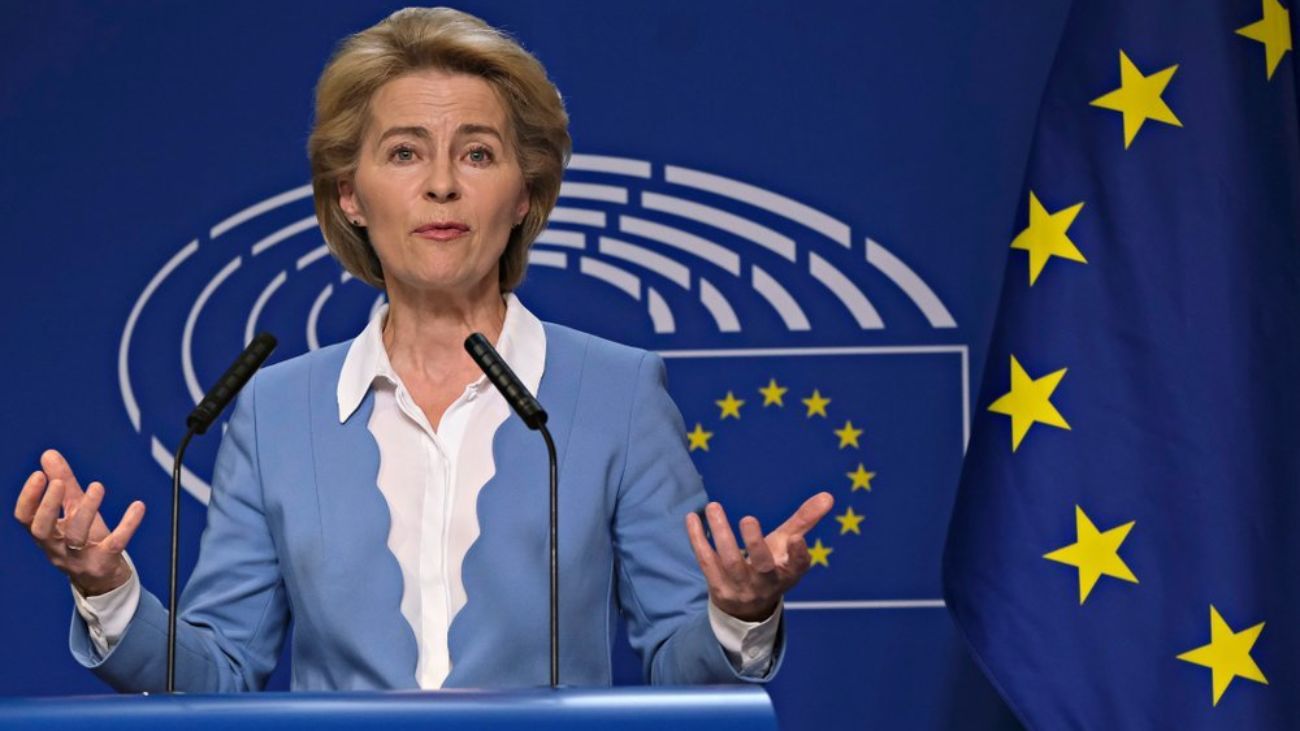
A chartered plane carrying European Commission President Ursula von der Leyen encountered GPS signal interference as it prepared to land in Bulgaria, with authorities suspecting Russian involvement, according to Nivo News.....KINDLY READ THE FULL STORY HERE▶
The European Commission confirmed Monday that the aircraft’s navigation systems were disrupted during its approach to Plovdiv International Airport on Sunday, though the flight landed safely without changing course. Commission spokeswoman Arianna Podesta told reporters that GPS jamming was detected, adding that Bulgarian authorities believe Moscow was responsible for the interference.
Officials noted it remains unclear whether von der Leyen’s plane was deliberately targeted, as satellite signal disruptions have become increasingly common in the region. A separate spokesperson described these actions as part of a pattern of “jamming and spoofing” linked to Russia, saying several companies suspected of involvement have already faced EU sanctions.
The Bulgarian government also confirmed the incident, explaining that the aircraft had to rely on terrestrial navigation systems after its GPS signal was neutralized. Reports suggested the flight crew resorted to using paper maps to guide the landing.
Von der Leyen, 66, was visiting Bulgaria as part of a seven-country tour of European Union states along the bloc’s eastern frontier, where concerns over Russian hybrid threats remain high.
Podesta condemned the interference as “blatant intimidation,” describing it as a reminder of Moscow’s hostile tactics. She said such incidents only strengthen the EU’s determination to bolster defense capabilities and expand support for Ukraine.
The episode occurred amid ongoing discussions among Western leaders on how to secure Ukraine’s future as the war with Russia drags into its fourth year. Diplomatic efforts to broker peace have stalled, with Moscow resisting proposals for direct talks between Russian President Vladimir Putin and Ukrainian President Volodymyr Zelensky.
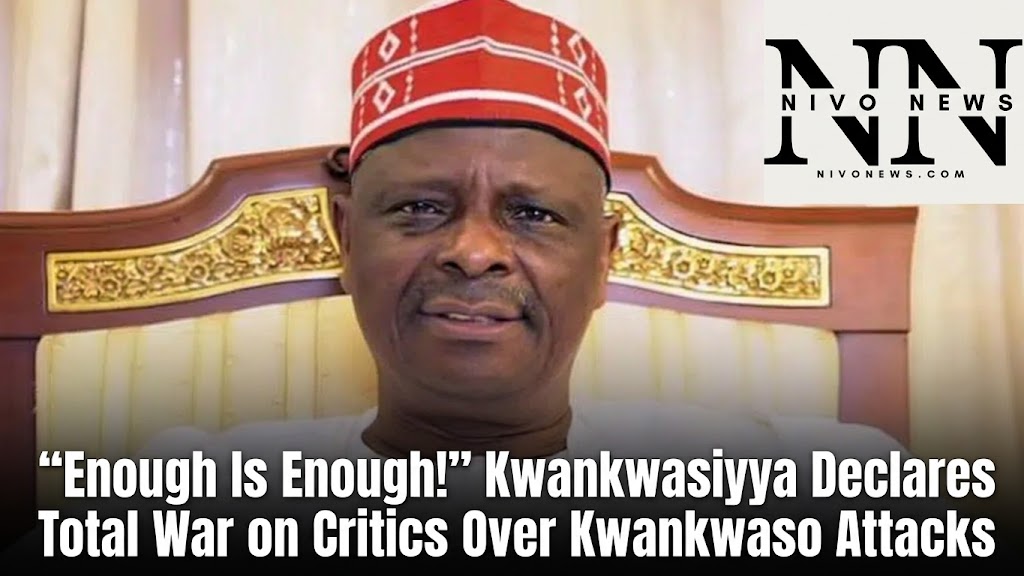
The Kwankwasiyya Movement has issued a firm warning against the dissemination of false information regarding its leader, Senator Rabiu Kwankwaso. In a statement released Wednesday by spokesperson Habeeb Sale Mohammed, the group clarified that while it welcomes constructive political debate and scrutiny, it draws a hard line at intentional deception. The movement emphasized that Senator Kwankwaso has a long history of handling opposition with maturity; however, they will no longer remain silent against what they term “malicious allegations” and character assassination. The group maintains that spreading falsehoods to incite division or damage reputations exceeds the boundaries of legitimate political discourse.....KINDLY READ THE FULL STORY HERE▶
“We are open to criticism, but not lies,” the Kwankwasiyya Movement declared on Wednesday night. Through spokesperson Habeeb Sale Mohammed, the group made it clear that they will no longer tolerate the “deliberate manufacture” of falsehoods targeting Senator Rabiu Kwankwaso. While the group acknowledges that political leaders are subject to scrutiny, they insist there is a major difference between fair criticism and harmful smear campaigns. The statement warns that the movement will actively push back against those who use the guise of political commentary to spread malicious rumors and incite hatred.
Key Takeaways
-
The Stance: The Kwankwasiyya Movement welcomes healthy democratic debate but rejects deliberate misinformation.
-
The Distinction: Spokesperson Habeeb Sale Mohammed emphasized that there is a clear divide between constructive criticism and malicious character assassination.
-
The Warning: The group vowed they will no longer remain silent or “fold their arms” while false allegations are spread against Senator Kwankwaso.
-
The Context: Despite this warning, the movement noted that Senator Kwankwaso remains committed to the tolerance and maturity he has displayed throughout his decades of public service.
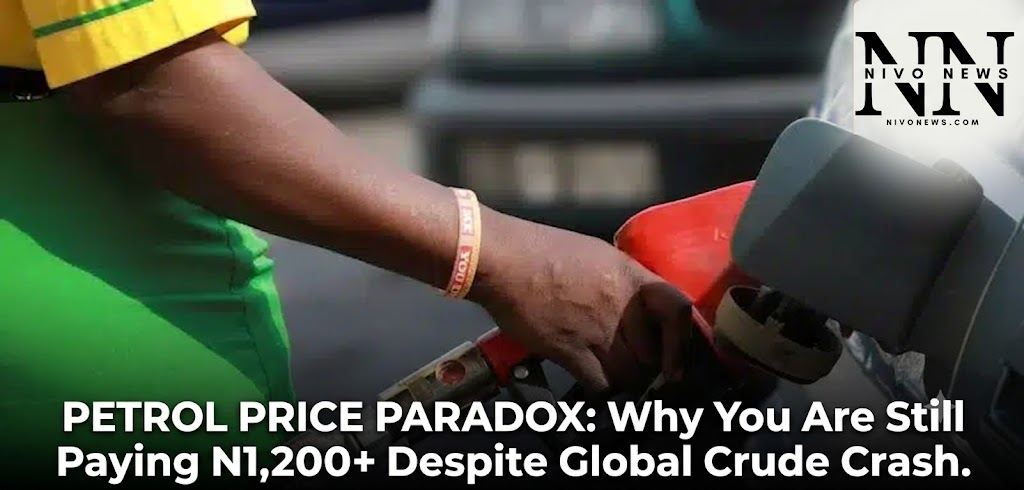
Despite a significant drop in global crude oil prices—with Brent falling to $73.14 and WTI to $69.85—petrol prices in Nigeria remain stubbornly high. While global markets have stabilized following the US-Iran conflict, domestic pump prices have barely budged, hovering between ₦1,200 and ₦1,300 per litre.....KINDLY READ THE FULL STORY HERE▶
Although industry insiders argue that ex-depot prices should be closer to ₦700, experts warn that a direct price drop is unlikely. Dr. Ayodele Oni, an oil and gas analyst, explains that in a deregulated market, the naira’s exchange rate is just as critical as the price of crude. He emphasizes that while falling crude prices help, the cost of petrol will only truly stabilize if the naira remains strong, as refined product imports are dollar-denominated. Consequently, relief for the average Nigerian may remain elusive unless both crude prices and the currency improve simultaneously.
Option 2: Accessible and Direct (Best for blogs or general reading)
Global oil prices are nearing pre-conflict levels, but Nigerians aren’t seeing the expected relief at the pump. Even though international oil benchmarks have dropped significantly since the US-Iran tensions cooled, local fuel prices remain stuck at ₦1,200 to ₦1,300 per litre.
Many marketers believe pump prices should be much lower, suggesting a price point closer to ₦700 per litre given current market conditions. However, analysts caution that it isn’t that simple. Because Nigeria’s fuel market is deregulated and reliant on imported refined products, the value of the naira is a major factor. Essentially, even if the price of crude oil falls, the cost of petrol will stay high as long as the dollar remains expensive against the naira. For now, experts believe that significant price relief depends as much on currency stability as it does on global oil trends.
Key Takeaways (Bullet Points)
-
The Disconnect: Global oil prices have returned to pre-conflict levels, yet domestic petrol prices remain high (₦1,200–₦1,300 per litre).
-
The Expectation: Marketers and the public believe current crude prices warrant a drop to around ₦700 per litre at the depot level.
-
The Complication: Experts note that the deregulation of the sector means the naira-to-dollar exchange rate is now a more powerful driver of pump prices than global crude costs alone.
-
The Outlook: Relief for consumers is unlikely to happen based on oil prices alone; it requires a combination of lower crude costs and a more stable naira.
Sources within the Economic and Financial Crimes Commission (EFCC) have disclosed that the agency had already completed significant investigations into Lagos-based Bureau De Change (BDC) operator Mukhtar Adamu Muhammad and three associated companies for alleged terrorism financing before the United States imposed sanctions on them. Officials indicated that criminal charges were being prepared when the U.S. indicted the suspects for allegedly acting as financial conduits for the Islamic State West Africa Province (ISWAP). The U.S. sanctions, part of a broader action against nine entities and individuals, freeze assets within U.S. jurisdiction and prohibit American citizens from transacting with the designated parties. Following the U.S. action, the Nigeria Sanctions Committee confirmed that these designations align with Nigeria’s own sanctions list updated on June 18, 2026, which followed extensive inter-agency intelligence and financial investigations.....KINDLY READ THE FULL STORY HERE▶
The EFCC was reportedly readying charges against Lagos BDC operator Mukhtar Adamu Muhammad and three linked companies for terrorism financing prior to their recent blacklisting by the United States. The U.S. Department of State designated these parties for allegedly facilitating funds for ISWAP operations. Confirming the move, the Nigeria Sanctions Committee noted that the U.S. action complements Nigeria’s own internal designations made on June 18, 2026, which resulted from collaborative investigations by multiple security and financial agencies. The Federal Government has since reiterated its mandate for all financial institutions to enforce asset-freezing requirements and report suspicious transactions, reaffirming its commitment to severing the financial lifelines of terrorist networks.
Option 3: Formal and Policy-Focused In a coordinated effort to combat terrorism financing, Nigerian authorities and international partners have moved against several individuals and entities accused of supporting ISWAP activities. Before the U.S. Department of State issued its recent sanctions against Lagos BDC operator Mukhtar Adamu Muhammad and associated firms, the EFCC had already finalized major aspects of its domestic investigation into the suspects. These designations—which include a total of six individuals and three companies on the Nigeria Sanctions List—were based on rigorous intelligence gathering and financial assessments. The Federal Government continues to coordinate with domestic stakeholders and international partners to strengthen financial integrity and deny terrorist organizations access to the global financial system.
-

 latest10 months ago
“Social Media Erupts As Jim Iyke Declares Rita Dominic Nollywood’s Most Beautiful”
-
 latest2 years ago
Edo Political Showdown: Oshiomhole Appears At Presidential Villa As Tinubu Hands APC Gubernatorial Flag To Okpebholo (Photos & Video)
-
 entertainment2 years ago
Love Knows No Age American Woman Defends Marriage To Young Nigerian Man “I’m Not 70”
-
 latest2 years ago
Olumide Akpata Strikes Again: Drops Killer Track, Sends Edo State Into Frenzy!(Video)
-
 Politics3 years ago
Nigerians React As Pastor Adeboye Foresees Passing Away On A Sunday After Enjoying A Satisfying Meal Of Pounded Yam
-
 latest2 years ago
FG Identifies 31 States At Risk Of Heavy Flooding In 2024: See Full List
-
 Politics3 years ago
BREAKING: Inspector-General Of Police Summons Top Police Commanders For Crucial-Security Challenges
-
 latest2 years ago
5 NYSC Corpers Perish In Fatal Road Accident Returning From Camp