
latest
“Nollywood’s Harsh Reality: Talent Alone Can’t Buy Success Anymore”

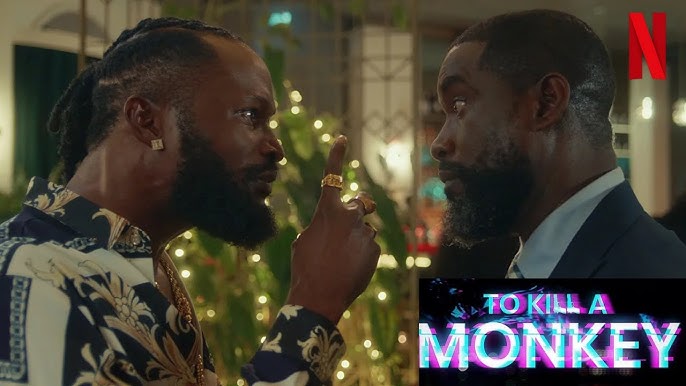
According to Nivo News, the recently released Nollywood film To Kill A Monkey, produced by Kemi Adetiba, has reignited debate over a growing trend in the Nigerian film industry: casting actors based on social media popularity rather than acting talent.....KINDLY READ THE FULL STORY HERE▶
For years, producers have leaned on popular faces to draw audiences, boost box office performance, and enhance a film’s credibility. High-profile actors not only help connect viewers emotionally to characters but also raise the industry’s profile on the global stage. However, Adetiba’s latest thriller—centered on cybercrime, betrayal, and ambition—featured relatively unknown talents as its lead actors, sparking conversation about Nollywood’s priorities.
Williams Benson, who has worked in film for over a decade without much public spotlight, earned widespread praise for his portrayal of Efemini Edewor, a struggling Nigerian man ground down by life and persecuted by his mother-in-law. Similarly, Bucci Franklin, long recognized for his acting prowess since his Tinsel and Jemeji days, delivered a commanding performance as Obozz, the ruthless leader of the Monkey Gang—a street kid who clawed his way through crime to power and eventual freedom. Despite such strong performances, both actors have relatively small social media followings, which critics say would normally hinder them from landing lead roles.
Industry observers note that this pressure for visibility has pushed many actors to reinvent themselves as online influencers, often exposing their private lives or stirring controversy to stay relevant in an algorithm-driven industry. Actress Lilian Afegbai, who also featured in To Kill A Monkey, recently revealed how personal relationships in the industry led to her being repeatedly sidelined with minor roles, despite her talent.
Veteran broadcaster Emma Ugolee condemned Nollywood’s obsession with follower counts, describing it as “sickening” and unfair to trained professionals. He argued that capable actors like Benson and Franklin are overlooked while internet personalities with no acting background—such as content creators known for sexually suggestive skits—are prioritized simply for their online reach. Ugolee urged producers to stop forcing actors to “entertain with their real lives,” warning that great talent is being lost to the numbers game.
Opinions within Nollywood remain divided. Actress Cossy Orjiakor claimed ignorance of any industry politics or social media-driven casting, while rising actor Funsho Davids offered a more pragmatic view. Davids acknowledged that visibility and timing play a huge role, with directors’ tastes, physical appearance, versatility, and online numbers often outweighing raw skill. He likened Nollywood’s internal politics to Nigeria’s political landscape, citing favoritism, money influence, and blacklisting as factors.
Davids cautioned that casting based solely on social media metrics might guarantee quick financial returns for executive producers but ultimately harms storytelling and erodes filmmaking quality. Unless content creators are trained actors, he warned, this practice risks reducing Nollywood to mediocrity.

Nigerian Christian leaders and major ecumenical bodies have firmly rejected United States President Donald Trump’s claim that American military operations have successfully put an end to the killing of Christians within Nigeria. The groups, including the Christian Association of Nigeria (CAN) for the 19 Northern states and the FCT, alongside the Ecumenical Synods of Bishops, dismissed the President’s remarks as misleading and disconnected from the ongoing, violent reality in the country.....KINDLY READ THE FULL STORY HERE▶
The backlash follows President Trump’s assertion on Friday in Washington, where he claimed: “As you know, we recently struck Nigeria and largely ended the slaughter of great Christian populations.”
Key responses to the claim from Christian leaders include:
-
Victims must speak: Rev. Joseph Hayab, CAN Chairman for Northern Nigeria, argued that only Nigerian Christians and victims of insecurity—not President Trump—can determine if there has been actual improvement. He accused Trump of acting on inaccurate information.
-
Interventions inadequate: Hayab acknowledged limited US operations against terrorists, such as the December strike near Sokoto and the targeting of ISIS commanders, but pointed out that after these strikes, US forces “went on a long recess” while Nigerians continued to be killed “every day.“
-
Call for genuine help: The CAN Chairman urged the US to provide practical, sustained assistance, emphasizing, “We want help, but the help shouldn’t be propaganda or misinformation.” He highlighted that many people remain in bandit captivity across states like Borno, Katsina, Kwara, and Kogi.
-
Demanding evidence: The Ecumenical Synods of Bishops, through International Secretary Archbishop Osazee William, stated there is “no convincing evidence” to support Trump’s claims. William described the reported actions as falling far short of the “good intervention” Nigeria hopes for, suggesting it had done little more than convey a minor message without solving the security crisis.
latest
SHOCKING REVELATION! “My Mother Sold Akara And Bananas”—Inside The Fierce Defense Of The First Lady!.

Sunday Dare, the Special Assistant to President Bola Tinubu on Media and Public Communications, has come to the defense of First Lady Senator Oluremi Tinubu following backlash over her recent comments on small-scale entrepreneurship. The First Lady had previously encouraged Nigerians to engage in small businesses like selling akara, kuli-kuli, and roasted corn—ventures that require minimal capital—while noting that the administration prefers providing grants rather than loans.....KINDLY READ THE FULL STORY HERE▶
This perspective sparked significant criticism from many online, who viewed the suggestions as insulting and disconnected from the current economic hardships faced by Nigerians.
In response, during an appearance on the Mic On podcast with Seun Okinbaloye, Dare shared his own personal history to support the First Lady’s message:
-
Dare revealed that his mother raised him by selling bananas and oranges in Jos, Plateau State.
-
He personally hawked these fruits in the markets of Jos to help support his family.
-
He emphasized that his mother’s ability to successfully train him through these small-scale trade activities sixty years ago highlights the value of such work.
-
Dare argued that the First Lady’s intent was simply to encourage Nigerians to develop entrepreneurial skills and avoid remaining idle, noting that the resilience of these small businesses is vital to the national economy.
latest
WAGE WAR! NLC and Federal Government Set To Clash Again As Inflation Forces New Minimum Wage Talks!.
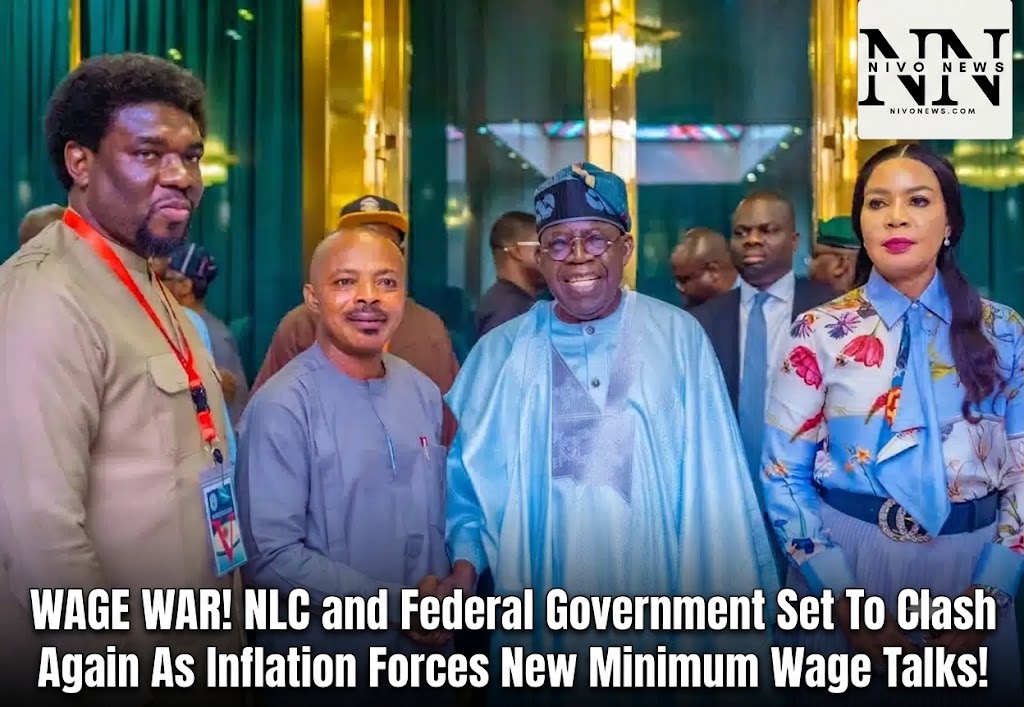
The Nigeria Labour Congress (NLC) has indicated that new negotiations regarding the national minimum wage may commence shortly to address the impact of soaring inflation and economic hardship. This potential development follows the implementation of the ₦70,000 minimum wage approximately two years ago.....KINDLY READ THE FULL STORY HERE▶
-
Status of Negotiations: While formal talks have not yet begun, NLC spokesperson Benson Upah stated that organized labor expects them to start at any moment.
-
Government Stance: Femi Gbajabiamila, Chief of Staff to the President, acknowledged the need for further discussions, noting that persistent inflation has significantly diminished the value of the existing minimum wage.
-
Wider Welfare Approach: Gbajabiamila suggested that evaluating workers’ welfare should extend beyond just salary adjustments to include social supports like affordable housing, education, transportation, and healthcare.
-
Context of Past Agreements: The 2024 wage review resulted in a ₦70,000 minimum wage after months of intense negotiations where labor initially sought ₦615,000 due to economic factors like the naira’s float and petrol subsidy removal.
-
Ongoing Concerns: Despite the previous settlement, NLC President Joe Ajaero has maintained that workers require a “living wage” that accurately reflects current economic conditions, as costs for food, electricity, rent, and transportation continue to increase.
-

 latest10 months ago
“Social Media Erupts As Jim Iyke Declares Rita Dominic Nollywood’s Most Beautiful”
-
 latest2 years ago
Edo Political Showdown: Oshiomhole Appears At Presidential Villa As Tinubu Hands APC Gubernatorial Flag To Okpebholo (Photos & Video)
-
 entertainment2 years ago
Love Knows No Age American Woman Defends Marriage To Young Nigerian Man “I’m Not 70”
-
 latest2 years ago
Olumide Akpata Strikes Again: Drops Killer Track, Sends Edo State Into Frenzy!(Video)
-
 Politics3 years ago
Nigerians React As Pastor Adeboye Foresees Passing Away On A Sunday After Enjoying A Satisfying Meal Of Pounded Yam
-
 latest2 years ago
FG Identifies 31 States At Risk Of Heavy Flooding In 2024: See Full List
-
 Politics3 years ago
BREAKING: Inspector-General Of Police Summons Top Police Commanders For Crucial-Security Challenges
-
 latest2 years ago
5 NYSC Corpers Perish In Fatal Road Accident Returning From Camp