
Latest News
Paying for Purity’: Reno Omokri Insists Bride Price Reserved for Virgins

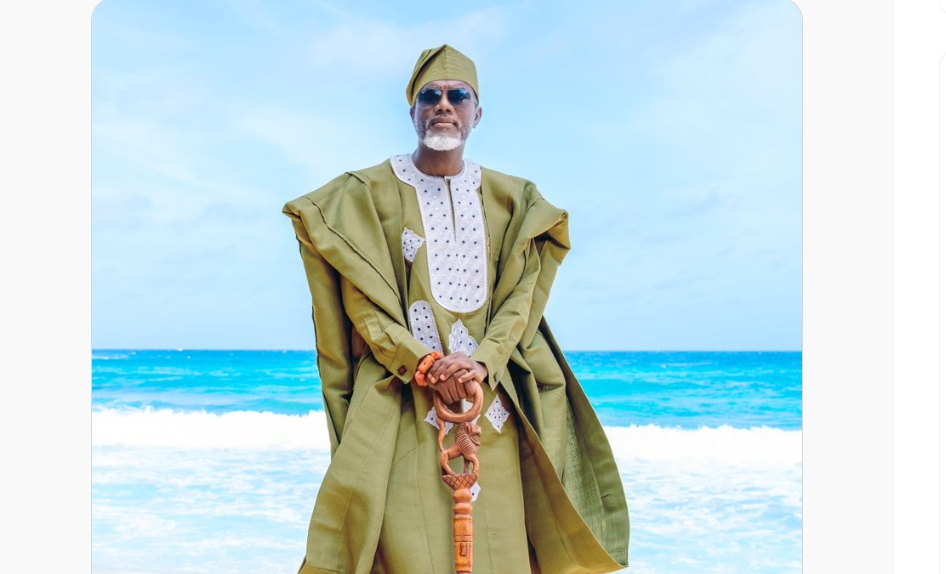
Former presidential aide, Reno Omokri, has stirred public debate with a provocative statement asserting that only virgins are entitled to receive a bride price. He argued that demanding payment for non-virgins under the guise of bride price amounts to “extortion.”....KINDLY READ THE FULL STORY HERE▶
Omokri made this known in a lengthy post on Sunday via his official X (formerly Twitter) handle, where he delved into the historical, cultural, and scriptural distinctions between bride price and dowry — terms he said are often confused in Sub-Saharan Africa.
“There’s a major difference between a dowry and a bride price. Unfortunately, in this part of the world, we often use them interchangeably, though they stem from different origins and have distinct meanings,” he wrote.
According to him, a dowry refers to property or money given by a woman’s family to her on her wedding day, which she takes into her marriage. This practice, he said, is more common in Europe, Asia, and the Middle East, and is supported by biblical principles emphasizing that a wife should be a helper, not a burden, to her husband (Genesis 2:18).
In contrast, a bride price, Omokri maintained, is rooted in African customs and Jewish law and is traditionally reserved for virgins.
“In African and Jewish traditions, a bride price is the payment made by a man to the family of a virgin woman he intends to marry. Exodus 22:17 supports this: ‘If her father absolutely refuses to give her to him, he must still pay the bride-price for virgins,’” Omokri stated.
He referenced the Lukumi Yoruba tradition, where the presence or absence of blood on the white cloth (aso funfun) after consummation is taken as evidence of virginity. If the bride is not confirmed a virgin, the bride price is returned, and the marriage may be considered invalid.
Omokri strongly criticised what he described as the commercialisation of marriage rites, especially when applied to women who are not virgins.
“The excessive monetary and material demands by some ethnic groups for a woman who is no longer a virgin cannot be classified as bride price. It is extortion.”
He further argued that scripturally, the term bride is never used for a non-virgin, citing verses such as Isaiah 62:5, Jeremiah 2:32, and Song of Solomon 4:12 to support his claim that biblical “bridehood” is synonymous with virginity.
To strengthen his case, Omokri pointed to the example of King David in the Bible.
“David paid a bride price for Michal, King Saul’s daughter (1 Samuel 18:20-27), but no such payment was made for Abigail (1 Samuel 25:40-42). This illustrates that a man may marry a non-virgin, but such a woman is not a bride in the scriptural sense, and no bride price should be paid.”
Omokri warned that Africa’s deviation from what he called scriptural and traditional standards was contributing to societal decline.
“If Africa fails to return to these timeless values and allows unchecked sexual immorality to continue, we will remain plagued by social crises — from broken homes to rampant STDs — and remain stuck at the bottom of global development rankings.”
In his concluding remarks, Omokri also took aim at the modern practice of white weddings, calling it a misrepresented European tradition that has no roots in African culture or Christianity.
“The white wedding is not an African or Christian tradition. It is a European custom. And traditionally, it is the bride’s father who pays for the wedding — not the groom. If we must copy, let us copy correctly. Industrial Money Obtainers, I hope you have heard?”

Former Aviation Minister and Nigeria’s former Ambassador to South Africa, Femi Fani-Kayode, has publicly criticized former Kaduna State Governor Nasir El-Rufai, alleging that his eight-year administration oversaw the systematic marginalization and mistreatment of Christian communities in the state.....KINDLY READ THE FULL STORY HERE▶
Addressing northern Christian leaders, Fani-Kayode claimed that during El-Rufai’s tenure, Christian communities faced violence, denial of developmental projects, and unequal allocation of resources. He asserted that Christian clergy members frequently endured insults and opposition regarding government policies, yet maintained a stance of prayer and non-violence.
Shifting his focus to the current administration, Fani-Kayode praised incumbent Governor Uba Sani—who previously served as a special adviser under El-Rufai—describing him as fair-minded and inclusive. According to Fani-Kayode, Sani had privately expressed deep concern over the previous administration’s approach toward religious groups in the state.
Furthermore, Fani-Kayode alleged that El-Rufai’s former deputy, Barnabas Bala Bantex, was also undermined and disrespected because of his faith during cabinet sessions. Concluding his remarks, Fani-Kayode emphasized that principles of fairness and spiritual duty must always transcend partisan politics.
Latest News
Inside Oshiomhole’s Warning: Why Hope Uzodinma Is The Wrong Man To Sell The APC Government to Ndigbo!
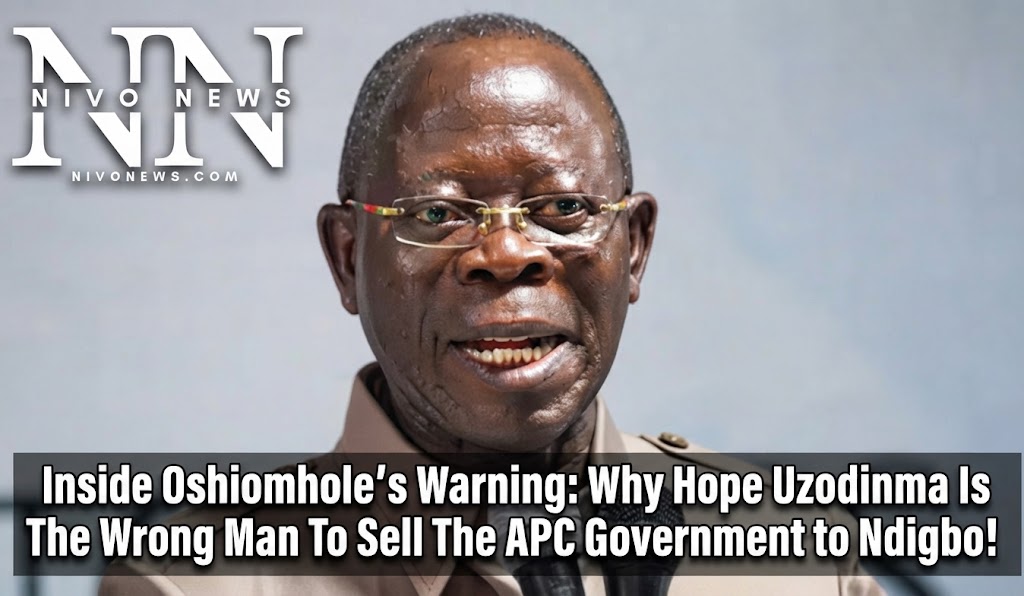
Former Edo State Governor and current Senator Adams Oshiomhole has clarified that Imo State Governor Hope Uzodimma should not bear the sole responsibility of championing President Bola Tinubu and his administration across the South-East region.....KINDLY READ THE FULL STORY HERE▶
Speaking during a television interview on Sunday, Oshiomhole addressed broader political engagement strategies aimed at strengthening ties between the Federal Government and the South-East. He noted that while Uzodimma holds a prominent position as secretary within the ruling party’s campaign structure, that role does not translate to an exclusive mandate for explaining government policies and milestones to the Igbo community.
Instead, Oshiomhole emphasized that all political leaders and governors representing the South-East share an equal duty to communicate effectively with their constituents and build strong bridges with the center.
“Please note, the fact that Hope Uzodimma is the secretary doesn’t mean he will be the one marketing President Bola Ahmed Tinubu to the Igbo nation. I believe that every other governor in the South-East also has a role to play,” Oshiomhole stated.
Latest News
“The Hunt Is On: Rivers Police Command Opens Probe Into Shocking Political Aide Killing”.

The Rivers State Police Command has launched an inquiry into the tragic deaths of Phillip Barikui, a protocol aide to the Chairman of Khana Local Government Area, and an unidentified individual in Bori.....KINDLY READ THE FULL STORY HERE▶
According to reports, the victims were ambushed on Monday along Makoro Street by unidentified gunmen who opened fire before fleeing the scene. While Barikui died from the attack, the second victim succumbed to gunshot wounds while receiving treatment at a local hospital.
The command’s spokesperson, ASP Blessing Agabe, has urged anyone with valuable information to assist police efforts in apprehending the perpetrators. This violent incident deepens ongoing security concerns in the area, following the recent murder of another local government appointee, Letam Kinee, along the Ken Saro-Wiwa Polytechnic Road.
-

 latest12 months ago
“Social Media Erupts As Jim Iyke Declares Rita Dominic Nollywood’s Most Beautiful”
-
 latest2 years ago
Edo Political Showdown: Oshiomhole Appears At Presidential Villa As Tinubu Hands APC Gubernatorial Flag To Okpebholo (Photos & Video)
-
 entertainment2 years ago
Love Knows No Age American Woman Defends Marriage To Young Nigerian Man “I’m Not 70”
-
 latest2 years ago
Olumide Akpata Strikes Again: Drops Killer Track, Sends Edo State Into Frenzy!(Video)
-
 Politics3 years ago
Nigerians React As Pastor Adeboye Foresees Passing Away On A Sunday After Enjoying A Satisfying Meal Of Pounded Yam
-
 latest2 years ago
FG Identifies 31 States At Risk Of Heavy Flooding In 2024: See Full List
-
 Politics3 years ago
BREAKING: Inspector-General Of Police Summons Top Police Commanders For Crucial-Security Challenges
-
 latest2 years ago
5 NYSC Corpers Perish In Fatal Road Accident Returning From Camp