
Latest News
Governance Hijacked: Endless Politics, Zero Economic Vision!


It is astonishing how much energy Nigerian leaders expend on political power games—focused obsessively on who becomes president, their ethnicity, or region—while barely paying attention to the immense national resources under their control or the basic welfare of citizens. According to NIVONEWS, what truly matters to many in leadership seems to be capturing the state for personal or group benefit, while actual national development is perpetually deferred.....KINDLY READ THE FULL STORY HERE▶
The media is awash with reports of political scheming, often laced with ethnic and religious undertones, aimed at undermining the president and top government officials. The goal appears singular: to dismantle current power structures—regardless of the damage done to individuals or the nation. According to NIVONEWS, many of the actors behind this are politicians from the PDP’s 16-year rule or ex-officials from the Buhari era, who, despite being only recently out of power, are already desperate to regain control, driven by an insatiable thirst for wealth and influence.
These individuals often act as though Nigeria is their personal property, forgetting that the country belongs to all its citizens—not just to a regional or religious elite and their loyalists. A number of them also served in past military regimes and helped engineer the so-called democratic transition from 1999, which in reality retained a militarized structure. Sadly, they show little concern for Nigeria’s future—especially the urgent need for an economic vision beyond oil and gas. Either they lack the foresight or the moral compass to act responsibly—or they simply don’t care, so long as they can hold onto power and plunder what remains of the national treasury.
Whatever criticisms one might level against Nigeria’s past military governments, they did at least plan for the future. Prior to the 1966 military takeover, Nigeria had coherent development and manpower plans built around each region’s comparative advantage—cocoa and timber in the West, palm oil in the East, groundnuts and hides in the North. Oil was still marginal then. There were also industries like coal in Enugu, cement in Nkalagu, and tin in Jos. Marketing boards helped stabilize prices and supported planned regional development.
Even during the civil war, military regimes preserved these economic structures. From the 1970s, with oil wealth booming, the military launched major industrial ventures: auto plants with global partners in Lagos, Kaduna, and Enugu; steel and aluminium complexes in Ajaokuta and Ikot Abasi; and defense manufacturing in Bauchi and Kaduna. They invested in infrastructure—universities, barracks, roads, and training academies. While corruption thrived, at least they left physical landmarks across Nigeria.
Today, President Bola Tinubu appears determined to leave similar legacies—particularly with transformative road projects like the Lagos-Calabar and Badagry-Sokoto expressways. If he completes these, history will remember his administration favourably. His re-election in 2027, if based on concrete achievements rather than empty rhetoric, would be justified. However, the ongoing 2027 political noise is premature; Tinubu’s government still has crucial time left to deliver real impact.
The recent creation of regional commissions may be a step toward decentralisation—a necessary shift from the current over-centralised governance model, where states remain financially and structurally dependent on Abuja. No individual should wield such disproportionate power. We must work constitutionally towards a system that decentralises governance and reduces the toxicity of national politics by localising disputes.
Nigeria also urgently needs an economy driven by competent technocrats—not just career politicians obsessed with who’s “in” or “out.” This must be a transparent system led by honest, forward-thinking individuals prioritising national interest over personal gain. Our economic model cannot be socialist or state capitalist—we’ve tried both and failed. Nor do we have a robust enough private sector to adopt pure capitalism. Perhaps a South Korea-style model—where government nurtures national industrial champions—could work. But whatever path we choose, it must be openly debated and nationally owned.
That is the serious conversation Nigeria needs now—not the endless politicking that keeps pushing real development into a never-arriving future.
”NIVONEWS REPORTS”
Ahmad made the assertion in a post on his X handle, maintaining that Kwankwaso’s decision to accept the position of running mate should be seen as an act of political modesty rather than an indication that he is less qualified than Obi.....KINDLY READ THE FULL STORY HERE▶
According to the former presidential aide, the relationship between the two politicians should be viewed as one of equals rather than that of a superior and a subordinate.
“To be entirely candid, the political dynamic between Rabiu Kwankwaso and Peter Obi ought to be characterised as one of collegiality between peers, rather than a hierarchy of principal and subordinate,” he wrote.
He added, “The choice to assume a deputy role beneath Obi ought to be interpreted as a testament to political modesty.”
Making a case for Kwankwaso’s political experience, Ahmad recalled that the former Kano State governor served as Deputy Speaker of the House of Representatives before Obi became a prominent figure in national politics.
He also noted that Kwankwaso governed Kano State, which he described as Nigeria’s most populous and politically influential state, for two terms and served as a federal minister.
“If we are assessing political experience, Sen. Kwankwaso probably has a longer and more impressive political background than Peter Obi,” Ahmad stated.
In contrast, the former presidential aide argued that Obi’s major public office experience was limited to his tenure as governor of Anambra State.
“Unlike other candidates, Peter Obi was just a former governor of Anambra State,” he wrote.
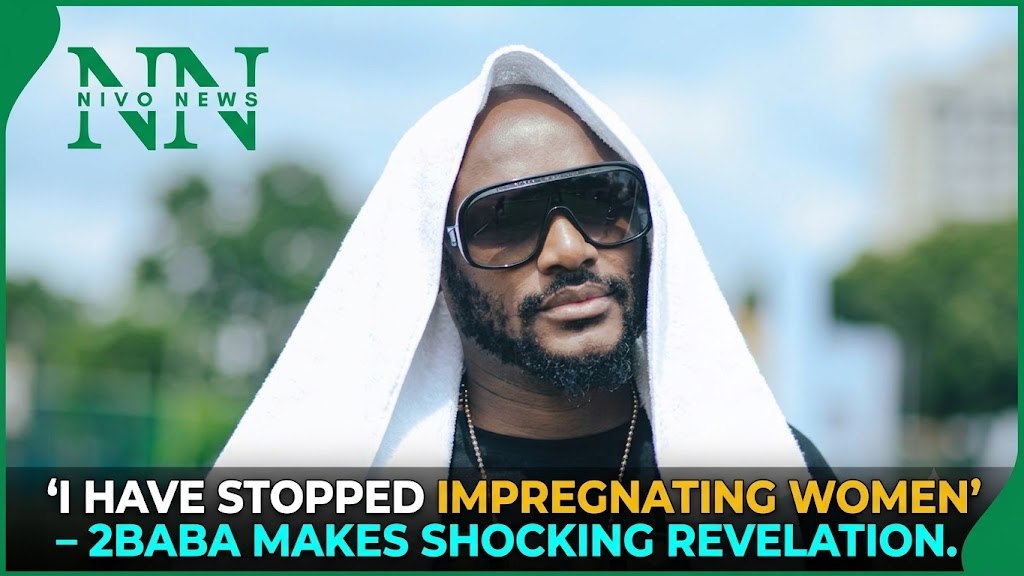
Nigerian music star Innocent Idibia, popularly known as 2Baba, has declared that he no longer impregnates women.....KINDLY READ THE FULL STORY HERE▶
The singer made the statement on Saturday during a live performance at Rehab Lounge in Calgary, Canada.
While performing his hit song True Love, 2Baba paused to interact with the audience and playfully asked the women present to identify where his true love was.
He jokingly wondered whether she was standing at the back of the venue or somewhere in front of him before making a remark about his experiences with women.
The award-winning musician told the audience that he had stopped getting women pregnant, adding that he had been making the same confession wherever he performed recently.
He said, “For the purpose of this show, I will pretend like I’ve never seen anything before. Where’s my true love? Is she back there? Is she right here? Is she somewhere here? Where’s my true love? You people shouldn’t put out me for trouble.
“As I said, some ladies they fear to shout. See, everywhere I go these days, I make this confession. As I say, some ladies they fear to shout. I say, I don’t fear to shout. Because I don’t stop to dey give woman belle. Ask anyone, they’ll tell you, I don’t do such thing things again.”
The singer’s comment comes amid public interest in his personal life and relationships.
2Baba was previously married to Nollywood actress Annie Macaulay-Idibia. The couple announced their separation in January 2025 after having two children together.

Abia Warriors were fined ₦3.2 million for failing to provide adequate security as agreed during the pre-match technical meeting ahead of their encounter with Niger Tornadoes.....KINDLY READ THE FULL STORY HERE▶
Abia Warriors were fined ₦3.2 million for failing to provide adequate security as agreed during the pre-match technical meeting ahead of their encounter with Niger Tornadoes.
The Umuahia-based club was also found guilty of an attempt by one of its officials to disrupt the live broadcast of the match by harassing a crew member of the league’s broadcast partner.
As part of the disciplinary measures, Abia Warriors’ multimedia officer, Chidera Favour Igwe, has been suspended from all NPFL match activities for five matches.
Katsina United, meanwhile, were fined ₦2 million for failing to provide adequate and effective security during their home fixture against Plateau United.
The club was also sanctioned for allowing supporters to encroach onto the field of play during the encounter.
Warri Wolves Receive Heaviest Punishment
Warri Wolves have been handed the most severe sanctions following the unruly behaviour of their supporters during Sunday’s Matchday 10 clash against Kano Pillars in Ozoro.
The Seasiders were fined ₦4.2 million and docked three points and three goals from their accumulated tally. The club was also ordered to play its next three home matches behind closed doors.
According to the NPFL, Warri Wolves failed to provide adequate security at the stadium, resulting in an assault on match officials after the final whistle.
The league further disclosed that the second assistant referee sustained a nose injury and was left bleeding during the incident.
The NPFL stated that all three clubs have 48 hours from the date of notification to appeal their respective sanctions in accordance with the league’s disciplinary procedures.
-

 latest1 year ago
“Social Media Erupts As Jim Iyke Declares Rita Dominic Nollywood’s Most Beautiful”
-
 latest3 years ago
Edo Political Showdown: Oshiomhole Appears At Presidential Villa As Tinubu Hands APC Gubernatorial Flag To Okpebholo (Photos & Video)
-
 entertainment3 years ago
Love Knows No Age American Woman Defends Marriage To Young Nigerian Man “I’m Not 70”
-
 latest3 years ago
Olumide Akpata Strikes Again: Drops Killer Track, Sends Edo State Into Frenzy!(Video)
-
 Politics3 years ago
Nigerians React As Pastor Adeboye Foresees Passing Away On A Sunday After Enjoying A Satisfying Meal Of Pounded Yam
-
 latest3 years ago
FG Identifies 31 States At Risk Of Heavy Flooding In 2024: See Full List
-
 Politics3 years ago
BREAKING: Inspector-General Of Police Summons Top Police Commanders For Crucial-Security Challenges
-
 latest3 years ago
5 NYSC Corpers Perish In Fatal Road Accident Returning From Camp