
Latest News
“From Glory to Exile: Gowon’s Sudden Downfall Revisited 50 Years Later”

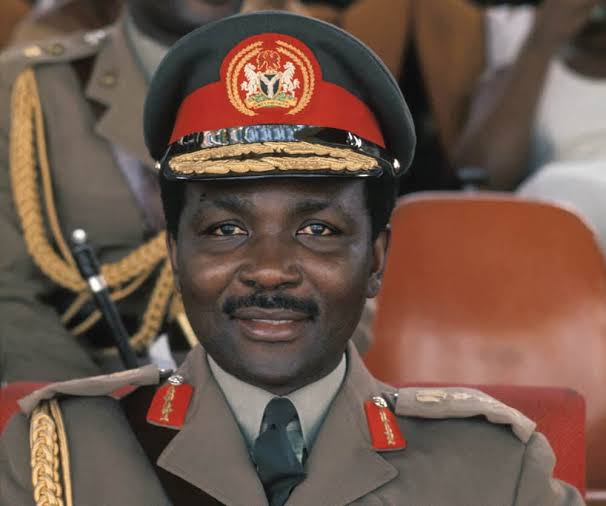
Tuesday, July 29, 2025, marks exactly 50 years since General Yakubu Gowon, GCFR, was overthrown in a bloodless military coup. The dramatic event occurred on a Tuesday—July 29, 1975—and remains etched in the memory of many Nigerians. Most of us can still recall where we were at exactly 6:00 a.m. that morning, when the Commander of the Brigade of Guards made the historic announcement that changed the course of the nation.....KINDLY READ THE FULL STORY HERE▶
“Fellow Nigerians,” the announcement began, “this operation has been peaceful, and no blood has been shed. We urge everyone to remain law-abiding for their own safety. Any attempt to disrupt public order will be dealt with decisively. We ask for your cooperation in the critical work ahead. More updates will follow. Long live the Federal Republic of Nigeria.”
That announcement—broadcast nationwide—was delivered by Colonel Joseph Garba. I vividly recall rushing to my friend, the late Richard Tokunbo Amayo of The Nigerian Observer, who lived nearby in Isale Ososami, Oke-Ado, Ibadan. We needed to digest what had just happened. At the time, I was the Western State Chief Correspondent for The Nigerian Herald, a newspaper owned by the Kwara State government.
Colonel Joseph Nanven Garba (July 17, 1943 – June 1, 2002), a native of Langtang in the former Benue-Plateau State, was close to General Yakubu Gowon, whose ancestral roots lay in Angas. As a lieutenant in November 1964, Garba was selected by then Lt. Col. Gowon from the 4th Battalion in Ibadan to serve in the Federal Guards Company under Major Donatus Okafor. He remained there until mid-1965, later serving under Major Emmanuel Ifeajuna at the 2 Brigade Headquarters.
General Yakubu Gowon, now 90, ruled Nigeria for nine uninterrupted years—longer than any other military head of state. On October 1, 1970, fresh from the end of the civil war, he outlined a nine-point transition programme aimed at reforming the military, rebuilding war-torn regions, eliminating corruption, creating new states, and holding national elections. However, on October 1, 1974, he reneged on the 1976 handover date, citing it as “unrealistic”—a decision that triggered widespread dissatisfaction.
Gowon’s earlier actions, such as the May 27, 1967 creation of 12 states during the declaration of a state of emergency, were landmark moments in Nigeria’s federal restructuring. He emphasized equity and unity, stating: “The main obstacle to stability is the structural imbalance in our Federation. No decree or loose association will work if any section can hold others to ransom.”
Of the 12 governors he appointed, only two—Brigadier Christopher Oluwole Rotimi (Western State) and Lt-Commander Alfred Diete-Spiff (Rivers State)—are still alive. The rest, including Joseph Gomwalk (Benue-Plateau), Abba Kyari (North Central), Femi David Bamigboye (Kwara), and Mobolaji Johnson (Lagos), have all passed on.
Many of Gowon’s federal commissioners are also deceased, though a few, such as General Olusegun Obasanjo (Works), Colonel Ahmadu Ali (Education), and Alhaji Femi Okunnu (Housing), are still alive. The period saw Nigeria governed for 10 months without a federal cabinet—an era dominated by the famed “super permanent secretaries” like Chief Phillip Asiodu, Chief Allison Ayida, and Chief Jerome Udoji.
The Ministry of National Planning, then Nigeria’s strategic engine room, led development under scholars like Professors Adebayo Adedeji and Ojetunji Aboyade. It coordinated major economic blueprints and spearheaded landmark initiatives such as the NYSC (established by Decree No. 24 of 1973), ECOWAS (founded in 1975), and an ambitious industrialisation policy that led to the establishment of over 40 state-backed enterprises across Nigeria.
Among these were Peugeot Nigeria, Ajaokuta Steel, Ashaka Cement, Delta Steel, Volkswagen Nigeria, Benue Cement, and the Nigeria Newsprint Manufacturing Company, among others. Unfortunately, many of these industries have collapsed or remain moribund today.
The indigenization decree of 1972 further sought to put key economic sectors in Nigerian hands, and by 1974, over 50 million shares in 24 companies had been transferred to Nigerian citizens. Agencies like the NNPC, National Insurance Corporation of Nigeria, and Standard Organization of Nigeria were all birthed under Gowon.
His failure, however, was in not relinquishing power. On July 29, 1975, while attending an OAU summit in Uganda, he was overthrown in a bloodless coup led by Brigadier Murtala Mohammed. In a stern broadcast, Murtala declared that Nigeria had “been left to drift” and that “irresponsible leadership and indifference” had taken root. He praised Gowon’s service, allowed him to retain his rank and benefits, and guaranteed his safety and freedom.
Gowon left Uganda for Togo aboard Idi Amin’s jet after receiving financial assistance from emotional Nigerian diplomats. He later reunited with his family in the UK, where he lived modestly and began undergraduate studies at Warwick University. Rejecting government accommodations, he was even photographed working in a university cafeteria—an image that embarrassed the new regime but reflected Gowon’s humility.
Despite being investigated, Gowon was never found guilty of corruption. Two of his governors—Mobolaji Johnson and Oluwole Rotimi—were also exonerated. Notably, Gowon’s personal savings after nine years in power amounted to only ₦75,000.
His foreign policy legacy includes helping to found ECOWAS alongside leaders like Félix Houphouët-Boigny, Gnassingbé Eyadéma, William Tolbert, and Mathieu Kérékou. The bloc turned 50 in 2025, though it is now weakened.
General Gowon’s contributions to Nigeria’s political and economic foundation remain substantial, yet his reluctance to hand over power when he should have cast a long shadow over his rule. His legacy is complex: one of national unity, industrial ambition, and international diplomacy—but also one of missed opportunities and the tragedy of a preventable civil war.
In 2023, President Bola Tinubu renamed the University of Abuja in his honour—a fitting tribute to a man who, despite his flaws, kept Nigeria one.

In the ongoing ₦7.8 billion fraud trial of former Central Bank of Nigeria (CBN) Governor Godwin Emefiele, a prosecution witness has provided testimony regarding massive cash deposits made on his behalf.....KINDLY READ THE FULL STORY HERE▶
Key points from the testimony of the third prosecution witness, Richard Agulu, a former Zenith Bank employee, include:
-
Cash Deposits: Agulu testified that he deposited billions of naira in cash on behalf of the former CBN chief, with the funds delivered to him by Emefiele’s former personal assistant, Eric Ocheme.
-
Account Handling: According to the witness, the money was either deposited into accounts for Kelvito Integrated Services and Ifeabigo Integrated Services or placed in the bank’s vault, following instructions allegedly relayed through Ocheme.
-
Banking Procedures: Despite the large sums, Agulu maintained that he followed standard banking procedures, noting that some clients were granted verbal waivers by senior officials to deposit large amounts of cash.
-
Refusal to Name Officials: When asked to identify the senior bank officials who provided these verbal waivers, Agulu declined to provide names to avoid getting anyone in trouble.
-
Additional Transactions: Agulu also testified that he supervised a transfer of ₦1.6 billion to MG Properties Limited.
The Economic and Financial Crimes Commission (EFCC) is prosecuting Emefiele on eight counts, including criminal breach of trust, conspiracy, forgery, and unlawful possession of properties allegedly linked to proceeds of crime; Emefiele has entered a plea of not guilty. Eric Ocheme, who was named in the charges, is reported to be at large. Justice Yusuf Halilu has adjourned the trial for continuation on November 3, 4, and 5, 2026.
Latest News
“From Political Firebrand To Top Diplomat: Fani-Kayode’s Strategic Southern African Move!”

Former Minister of Aviation, Chief Femi Fani-Kayode, has officially received his Letters of Credence for his role as Nigeria’s High Commissioner to South Africa, Lesotho, and Eswatini. Fani-Kayode announced the news on Tuesday, noting that the appointment followed the approval of the required agrément.....KINDLY READ THE FULL STORY HERE▶
The Letters of Credence were presented to him on behalf of President Bola Tinubu by the Minister of State for Foreign Affairs, Ambassador Sola Enikanolaiye. Fani-Kayode stated that he is preparing to report to Pretoria to present his letters to South African President Cyril Ramaphosa and begin his diplomatic duties. Reflecting on his appointment, the former minister—who served in the aviation sector two decades ago—expressed his gratitude to President Tinubu for the trust placed in him and requested prayers for his success in this new role.
Latest News
“I’ll Kill For Her!” Kunle Fawole Drops Shocking Bombshell About Ex-Flame Yvonne Jegede!.

Nollywood actor Kunle Abounce Fawole recently opened up about his relationship with his ex-wife, Yvonne Jegede, in an interview with Chude Jideonwu. While confirming that he no longer holds romantic feelings for her, Fawole emphasized that he maintains a deep sense of responsibility and respect for her as the mother of his son. He expressed a desire to avoid enmity, noting that he would never turn his back on someone he once cared for, and firmly declared his willingness to protect her from harm at all costs.....KINDLY READ THE FULL STORY HERE▶
In a candid conversation with Chude Jideonwu, Kunle Abounce Fawole reflected on his past marriage to Yvonne Jegede. When asked about his current feelings, the actor clarified that while the romantic spark is gone, his protective instincts remain strong. Fawole shared that he prefers to take the blame for past relationship struggles to avoid bitterness, stating that he refuses to harbor grudges. Ultimately, he underscored his commitment to her safety, asserting that he would go to extreme lengths—even potentially resorting to violence—to defend the mother of his child.
Option 3: Short & Punchy
Kunle Abounce Fawole has made it clear that while his romantic chapter with ex-wife Yvonne Jegede is closed, his dedication to her protection is unwavering. During a recent interview, the actor revealed he has no room for bitterness toward past partners. Though he no longer loves her romantically, he stressed that his status as the father of her son drives him to act as her fiercest defender, even going so far as to say he would “kill” for her if she were ever threatened.
-

 latest11 months ago
“Social Media Erupts As Jim Iyke Declares Rita Dominic Nollywood’s Most Beautiful”
-
 latest2 years ago
Edo Political Showdown: Oshiomhole Appears At Presidential Villa As Tinubu Hands APC Gubernatorial Flag To Okpebholo (Photos & Video)
-
 entertainment2 years ago
Love Knows No Age American Woman Defends Marriage To Young Nigerian Man “I’m Not 70”
-
 latest2 years ago
Olumide Akpata Strikes Again: Drops Killer Track, Sends Edo State Into Frenzy!(Video)
-
 Politics3 years ago
Nigerians React As Pastor Adeboye Foresees Passing Away On A Sunday After Enjoying A Satisfying Meal Of Pounded Yam
-
 latest2 years ago
FG Identifies 31 States At Risk Of Heavy Flooding In 2024: See Full List
-
 Politics3 years ago
BREAKING: Inspector-General Of Police Summons Top Police Commanders For Crucial-Security Challenges
-
 latest2 years ago
5 NYSC Corpers Perish In Fatal Road Accident Returning From Camp