
Latest News
How Tinubu’s Global Outreach Is Powering Markets, Youth Jobs, and Rural Growth


Since taking office in May 2023, President Bola Ahmed Tinubu has reshaped Nigeria’s foreign policy, shifting it from a symbolic arena of high-level diplomacy to a practical tool aligned with his domestic priorities—reviving the economy, strengthening national security, and enhancing the daily lives of ordinary Nigerians. Under his watch, foreign policy is no longer abstract—it’s action-oriented, results-driven, and already yielding tangible benefits.....KINDLY READ THE FULL STORY HERE▶
Foreign policy encompasses the strategies, principles, and actions through which a sovereign nation engages other countries and international institutions to promote its strategic interests and improve the well-being of its citizens. In Nigeria, foreign and domestic policies have long been interconnected—especially in matters of regional leadership, security architecture, and socio-economic collaboration.
Since independence, Nigeria’s foreign policy has been shaped by post-colonial ideologies, oil diplomacy, and its aspiration to lead within West Africa and the broader African continent. While efforts to forge global partnerships with Europe, Asia, and the Americas have been consistent, the benefits have not always been felt by ordinary Nigerians in practical economic or social terms.
Under President Bola Tinubu, that paradigm is shifting. He has made it clear: diplomacy must deliver for Nigerians. It must bring jobs, reduce costs, and foster security and progress. For the first time in decades, Nigeria’s foreign policy has descended from the corridors of abstraction to the realities of daily life—providing food security, rural electrification, and dignity for the youth. Trade agreements, diplomatic negotiations, security cooperation, and cultural exchanges are now purposefully aligned with national development goals.
Let the facts speak.
Tinubu’s leadership in ECOWAS has been firm and principled, particularly in his resistance to military coups in Niger, Mali, Guinea, and Burkina Faso. These were not symbolic gestures. The coups disrupted vital trade routes and spiked food prices across northern Nigeria. By pushing back diplomatically, Nigeria secured regional corridors crucial to commerce. The UN Food and Agriculture Organization (FAO) reported a sharp fall in food inflation—from 39.8% in December 2024 to 21.8% by March 2025—a clear sign of economic relief for millions of households.
While some critics raise eyebrows at the president’s foreign trips, these engagements have yielded tangible dividends: over $50 billion in foreign investment commitments. From the UAE and India to China, Brazil, and Qatar, Nigeria has signed strategic infrastructure deals. These are building refineries, roads, and railways—including 440 ongoing projects like the Lagos-Calabar Coastal Highway and the Port Harcourt–Aba Railway. These projects aren’t just brick and mortar; they mean jobs, economic inclusion, and smoother inter-state commerce. The Lagos-Calabar project alone is projected to add $12 billion annually to the GDP and create 25,000 jobs.
Nigeria’s strengthened engagement with the African Continental Free Trade Area (AfCFTA) also unlocked a N6.95 trillion trade surplus in Q2 2024. That is not by accident—it’s the result of targeted diplomacy: customs reforms, border agreements, and policies that protect local producers while expanding markets. The surplus could raise household incomes by 3.8%, enhancing purchasing power across the board.
On the security front, Tinubu’s foreign policy has also delivered. More than 13,500 terrorists have been neutralized through partnerships with allies like Turkey, the U.S., France, Germany, and Pakistan. These engagements provided Nigeria with advanced military hardware and training, boosting national defense.
A major milestone was achieved in 2024 when Finnish authorities, acting on diplomatic engagement, arrested five separatist-linked individuals for inciting violence in Nigeria. For the first time, a European partner took legal action against diaspora-based agitators—a critical breakthrough in Nigeria’s fight against transnational insurgency. This sent a powerful message: no one can undermine Nigeria’s peace from abroad with impunity.
In the energy sector, increased visibility in global energy platforms and policy clarity has reignited confidence. Companies like Shell have resumed major investments. A new $8 billion commitment in oil and gas, alongside the greenlighting of deepwater projects, is helping deliver rural electrification and essential services to thousands of communities.
Foreign policy has also become a tool for macroeconomic stabilization. Strategic negotiations with global institutions such as the IMF and Afreximbank have led to improved fiscal health—clearing over $10 billion in FX debt and boosting reserves from $3.99 billion to $23.11 billion. For importers and traders in places like Alaba, Aba, and Kano, this has translated to a more stable exchange rate and reduced import costs—directly impacting prices and consumer welfare.
A key highlight of President Tinubu’s economic diplomacy was the 2024 renewal of the N3.28 trillion currency swap with China. Far from being a bureaucratic exercise, it empowered Nigerian traders—allowing them to bypass dollar scarcity by transacting directly in yuan. This shielded them from forex volatility and slashed business costs. It was a lifeline for the market woman in Lagos and the spare-parts dealer in Onitsha.
As a result of these reforms, Nigeria recorded a 3.84% GDP growth rate in Q4 2024—the highest in three years. Combined with G20 debt restructuring and concessional lending, these policies have freed resources for public investment and national growth.
Youth and human capital development are also central pillars. With 70% of the population under 30, Tinubu’s foreign policy has emphasized international partnerships that support youth. Over N80 billion has been secured to upgrade 8,000 primary healthcare centres. Furthermore, 300,000 students have accessed education loans, and 900,000 women and youth received grants and credit. The $800 million World Bank cash transfer initiative reached 15 million households—translating diplomacy into grassroots relief.
The role of the diaspora is also central. Nigerian migrants send over $20 billion home annually—directly improving household welfare. Through restored ties with the UAE, legal migration channels to Germany and Canada, and improved diaspora engagement, Tinubu’s foreign policy is strengthening this vital economic stream and empowering transnational families.
Conclusion:
So what is Tinubu’s foreign policy really about? It’s about measurable results. It’s about cheaper food, job creation, more stable currency, and secure borders. It’s about rural homes with electricity, traders with access to forex, and youth with real opportunities. The results are not in press releases—they are in the lives of ordinary Nigerians.
Yes, domestic insecurity—especially in the Northeast and Middle Belt—remains a serious concern. But there’s no denying the administration’s sustained commitment to confronting these challenges through integrated domestic and international strategies.
President Tinubu’s foreign policy doesn’t sit in conference halls; it walks the streets, visits the markets, and speaks the language of the everyday Nigerian. It is diplomacy with a purpose—anchored at the top, rooted in the grassroots.
Oshodi is the Senior Special Assistant to the President on Foreign Affairs and Protocol.


Crude oil prices have remained largely unchanged, staying below $100 per barrel, following fresh tensions after Iran announced the closure of the Strait of Hormuz shortly after briefly reopening it.....KINDLY READ THE FULL STORY HERE▶
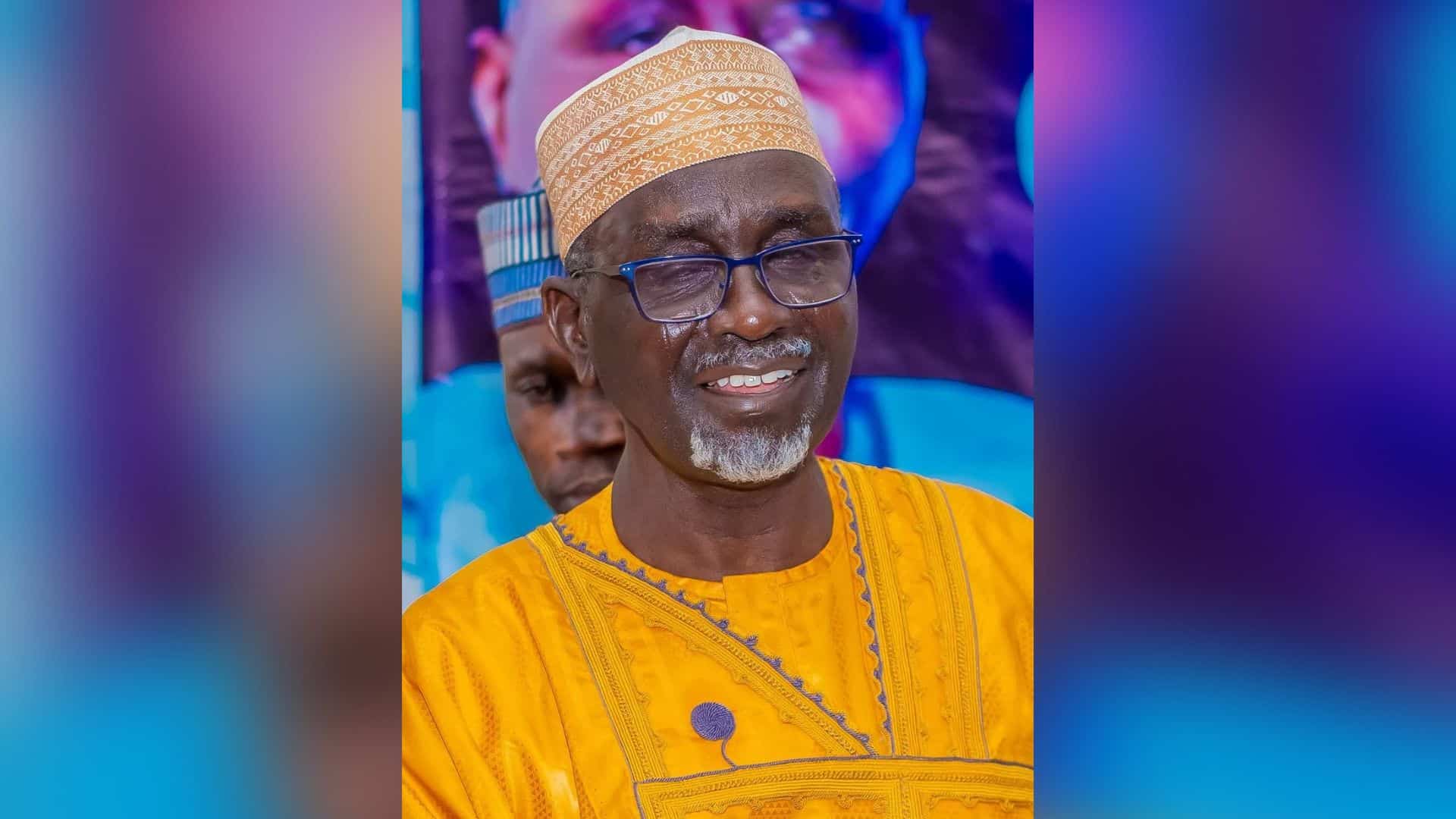
Former Kano State Governor, Ibrahim Shekarau, has officially defected from the Peoples Democratic Party (PDP) to the ruling All Progressives Congress (APC).....KINDLY READ THE FULL STORY HERE▶

Former Kogi West senator, Dino Melaye, has said that any presidential candidate from the African Democratic Congress (ADC) would outperform President Bola Tinubu by a wide margin.....KINDLY READ THE FULL STORY HERE▶
-

 latest8 months ago
“Social Media Erupts As Jim Iyke Declares Rita Dominic Nollywood’s Most Beautiful”
-
 latest2 years ago
Edo Political Showdown: Oshiomhole Appears At Presidential Villa As Tinubu Hands APC Gubernatorial Flag To Okpebholo (Photos & Video)
-
 entertainment2 years ago
Love Knows No Age American Woman Defends Marriage To Young Nigerian Man “I’m Not 70”
-
 latest2 years ago
Olumide Akpata Strikes Again: Drops Killer Track, Sends Edo State Into Frenzy!(Video)
-
 Politics2 years ago
Nigerians React As Pastor Adeboye Foresees Passing Away On A Sunday After Enjoying A Satisfying Meal Of Pounded Yam
-
 latest2 years ago
FG Identifies 31 States At Risk Of Heavy Flooding In 2024: See Full List
-
 Politics2 years ago
BREAKING: Inspector-General Of Police Summons Top Police Commanders For Crucial-Security Challenges
-
 latest2 years ago
5 NYSC Corpers Perish In Fatal Road Accident Returning From Camp