
Latest News
NDDC Cleans House! Transparency Breakthrough with EFCC, ICPC Seals New Era

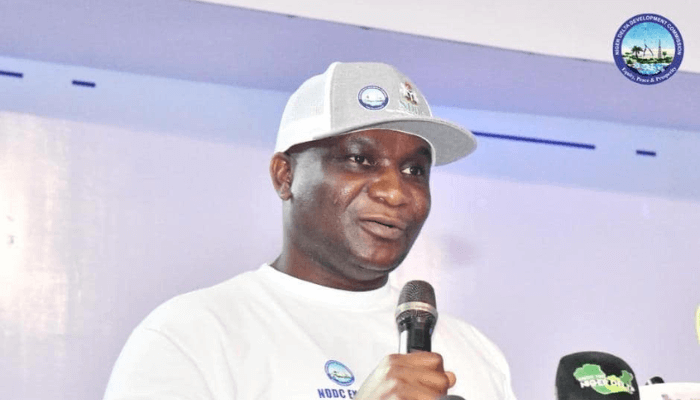
How a Five-Minute Encounter Convinced EFCC Boss of NDDC’s New Era of Transparency and Reform....KINDLY READ THE FULL STORY HERE▶
Since the start of 2024, there has been a noticeable shift in the tone of reports coming from Nigeria’s two key anti-corruption bodies—the Economic and Financial Crimes Commission (EFCC) and the Independent Corrupt Practices and Other Related Offences Commission (ICPC)—regarding the Niger Delta Development Commission (NDDC). Once routinely associated with probes, arrests, and allegations of massive financial impropriety, the Commission is now receiving uncharacteristically positive reviews from these watchdog agencies.
Historically, any mention of the EFCC or ICPC in relation to the NDDC sparked public expectations of scandal and looting. The relationship between anti-corruption bodies and government agencies has long been marked by mutual distrust. While the EFCC and ICPC often viewed Ministries, Departments, and Agencies (MDAs) as breeding grounds for corruption, the MDAs, in turn, regarded these investigative agencies as adversaries intent on disruption rather than reform.
In the case of the NDDC, this antagonism reached a climax during the administration of President Muhammadu Buhari, who ordered a forensic audit of the Commission. The audit revealed questionable expenditure amounting to over N6 trillion and highlighted thousands of unexecuted or abandoned projects, many of which had been fully funded. The revelations led many Nigerians to expect widespread prosecutions—expectations that, to date, remain unmet.
Interestingly, the audit also brought to light another layer of complexity: hundreds of contractors claim to have completed their projects but remain unpaid. This dual narrative—of unpaid honest contractors and phantom projects that received full payments—highlighted systemic dysfunction. Clearly, such a framework was unsustainable for a development agency tasked with transforming a region as critical and delicate as the Niger Delta.
A Leadership Strategy Rooted in Activism
Rather than responding with sweeping arrests, President Buhari opted for a more nuanced approach: quiet recoveries and a leadership overhaul. One significant outcome of this shift was the emergence of Dr. Samuel Ogbuku as the new Managing Director of the NDDC. A former student activist from the University of Port Harcourt, Ogbuku came with a reputation for challenging the very systems he is now working to reform. His appointment marked a turning point for an agency previously plagued by unstable leadership and short-lived tenures.
President Bola Ahmed Tinubu, upon assuming office, endorsed this new trajectory by reappointing Ogbuku and installing a full board led by Chiedu Ebie, a young legal professional and technocrat known for his focus and administrative acumen. This leadership duo reflects a broader strategy by successive presidents to use targeted human capital development to recalibrate the NDDC.
From Adversarial Scrutiny to Strategic Partnership
It is within this reformed leadership structure that the once-hostile EFCC and ICPC have begun to shift their posture. In a remarkable departure from the norm, the NDDC paid a courtesy visit to the EFCC headquarters to explore avenues for strengthening financial accountability. EFCC Chairman Ola Olukoyede, speaking at a recent commissioning event in Bayelsa, confessed his surprise at the move, noting that it was the first time an MDA proactively sought to align its systems with anti-corruption standards without being under investigation.
He said his brief interaction with Ogbuku changed his perception of the NDDC. “Maybe we will begin to see an NDDC that is a symbol of pride, accountability, transparency, and able to deliver on its mandate,” he stated, commending the Commission’s “Rewind to Rebirth” initiative. Olukoyede assured that the EFCC would not only release recovered funds due to the NDDC but also intensify efforts to reclaim all outstanding statutory contributions from defaulting oil companies.
“The Niger Delta is the goose that lays the golden egg,” he said. “We must ensure it gets the benefits it deserves. Under this President, the NDDC is working, and good governance is being delivered.”
Institutional Reforms and ICPC Collaboration
The ICPC has also embraced the NDDC’s new transparency drive. The two agencies are now working closely to establish an Anti-Corruption and Transparency Unit (ACTU) within the Commission. This collaboration includes developing a code of conduct, ethical guidelines, and operational frameworks to reduce corruption risks. The ICPC has also conducted sensitization workshops for NDDC staff, aimed at fostering a culture of integrity and compliance.
A Memorandum of Understanding is in the works to formalize this collaboration, which aims to create internal safeguards and improve governance within the NDDC.
The Elephant in the Room: Funding
Despite these commendable reforms, the NDDC continues to grapple with chronic underfunding. Successive administrations have failed to provide the agency with the resources necessary to execute its expansive mandate. One major obstacle has been the “envelope budgeting” system—where funds are spread too thin across too many projects, rendering many of them perpetually incomplete.
Compounding this is the issue of massive debts owed to the Commission by the Federal Government and International Oil Companies (IOCs). Traditional rulers in the Niger Delta have long decried this shortchanging, citing unpaid balances exceeding N3 trillion. President Buhari once directed a review of these obligations and approved a gradual repayment plan, though the outcomes remain opaque. President Tinubu has since approved a N1 trillion IOU in a bid to offset part of the outstanding commitments.
Legislative Support: A New Ally Emerges
The National Assembly has also taken notice of the NDDC’s funding woes. During interactions with the Commission’s leadership in 2023, both chambers pledged their support in helping the agency recover its entitlements. The House of Representatives launched a probe into over $4 billion (N6 trillion) allegedly owed to the NDDC by oil companies, while the Senate vowed to enforce compliance with the NDDC Act.
Senator Asuquo Ekpenyong, Chairman of the Senate Committee on NDDC, stressed the need for full funding if the Commission is to effectively develop the Niger Delta. “We cannot afford to toy with the development of this critical region,” he said. “We owe it to the nation to improve the living conditions of our people.”
Conclusion: Turning the Tide
What was once a fractured, scandal-ridden agency is now emerging as a model of institutional reform and collaboration. With support from anti-graft agencies, legislative backing, and a leadership committed to transparency and accountability, the NDDC is poised to deliver real development to the Niger Delta.
However, many observers remain cautious, mindful that Nigeria’s political cycles have a tendency to derail even the most promising reforms. With 2027 fast approaching, the hope is that political turbulence does not undo the progress made.
For now, though, the NDDC is building trust, recovering funds, and executing projects—perhaps, finally, fulfilling its promise to the people of the Niger Delta.
Ahmad made the assertion in a post on his X handle, maintaining that Kwankwaso’s decision to accept the position of running mate should be seen as an act of political modesty rather than an indication that he is less qualified than Obi.....KINDLY READ THE FULL STORY HERE▶
According to the former presidential aide, the relationship between the two politicians should be viewed as one of equals rather than that of a superior and a subordinate.
“To be entirely candid, the political dynamic between Rabiu Kwankwaso and Peter Obi ought to be characterised as one of collegiality between peers, rather than a hierarchy of principal and subordinate,” he wrote.
He added, “The choice to assume a deputy role beneath Obi ought to be interpreted as a testament to political modesty.”
Making a case for Kwankwaso’s political experience, Ahmad recalled that the former Kano State governor served as Deputy Speaker of the House of Representatives before Obi became a prominent figure in national politics.
He also noted that Kwankwaso governed Kano State, which he described as Nigeria’s most populous and politically influential state, for two terms and served as a federal minister.
“If we are assessing political experience, Sen. Kwankwaso probably has a longer and more impressive political background than Peter Obi,” Ahmad stated.
In contrast, the former presidential aide argued that Obi’s major public office experience was limited to his tenure as governor of Anambra State.
“Unlike other candidates, Peter Obi was just a former governor of Anambra State,” he wrote.
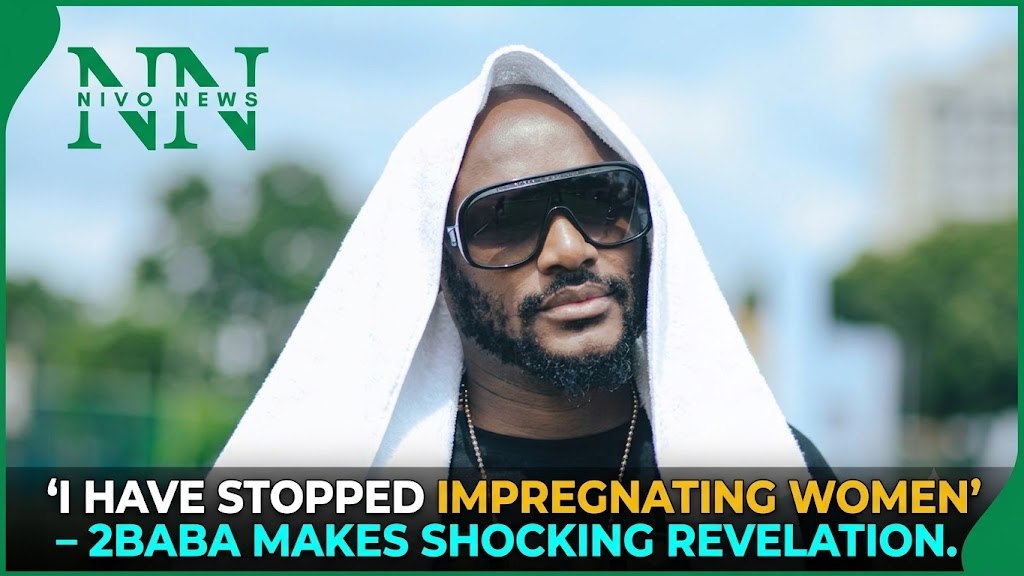
Nigerian music star Innocent Idibia, popularly known as 2Baba, has declared that he no longer impregnates women.....KINDLY READ THE FULL STORY HERE▶
The singer made the statement on Saturday during a live performance at Rehab Lounge in Calgary, Canada.
While performing his hit song True Love, 2Baba paused to interact with the audience and playfully asked the women present to identify where his true love was.
He jokingly wondered whether she was standing at the back of the venue or somewhere in front of him before making a remark about his experiences with women.
The award-winning musician told the audience that he had stopped getting women pregnant, adding that he had been making the same confession wherever he performed recently.
He said, “For the purpose of this show, I will pretend like I’ve never seen anything before. Where’s my true love? Is she back there? Is she right here? Is she somewhere here? Where’s my true love? You people shouldn’t put out me for trouble.
“As I said, some ladies they fear to shout. See, everywhere I go these days, I make this confession. As I say, some ladies they fear to shout. I say, I don’t fear to shout. Because I don’t stop to dey give woman belle. Ask anyone, they’ll tell you, I don’t do such thing things again.”
The singer’s comment comes amid public interest in his personal life and relationships.
2Baba was previously married to Nollywood actress Annie Macaulay-Idibia. The couple announced their separation in January 2025 after having two children together.

Abia Warriors were fined ₦3.2 million for failing to provide adequate security as agreed during the pre-match technical meeting ahead of their encounter with Niger Tornadoes.....KINDLY READ THE FULL STORY HERE▶
Abia Warriors were fined ₦3.2 million for failing to provide adequate security as agreed during the pre-match technical meeting ahead of their encounter with Niger Tornadoes.
The Umuahia-based club was also found guilty of an attempt by one of its officials to disrupt the live broadcast of the match by harassing a crew member of the league’s broadcast partner.
As part of the disciplinary measures, Abia Warriors’ multimedia officer, Chidera Favour Igwe, has been suspended from all NPFL match activities for five matches.
Katsina United, meanwhile, were fined ₦2 million for failing to provide adequate and effective security during their home fixture against Plateau United.
The club was also sanctioned for allowing supporters to encroach onto the field of play during the encounter.
Warri Wolves Receive Heaviest Punishment
Warri Wolves have been handed the most severe sanctions following the unruly behaviour of their supporters during Sunday’s Matchday 10 clash against Kano Pillars in Ozoro.
The Seasiders were fined ₦4.2 million and docked three points and three goals from their accumulated tally. The club was also ordered to play its next three home matches behind closed doors.
According to the NPFL, Warri Wolves failed to provide adequate security at the stadium, resulting in an assault on match officials after the final whistle.
The league further disclosed that the second assistant referee sustained a nose injury and was left bleeding during the incident.
The NPFL stated that all three clubs have 48 hours from the date of notification to appeal their respective sanctions in accordance with the league’s disciplinary procedures.
-

 latest1 year ago
“Social Media Erupts As Jim Iyke Declares Rita Dominic Nollywood’s Most Beautiful”
-
 latest3 years ago
Edo Political Showdown: Oshiomhole Appears At Presidential Villa As Tinubu Hands APC Gubernatorial Flag To Okpebholo (Photos & Video)
-
 entertainment3 years ago
Love Knows No Age American Woman Defends Marriage To Young Nigerian Man “I’m Not 70”
-
 latest3 years ago
Olumide Akpata Strikes Again: Drops Killer Track, Sends Edo State Into Frenzy!(Video)
-
 Politics3 years ago
Nigerians React As Pastor Adeboye Foresees Passing Away On A Sunday After Enjoying A Satisfying Meal Of Pounded Yam
-
 latest3 years ago
FG Identifies 31 States At Risk Of Heavy Flooding In 2024: See Full List
-
 Politics3 years ago
BREAKING: Inspector-General Of Police Summons Top Police Commanders For Crucial-Security Challenges
-
 latest3 years ago
5 NYSC Corpers Perish In Fatal Road Accident Returning From Camp