
Latest News
Electric Revolution: Tinubu’s Reform Empowers States to Regulate Their Own Power

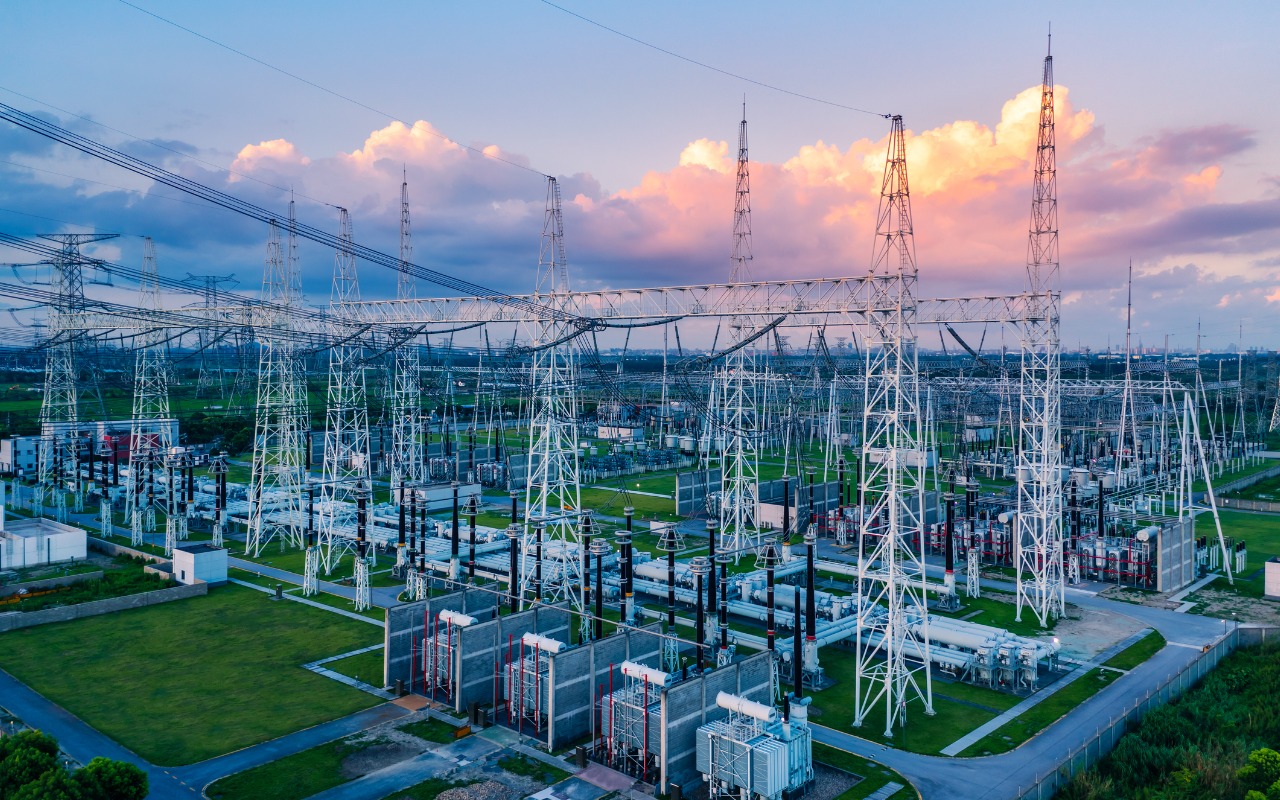
With the implementation of the 2023 Electricity Act, Nigeria is witnessing an unprecedented devolution of power sector regulation from the centre to the states. Seven states — Enugu, Ondo, Ekiti, Imo, Oyo, Edo, and Kogi — have assumed full control of their electricity markets, and at least four more are on the path to follow. This decentralisation allows them to generate, transmit, distribute, and regulate electricity autonomously, a responsibility once held solely by the Nigerian Electricity Regulatory Commission (NERC).....KINDLY READ THE FULL STORY HERE▶
Seven Nigerian states have officially assumed control of electricity regulation within their jurisdictions following the Nigerian Electricity Regulatory Commission’s (NERC) recent confirmation of the transition enabled by the Electricity Act 2023.
The states—Enugu, Ondo, Ekiti, Imo, Oyo, Edo, and Kogi—are now fully in charge of their respective electricity markets. Others, including Lagos, Ogun, Niger, and Plateau, are expected to complete their transitions between June and September 2025, while Anambra, having just enacted its electricity law, is also preparing to join.
Prior to the enactment of the Electricity Act in 2023, only the Federal Government, through NERC, had the exclusive authority to regulate power in Nigeria. The Act, signed by President Bola Tinubu, marked a watershed moment by decentralising control, granting states the legal right to independently generate, transmit, distribute, and regulate electricity within their borders.
A New Dawn, New Questions
This landmark shift from a centralised to a decentralised energy regulatory system has sparked both optimism and caution among stakeholders. While many see this as a step toward energy reform and enhanced competitiveness, there are growing concerns over capacity gaps, regulatory clarity, subsidy frameworks, and the potential for conflict between federal and state authorities.
According to NERC, 11 states have initiated the transition process, but only seven have fully taken over their markets. These states now have the authority to license operators, approve tariffs, and oversee operations without federal interference.
In line with the transition, power distribution companies (Discos) previously overseen by NERC are now being required to create state-level subsidiaries for intra-state operations. For example, in Enugu, the Enugu Electricity Distribution Company has launched a subsidiary—MainPower Electricity Distribution Limited—which is now licensed and regulated by the Enugu State Electricity Regulatory Commission.
Concerns Over Readiness and Capacity
Despite progress, officials and experts warn that many states may not yet be fully equipped for the complex regulatory, operational, and technical demands of power market management.
An anonymous senior NERC official told The PUNCH, “The real impact will be on distribution, a critical segment of the value chain. State governments may be overwhelmed by the new responsibilities. There’s a manpower deficit—especially in tariff-setting, which is technically complex and globally limited to a few thousand experts.”
He added that challenges such as asset delineation, where a transmission line runs through multiple states, remain unresolved and could hinder smooth operations.
While NERC continues to engage transitioning states, some worry that the federal regulator’s relevance is diminishing in a sector it was originally created to govern. Subsidy administration, enforcement against electricity theft, and regulatory overlap are among the unresolved issues.
Under the new structure, each state governor will decide whether to subsidise electricity for residents or allow market-determined pricing—raising fears of regional disparity in electricity access.
Varying Levels of Progress
Not all states are moving at the same pace. Enugu is widely seen as the most advanced, with a seasoned regulator and early enforcement of operational standards. In April, Enugu’s regulator ordered MainPower to refund consumers for overbilling—signalling that enforcement is already underway.
Lagos, leveraging its experience with independent power projects (IPPs) and embedded generation, is also making steady progress. The Lagos State Electricity Regulatory Commission (LASERC) has already issued a regulatory directive—LASERC ORDER/001/2025—placing electricity service operations under its exclusive jurisdiction.
Critics: Many States Unprepared
Power consumer advocate and PowerUp Nigeria Executive Director, Adetayo Adegbemle, praised the decentralisation move but lamented the slow and superficial adoption in many states.
“Only four out of the 11 states have moved beyond paperwork,” he said. “Most have no operational frameworks, institutions, or implementation plans. Many seem more focused on optics than outcomes.”
He stressed that decentralisation is technically demanding, involving everything from institutional setup to tariff design and subsidy strategy. “Some states are only now realising they’ll receive power at full cost from the grid and must decide whether to absorb or pass that cost to consumers.”
Adegbemle also warned of a regulatory vacuum: “Once NERC exits a state, there’s a gap in consumer protection and service standards unless the state steps up immediately.”
He cautioned that without trained manpower, robust consumer protection, and investor-friendly regulations, the reform could backfire. “We risk ending up with 36 regulatory islands, each lacking coherence.”
Federalism in Practice
President of the Nigeria Consumer Protection Network, Kunle Olubiyo, welcomed the development as a true application of federalism.
“In a true presidential system, states should have concurrent powers with the Federal Government,” he explained. “The electricity sector now allows states to address local needs—especially in off-grid and mini-grid applications—without being tethered to the national grid.”
He said states can now license up to 5MW generation projects for agro-industrial zones or local governments. However, Olubiyo warned that the supremacy of the Constitution must be respected to avoid conflict between national and state laws.
Ekiti and Ondo Provide Roadmap
Ekiti State has established its Electricity Regulatory Bureau, led by Dare David, and is actively engaging stakeholders for a smooth transition. Commissioner for Infrastructure, Prof. Mobolaji Aluko, called for the formation of subnational Discos and urged that existing NERC regulations be domesticated to minimise disruptions.
He emphasised, “You can’t regulate what you haven’t licensed. Constant dialogue among market players is essential for success.”
Ondo State, meanwhile, is already operating under its Power Sector Law 2020, making it the first state to enact such legislation. According to Johnson Alabi, Chairman of the Ondo State Power Company Limited, the state now has both a regulatory bureau and a state-owned power company actively managing the market.
“We’ve had several meetings with Benin Electricity Distribution Company, which has now set up Benin Electricity Ondo Limited to serve the state,” Alabi revealed.
Ahmad made the assertion in a post on his X handle, maintaining that Kwankwaso’s decision to accept the position of running mate should be seen as an act of political modesty rather than an indication that he is less qualified than Obi.....KINDLY READ THE FULL STORY HERE▶
According to the former presidential aide, the relationship between the two politicians should be viewed as one of equals rather than that of a superior and a subordinate.
“To be entirely candid, the political dynamic between Rabiu Kwankwaso and Peter Obi ought to be characterised as one of collegiality between peers, rather than a hierarchy of principal and subordinate,” he wrote.
He added, “The choice to assume a deputy role beneath Obi ought to be interpreted as a testament to political modesty.”
Making a case for Kwankwaso’s political experience, Ahmad recalled that the former Kano State governor served as Deputy Speaker of the House of Representatives before Obi became a prominent figure in national politics.
He also noted that Kwankwaso governed Kano State, which he described as Nigeria’s most populous and politically influential state, for two terms and served as a federal minister.
“If we are assessing political experience, Sen. Kwankwaso probably has a longer and more impressive political background than Peter Obi,” Ahmad stated.
In contrast, the former presidential aide argued that Obi’s major public office experience was limited to his tenure as governor of Anambra State.
“Unlike other candidates, Peter Obi was just a former governor of Anambra State,” he wrote.
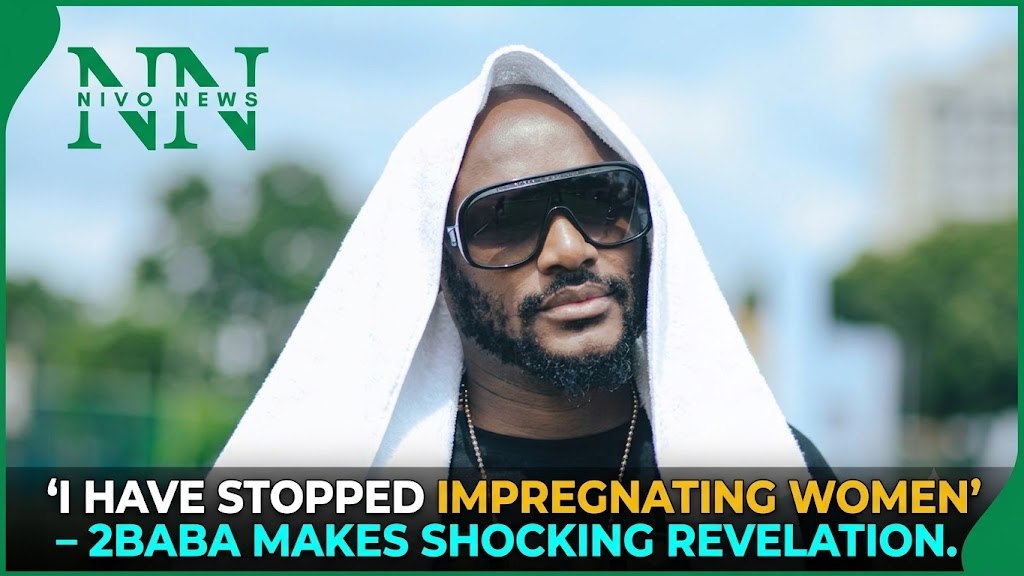
Nigerian music star Innocent Idibia, popularly known as 2Baba, has declared that he no longer impregnates women.....KINDLY READ THE FULL STORY HERE▶
The singer made the statement on Saturday during a live performance at Rehab Lounge in Calgary, Canada.
While performing his hit song True Love, 2Baba paused to interact with the audience and playfully asked the women present to identify where his true love was.
He jokingly wondered whether she was standing at the back of the venue or somewhere in front of him before making a remark about his experiences with women.
The award-winning musician told the audience that he had stopped getting women pregnant, adding that he had been making the same confession wherever he performed recently.
He said, “For the purpose of this show, I will pretend like I’ve never seen anything before. Where’s my true love? Is she back there? Is she right here? Is she somewhere here? Where’s my true love? You people shouldn’t put out me for trouble.
“As I said, some ladies they fear to shout. See, everywhere I go these days, I make this confession. As I say, some ladies they fear to shout. I say, I don’t fear to shout. Because I don’t stop to dey give woman belle. Ask anyone, they’ll tell you, I don’t do such thing things again.”
The singer’s comment comes amid public interest in his personal life and relationships.
2Baba was previously married to Nollywood actress Annie Macaulay-Idibia. The couple announced their separation in January 2025 after having two children together.

Abia Warriors were fined ₦3.2 million for failing to provide adequate security as agreed during the pre-match technical meeting ahead of their encounter with Niger Tornadoes.....KINDLY READ THE FULL STORY HERE▶
Abia Warriors were fined ₦3.2 million for failing to provide adequate security as agreed during the pre-match technical meeting ahead of their encounter with Niger Tornadoes.
The Umuahia-based club was also found guilty of an attempt by one of its officials to disrupt the live broadcast of the match by harassing a crew member of the league’s broadcast partner.
As part of the disciplinary measures, Abia Warriors’ multimedia officer, Chidera Favour Igwe, has been suspended from all NPFL match activities for five matches.
Katsina United, meanwhile, were fined ₦2 million for failing to provide adequate and effective security during their home fixture against Plateau United.
The club was also sanctioned for allowing supporters to encroach onto the field of play during the encounter.
Warri Wolves Receive Heaviest Punishment
Warri Wolves have been handed the most severe sanctions following the unruly behaviour of their supporters during Sunday’s Matchday 10 clash against Kano Pillars in Ozoro.
The Seasiders were fined ₦4.2 million and docked three points and three goals from their accumulated tally. The club was also ordered to play its next three home matches behind closed doors.
According to the NPFL, Warri Wolves failed to provide adequate security at the stadium, resulting in an assault on match officials after the final whistle.
The league further disclosed that the second assistant referee sustained a nose injury and was left bleeding during the incident.
The NPFL stated that all three clubs have 48 hours from the date of notification to appeal their respective sanctions in accordance with the league’s disciplinary procedures.
-

 latest1 year ago
“Social Media Erupts As Jim Iyke Declares Rita Dominic Nollywood’s Most Beautiful”
-
 latest3 years ago
Edo Political Showdown: Oshiomhole Appears At Presidential Villa As Tinubu Hands APC Gubernatorial Flag To Okpebholo (Photos & Video)
-
 entertainment3 years ago
Love Knows No Age American Woman Defends Marriage To Young Nigerian Man “I’m Not 70”
-
 latest3 years ago
Olumide Akpata Strikes Again: Drops Killer Track, Sends Edo State Into Frenzy!(Video)
-
 Politics3 years ago
Nigerians React As Pastor Adeboye Foresees Passing Away On A Sunday After Enjoying A Satisfying Meal Of Pounded Yam
-
 latest3 years ago
FG Identifies 31 States At Risk Of Heavy Flooding In 2024: See Full List
-
 Politics3 years ago
BREAKING: Inspector-General Of Police Summons Top Police Commanders For Crucial-Security Challenges
-
 latest3 years ago
5 NYSC Corpers Perish In Fatal Road Accident Returning From Camp