
Latest News
Boost for Farmers! FG Rolls Out Free Fertilisers as N200bn Agric Push Gains Momentum

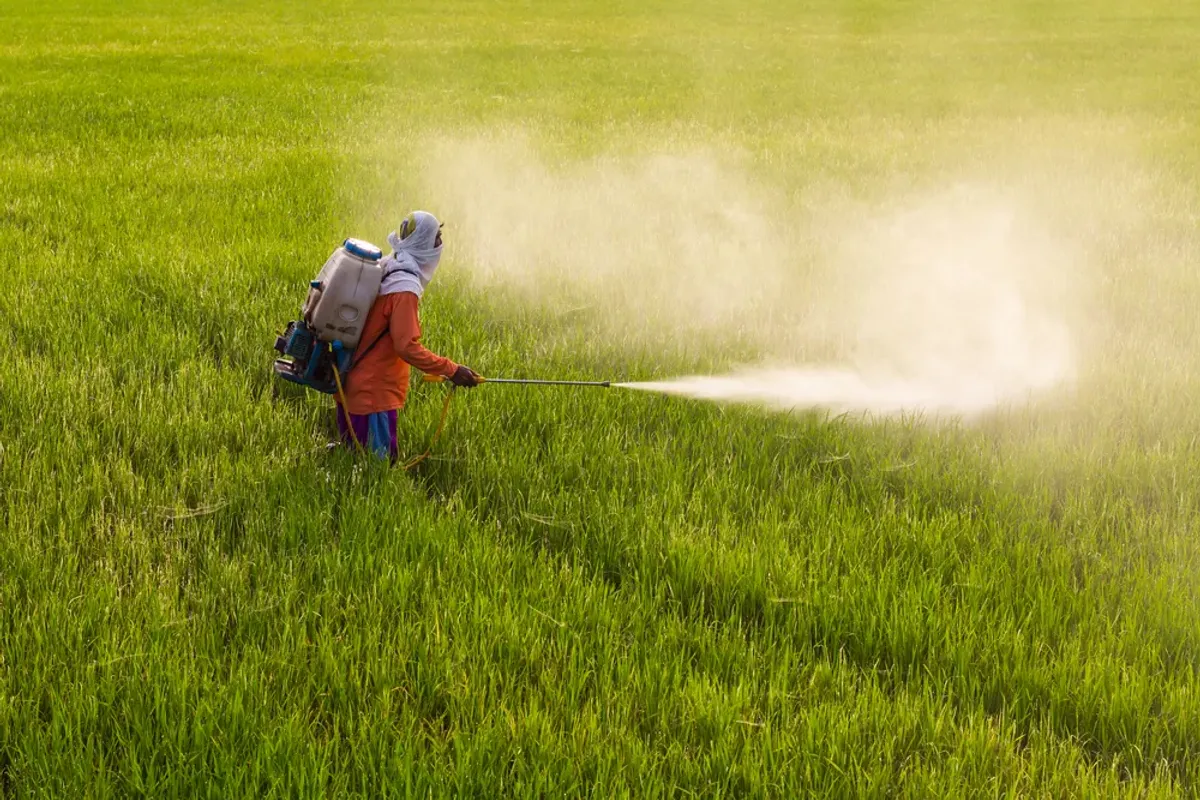
The Federal Government has committed more than N200 billion to the agricultural sector in a bid to enhance food production and strengthen national food security.....KINDLY READ THE FULL STORY HERE▶
In a statement released on Sunday, Minister of Agriculture and Food Security, Abubakar Kyari, announced that the ministry has invested over N200 billion in agricultural interventions and distributed fertilisers valued at over N2.15 million to farmers nationwide—completely free of charge—to boost cultivation and enhance crop yields.
Kyari also commended the Government of The Gambia for seeking a strategic partnership with Nigeria to strengthen food production and foster economic development across the region.
While acknowledging that Nigeria’s path to food sufficiency has been challenging, the minister highlighted the notable progress achieved so far, crediting support from key development partners such as the Food and Agriculture Organisation (FAO) and the World Bank.
The Minister of Agriculture and Food Security, Abubakar Kyari, has said that the path to food sufficiency in Nigeria has been tough but productive, with the government intensifying agricultural production through collaborations with development partners such as the Food and Agriculture Organisation (FAO) and the World Bank.
Kyari, speaking over the weekend, reiterated the administration’s commitment to ensuring food security, noting that when President Bola Tinubu assumed office in 2023, he issued a clear directive to achieve food sovereignty and end hunger in the country.
“The journey has not been easy, but the President gave a marching order: ‘we must achieve food security and food sovereignty,’ and that has remained our guiding principle,” Kyari stated.
He explained that the recent renaming of the ministry—from the Federal Ministry of Agriculture and Rural Development to the Federal Ministry of Agriculture and Food Security—was a deliberate move to reflect the urgency of tackling food insecurity, especially in light of challenges posed by climate change, the COVID-19 pandemic, and natural disasters like flooding.
Highlighting the administration’s drive towards mechanised agriculture, Kyari stressed the need to attract Nigerian youth into the sector. “We have enormous youth potential, but traditional, labour-intensive farming practices often discourage their participation,” he said.
The minister also pointed to progress made in local crop production, especially in rice and wheat. He revealed that significant breakthroughs in agricultural research have boosted Nigeria’s self-reliance, particularly in wheat production.
“In 2023, farmers received imported wheat seeds. But as of last year, we no longer import seeds—our research institutes have developed homegrown varieties that allowed us to cultivate nearly 500 metric tons of wheat within the country,” Kyari explained.
While challenges in the rice sector persist—particularly around availability and affordability—Kyari highlighted the outgrower scheme as a key strategy for supporting smallholder farmers.
“The scheme empowers small-scale farmers by giving them access to inputs and financing for short-term cycles between planting and harvest, typically within four to five months,” he added.
Kyari made these remarks during a courtesy visit by a Gambian delegation led by Demba Sabally, The Gambia’s Minister of Agriculture, Livestock, and Food Security. The delegation had earlier visited Kebbi State to study Nigeria’s rice farming and irrigation techniques.
Sabally praised Nigeria’s agricultural strides and expressed particular interest in the outgrower scheme model. “Your outgrower model—post-harvest management, mechanisation, seeds, packaging, and rice trade—is something we are eager to replicate,” he said.
He acknowledged that while Nigeria has made substantial progress in rice self-sufficiency, The Gambia still relies on imports for over 80 percent of its rice needs, a situation that continues to weigh heavily on the country’s economy.
Sabally concluded by calling for Nigeria’s support in appointing a “Rice Ambassador” to help guide The Gambia in replicating Nigeria’s success and advancing its own goal of achieving rice self-sufficiency.
Latest News
The Bulldozers Are Coming! Kano Targets Azman University In Massive Illegal Property Crackdown.
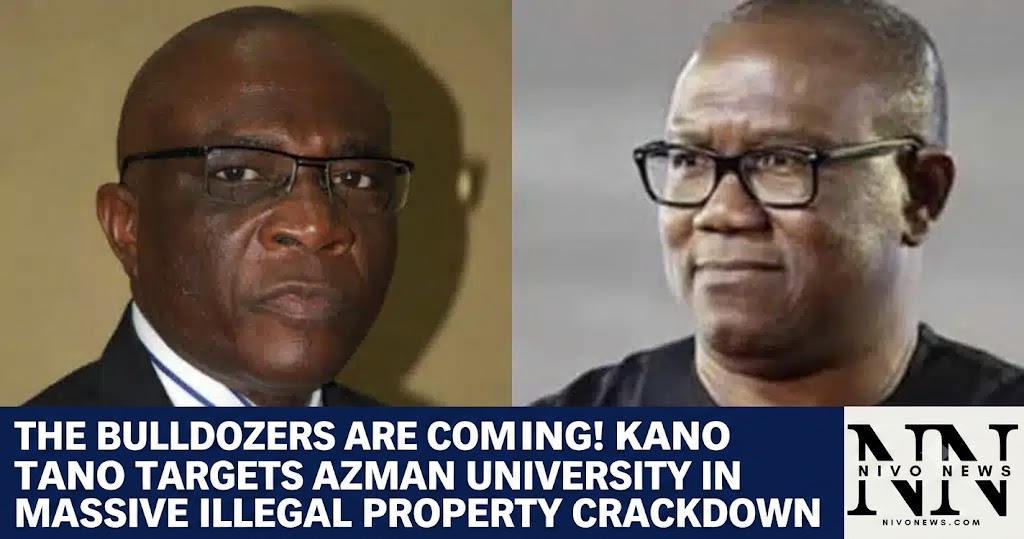
Bayo Onanuga, Special Adviser to the President on Information and Strategy, has dismissed recent claims by 2027 presidential hopeful Peter Obi regarding Nigeria’s power generation goals. During an Arise Television interview, Onanuga clarified that Nigeria’s core electricity crisis stems from structural deficits—such as gas supply shortages, a $4 trillion legacy debt owed to suppliers, and an aging national grid—rather than a lack of generation capacity.....KINDLY READ THE FULL STORY HERE▶
Onanuga noted that the nation already possesses an installed capacity of 13,500 megawatts, exceeding Obi’s promise to add 10,000 megawatts. He argued that the former governor lacks a clear understanding of the existing infrastructure limitations. Furthermore, Onanuga highlighted that the Tinubu administration is actively tackling these issues through the Electricity Act, which decentralizes power management, and the establishment of the Grid Asset Management Company Limited (GAMCO) to improve performance. He maintained that power generation has seen marked improvement since the current administration took office in May 2023.
President Bola Tinubu’s aide, Bayo Onanuga, has challenged Peter Obi’s pledge to increase Nigeria’s electricity generation by 10,000 megawatts within four years. In a recent interview, Onanuga stated that Obi’s plan ignores the reality that Nigeria’s installed capacity is already 13,500 megawatts—a figure that remains underutilized due to structural failures.
Onanuga identified the country’s primary obstacles as an outdated national grid, chronic gas supply issues, and a massive legacy debt of over ₦4 trillion owed to gas companies. He asserted that the current administration is addressing these systemic problems through legislative reforms, specifically citing the Electricity Act, which allows states to manage their own power generation, transmission, and distribution. Onanuga concluded that electricity output has already trended upward since May 2023 and that the government’s focus remains on optimizing existing assets rather than merely chasing higher capacity targets.
Bayo Onanuga is pushing back against Peter Obi’s recent promise to boost Nigeria’s power supply by 10,000 megawatts. According to President Tinubu’s spokesperson, the real issue isn’t a lack of capacity, but a broken system.
Onanuga pointed out that Nigeria already has 13,500 megawatts of installed capacity, most of which sits idle due to three main roadblocks:
-
The Grid: Outdated infrastructure that cannot handle current demands.
-
Gas Supply: A crippling lack of fuel for power plants.
-
Legacy Debt: A massive ₦4 trillion debt pile-up owed to gas suppliers.
Onanuga credited the Tinubu administration with tackling these hurdles head-on, specifically through the new Electricity Act that empowers states to generate and distribute their own power. He insists that the sector is already performing better than it was in May 2023 and that the focus is on fixing the structural bottlenecks, not just expanding capacity.
Would you like me to focus on a specific aspect of this report, such as the economic implications or the political disagreement between the two figures?

On Tuesday, the Federal High Court in Abuja initiated an investigation into the unauthorized release of a video linked to the ongoing trial of six individuals accused of conspiring to topple President Bola Tinubu’s government.....KINDLY READ THE FULL STORY HERE▶
Investigation into the Leaked Video
-
Court Directive: Following a complaint from the Director of Public Prosecution (DPP), Rotimi Oyedepo (SAN), regarding a video statement that surfaced on the social media platform of influencer “VeryDarkMan” despite a court-imposed restriction, Justice Joyce Abdulmalik ordered the Department of State Services (DSS) to conduct an inquiry.
-
National Security Concerns: The DPP characterized the leak as a national security risk that prejudices the ongoing judicial proceedings, noting the video had already surpassed 6,000 views.
-
Defense Stance: While defense counsel denied involvement in the leak, they held varying views on a probe; some welcomed an investigation, while others, like Sanusi Musa (SAN), cautioned against acting without formal evidence.
-
Judicial Ruling: Invoking Section 232(5) of the Administration of Criminal Justice Act, 2015, Justice Abdulmalik mandated the DSS to identify and bring any responsible parties before the court, noting that such prosecution would be handled separately from the main coup trial.
Trial Testimony and Bail Proceedings
-
Witness Testimony: A prosecution witness, an Army officer codenamed “DDD,” testified that the investigation was conducted by a multi-agency team—including the Army, DSS, DIA, and EFCC—and explicitly denied that the defendants were chained, coerced, or tortured during interrogation.
-
Defense Challenges: During cross-examination, defense lawyers challenged the interrogation process, specifically noting the absence of family members or legal representation during the suspects’ questioning; however, the witness stated no such requests were made by the defendants.
-
Bail Applications: The court heard bail arguments from the defense, which the DPP opposed; Justice Abdulmalik has reserved her ruling on these applications and adjourned the trial-within-trial for the first three defendants until June 25 and June 30.

-
Deportation of Nigerian National: A Nigerian citizen named Ayodeji Ajayi has been deported from the United States following a series of criminal convictions, which include domestic violence.....KINDLY READ THE FULL STORY HERE▶
-
-
Immigration Status: According to a statement released by US Immigration and Customs Enforcement (ICE) on their official account, Ajayi had been living in the US illegally for nearly two decades after failing to depart the country following the expiration of his student visa.
-
Criminal History: ICE reported that after abandoning his studies, Ajayi amassed a significant criminal record that includes convictions for domestic violence, trespassing, intimidation, and obstruction. Furthermore, his record includes charges involving kidnapping, rape, and family neglect.
-
Administrative Context: ICE attributed the removal of Ajayi to the immigration enforcement policies of President Donald Trump, noting the administration’s commitment to deporting criminal undocumented immigrants.
-
Missing Details: While the agency confirmed the deportation, they did not specify when it occurred, nor did they provide additional details regarding the jurisdictions of the convictions or the current status of his pending criminal charges.
-
Policy Enforcement: This action reflects the ongoing efforts by the Trump administration to intensify enforcement and increase the number of removals of undocumented individuals with criminal backgrounds across the United States.
-
-

 latest10 months ago
“Social Media Erupts As Jim Iyke Declares Rita Dominic Nollywood’s Most Beautiful”
-
 latest2 years ago
Edo Political Showdown: Oshiomhole Appears At Presidential Villa As Tinubu Hands APC Gubernatorial Flag To Okpebholo (Photos & Video)
-
 entertainment2 years ago
Love Knows No Age American Woman Defends Marriage To Young Nigerian Man “I’m Not 70”
-
 latest2 years ago
Olumide Akpata Strikes Again: Drops Killer Track, Sends Edo State Into Frenzy!(Video)
-
 Politics3 years ago
Nigerians React As Pastor Adeboye Foresees Passing Away On A Sunday After Enjoying A Satisfying Meal Of Pounded Yam
-
 latest2 years ago
FG Identifies 31 States At Risk Of Heavy Flooding In 2024: See Full List
-
 Politics3 years ago
BREAKING: Inspector-General Of Police Summons Top Police Commanders For Crucial-Security Challenges
-
 latest2 years ago
5 NYSC Corpers Perish In Fatal Road Accident Returning From Camp