
Politics
BREAKING: Presidency Reveals Reason For Tinubu’s Cabinet Reshuffle


Nigerians’ perception played a crucial role in President Bola Tinubu’s decision to discharge five ministers from his cabinet, according to the Special Adviser on Information and Strategy, Bayo Onanuga.....KINDLY READ THE FULL STORY HERE▶
Tinubu on Wednesday re-assigned 10 ministers to new portfolios and relieved five of their duties.
The president also nominated seven new persons for Senate confirmation.
The affected ministers include Minister of Youth Development, Dr Jamila Bio Ibrahim; Minister of Tourism, Lola Ade-John; Minister of Women Affairs, Uju Kennedy-Ohanenye; Minister of Education, Tahir Mamman; and Minister of State for Housing and Urban Development, Abdullahi Gwarzo.
Onanuga has now revealed that the Special Adviser to the President on Policy and Coordination, Hadiza Bala Usman, introduced a technological system that allowed Nigerians to assess the performance of ministers.
“It wasn’t done arbitrarily. Hadiza Bala Usman brought in technology, asking Nigerians to rate the ministers,” Onanuga said in an interview on Wednesday night.
“So, the removal of these ministers was based on empirical facts, shaped by the public’s perception.
“The scorecards were filled out by the people, and the President acted on those results. It wasn’t just about meeting the President’s expectations but also the public’s.
“A few weeks ago, during a cabinet meeting, the President urged the ministers to inform Nigerians of their accomplishments because, according to him, there was a public perception that the government wasn’t performing. The government believed it was, but the ministers weren’t effectively communicating their work,” he added.
Onanuga also claimed Tinubu’s administration is working to reduce the cost of governance.
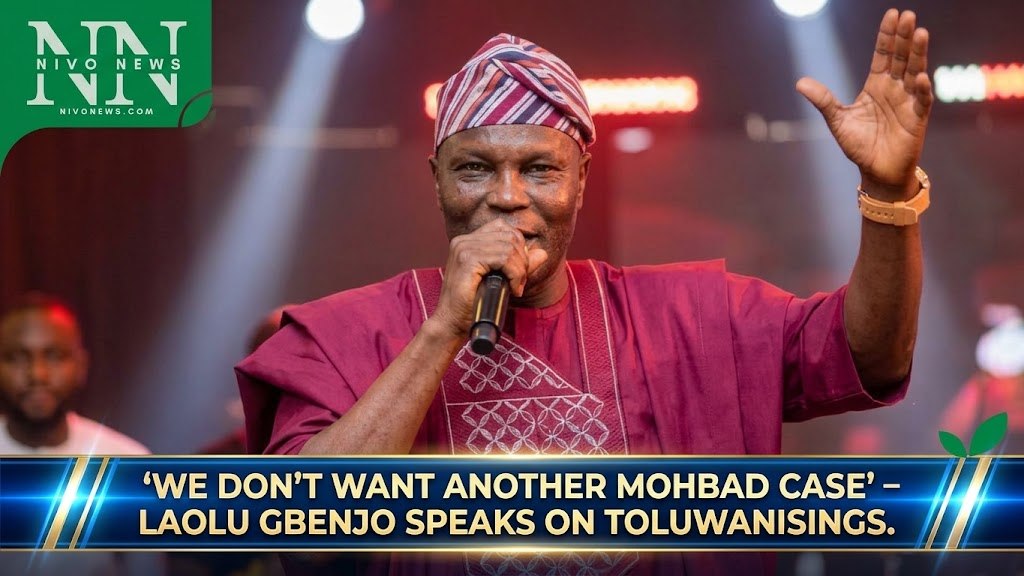
Nigerian gospel singer Laolu Gbenjo has cautioned the public against spreading unverified information about the circumstances surrounding the death of his colleague, Bayonile Bolaji, popularly known as Toluwanisings.....KINDLY READ THE FULL STORY HERE▶
Gbenjo’s warning comes amid growing controversy surrounding the late singer’s death and burial arrangements, with reports of disagreements among members of his family.
The gospel singer spoke on Tuesday during a night of tributes held in honour of Toluwanisings in Ibadan, Oyo State. He warned against allowing the situation to degenerate into a controversy similar to the one that followed the death of Nigerian singer Mohbad.
Describing the deceased as a devoted Christian and a genuine servant of God, Gbenjo said Toluwanisings was passionate about his faith and had a good relationship with people.
He urged the public to stop fuelling unnecessary controversy over the late singer’s death, particularly through social media platforms such as TikTok and Instagram.
“You can never see Toluwani in the midst of jobless people. He had a good heart. He was a friend to everybody. He served the Lord with all his heart. Don’t turn Toluwani into Mohbad. That madness on TikTok and Instagram must stop. If you are jobless, go and look for a job,” Gbenjo said.
Meanwhile, comedians Ayobami Ajewole, popularly known as Woli Agba, and Olamide Oladimeji, also known as Dele Omo Woli, have threatened legal action against individuals allegedly linking them to Toluwanisings’ death.
Woli Agba disclosed this in a public notice shared on his Instagram page on Sunday.
In the notice issued by their solicitors, Gemgold, the comedians warned members of the public against publishing or circulating allegations they described as false and defamatory against them.
The legal notice maintained that the allegations were baseless and intended to damage the reputations of the two entertainers.
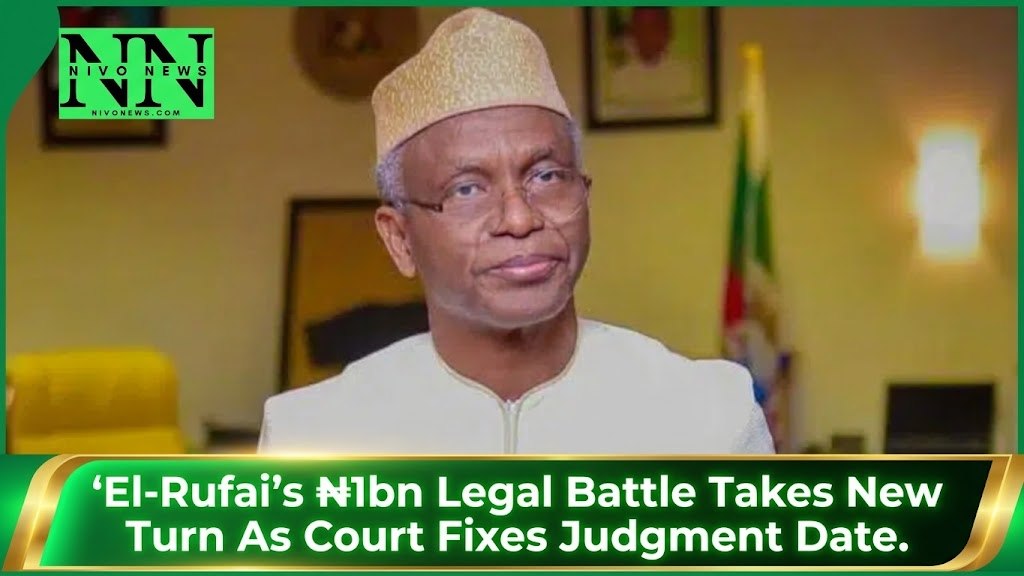
The Federal High Court in Abuja has fixed December 2, 2026, for judgment in the ₦1 billion fundamental rights suit filed by former Kaduna State Governor, Nasir El-Rufai, against the Independent Corrupt Practices and Other Related Offences Commission (ICPC) and other respondents.....KINDLY READ THE FULL STORY HERE▶
Justice Joyce Abdulmalik set the date after lawyers representing the parties adopted their respective court processes.
However, El-Rufai’s lawyer was absent when the case was initially called. The judge subsequently deemed the former governor’s filed processes adopted.
Counsel to the ICPC, Abdul Mohammed (SAN), adopted the commission’s court processes and urged the judge to dismiss the suit in its entirety.
Similarly, the lawyer representing the Inspector-General of Police, ACP Ezekiel Rimamsomte, and Maimuna Lami-Shiru, Director of Civil Litigation and Public Law, who appeared on behalf of the Attorney-General of the Federation (AGF), adopted their respective processes and asked the court to dismiss the case.
During the proceedings, El-Rufai’s lawyer, Ubong Akpan, arrived in court and apologised for his lateness.
When Akpan sought the court’s permission to adopt his client’s processes, Justice Abdulmalik informed him that the documents had already been deemed adopted.
The judge subsequently adjourned the matter until December 2, 2026, when judgment is expected to be delivered.
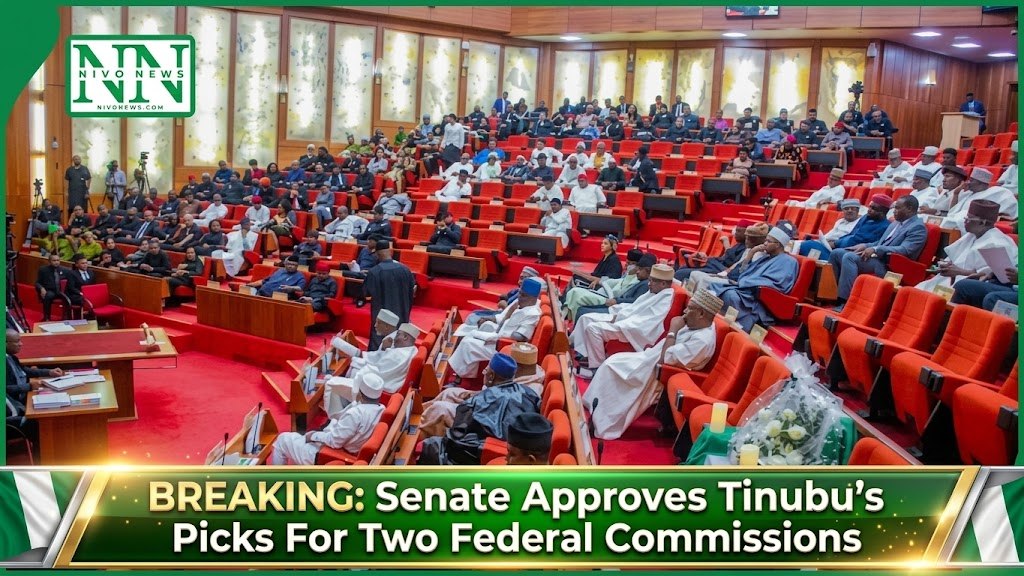
The Senate has confirmed Dr Salamatu Hussaini Suleiman as Chairman of the National Human Rights Commission (NHRC) and Dr Abdullahi Maikano Saidu as Executive Chairman of the Fiscal Responsibility Commission.....KINDLY READ THE FULL STORY HERE▶
Suleiman’s confirmation was approved alongside that of 10 other members of the NHRC, while Saidu was confirmed together with six other members representing Nigeria’s six geopolitical zones.
President Bola Tinubu nominated the appointees, Naija News reports.
The Senate’s approval clears the way for the nominees to assume their respective positions in the two federal commissions.
Meanwhile, President Tinubu has forwarded a bill to the Senate seeking to expand Nigeria’s legal framework for transferring convicted offenders to and from countries outside the Commonwealth.
The proposed legislation, known as the Transfer of Convicted Offenders (Enactment and Enforcement) Amendment Bill, 2026, was presented in a letter read by Senate President Godswill Akpabio during plenary on Tuesday.
The bill seeks to amend the Transfer of Convicted Offenders (Enactment and Enforcement) Act, Cap. T16, Laws of the Federation of Nigeria, 2004.
Under the proposed amendment, the President would be empowered to extend the provisions of the Act to any country with which Nigeria has entered into a prisoner-transfer agreement. Such an extension would be made through an order published in the Federal Gazette.
Tinubu explained that the amendment would provide the legal backing required to implement agreements reached between Nigeria and foreign governments on the transfer of convicted persons.
According to the President, the proposed law would establish a framework for enforcing such arrangements with countries outside the Commonwealth, giving the Federal Government greater flexibility in negotiating and implementing prisoner-transfer agreements.
Such agreements generally allow inmates to serve their sentences in another country under mutually agreed conditions while addressing the legal and administrative challenges associated with transferring prisoners across borders.
In his letter to the Senate, Tinubu urged lawmakers to give the bill urgent consideration.
“While it is my hope that the Senate will consider this submission expeditiously, please accept, Distinguished Senate President and Distinguished Senators, the assurances of my highest consideration,” he stated.
The bill was transmitted to the National Assembly pursuant to Section 58(2) of the 1999 Constitution, as amended. It must undergo the required legislative process before it can become law.
-

 latest1 year ago
“Social Media Erupts As Jim Iyke Declares Rita Dominic Nollywood’s Most Beautiful”
-
 latest3 years ago
Edo Political Showdown: Oshiomhole Appears At Presidential Villa As Tinubu Hands APC Gubernatorial Flag To Okpebholo (Photos & Video)
-
 entertainment3 years ago
Love Knows No Age American Woman Defends Marriage To Young Nigerian Man “I’m Not 70”
-
 latest3 years ago
Olumide Akpata Strikes Again: Drops Killer Track, Sends Edo State Into Frenzy!(Video)
-
 Politics3 years ago
Nigerians React As Pastor Adeboye Foresees Passing Away On A Sunday After Enjoying A Satisfying Meal Of Pounded Yam
-
 latest3 years ago
FG Identifies 31 States At Risk Of Heavy Flooding In 2024: See Full List
-
 Politics3 years ago
BREAKING: Inspector-General Of Police Summons Top Police Commanders For Crucial-Security Challenges
-
 latest3 years ago
5 NYSC Corpers Perish In Fatal Road Accident Returning From Camp