
latest
Oshiomhole Opposes Establishment Of New Drug Awareness Agency

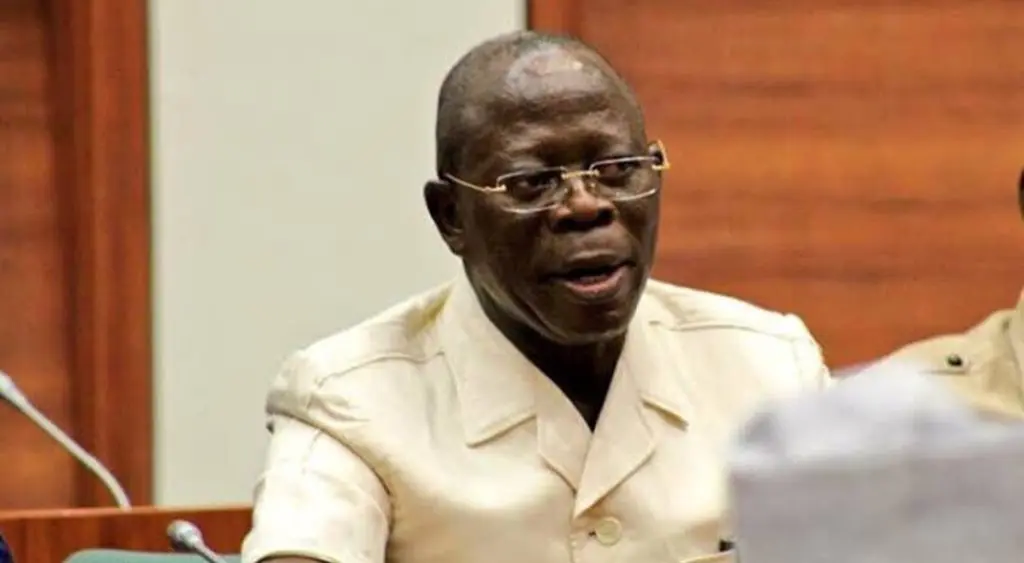
Oshiomhole Opposes Establishment Of New Drug Awareness Agency. Adams Oshiomhole, the former Governor and current senator representing Edo North Senatorial District, has voiced strong opposition against the proposed establishment of a National Institute for Drug Awareness and Rehabilitation.....KINDLY READ THE FULL STORY HERE▶
The bill aims to coordinate drug awareness efforts, prevent substance abuse, and facilitate rehabilitation across Nigeria.
Oshiomhole argues that the existing National Drug Law Enforcement Agency (NDLEA) already fulfills these roles, including training and education on drug abuse. He suggests that instead of creating a new agency, lawmakers should focus on strengthening the NDLEA by amending its laws to address any gaps.
Expressing concerns over increased government expenditure, Oshiomhole criticizes the idea of creating new agencies for every societal challenge, fearing it would lead to unnecessary bureaucracy without significantly improving the quality of life for Nigerians. He emphasizes the need for effective utilization of resources to combat drug-related issues decisively.
The debate over the bill continues amid differing opinions from lawmakers and stakeholders regarding the optimal approach to tackle drug abuse in Nigeria.
latest
JUSTICE SERVED: DSS Secures Shocking Death Sentence For Notorious ‘Dan Iyali’ Over Sokoto Bloodbath!,
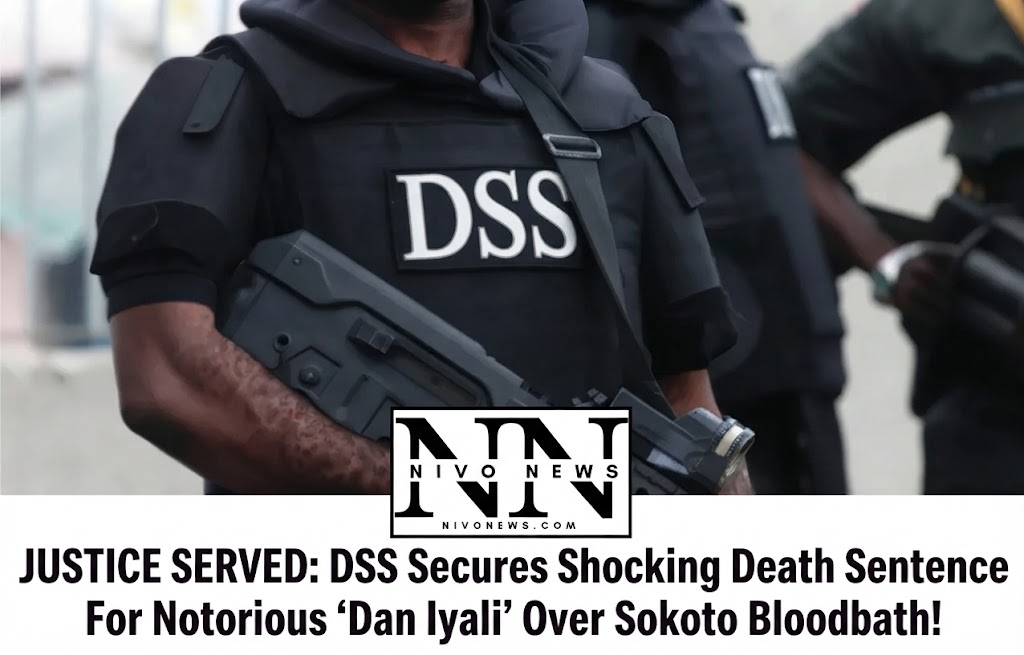
The Department of State Services (DSS) has successfully secured a death sentence against Ibrahim Usman, widely known as Dan Iyali, for his role in the kidnapping and murder of three individuals in Sokoto State.....KINDLY READ THE FULL STORY HERE▶
-
The Conviction: Usman was found guilty on a four-count charge at the High Court of Justice of Sokoto State, sitting in the Sokoto Judicial Division. His charges included criminal conspiracy, kidnapping, culpable homicide punishable by death, and voluntarily causing grievous hurt without provocation.
-
The Crime: These offenses stemmed from the abduction and subsequent killing of three people in Sokoto State in September 2023. Usman stood trial alongside other accomplices who remain at large.
-
Recent Legal Precedents: This ruling follows a similar milestone in June 2026, when the same Sokoto High Court sentenced three other men—Yusuf Muhammad (a Nigerien national), Jabbi Alhaji Yalle, and Kabiru Muhammad—to death by hanging for terrorism, arms trafficking, and cross-border criminal activities following their arrest by the DSS Counter Terrorism Unit.

The Independent National Electoral Commission (INEC) has announced that the collection of Permanent Voter Cards (PVCs) for the upcoming 2027 general elections will officially begin on October 9, 2026.....KINDLY READ THE FULL STORY HERE▶
-
Readiness Assessment Tour: The announcement was made following an assessment visit by INEC Chairman Professor Joash Amupitan and his team to Kaduna State. The visit is part of a broader six-zone national tour across the country to evaluate field operations and prepare for the 2027 polls.
-
Grassroots Focus: Speaking at the North-West Zonal Interactive Meeting, Amupitan emphasized that election success is determined in the field—at local government areas, registration area centers, and polling units—rather than just in Abuja headquarters. He urged staff to address operational bottlenecks and maintain strict neutrality.
-
New Registrations: The Chairman disclosed that three phases of Continuous Voter Registration have yielded 10,772,421 new registrations, pending Automated Biometric Identification System verification. He stressed the need to eliminate distribution hurdles so citizens are not disenfranchised.
-
Technology and Logistics: INEC is currently refining its technological systems, including voter verification, result transmission processes, and the newly introduced eEC8A Result Management System. The commission is also implementing a “Zero-Failure” logistics strategy to ensure the early deployment of materials and proper security coordination.
latest
PEAK IGNORANCE EXPOSED: Tinubu’s Aide Fires Brutal Shot At Dino Melaye Over ₦20,000 NELFUND Fee!,

President Bola Tinubu’s Special Adviser on Social Media, Olusegun Dada, has strongly criticized African Democratic Congress (ADC) chieftain Dino Melaye over his remarks regarding the Nigerian Education Loan Fund (NELFUND).....KINDLY READ THE FULL STORY HERE▶
-
-
Melaye’s Claims: In a viral video circulating online, Melaye labeled NELFUND a center of corruption, claiming that students are only receiving a ₦20,000 monthly stipend. He questioned how any government school could charge ₦20,000 as annual tuition and criticized President Tinubu’s administration over the matter.
-
The Aide’s Response: Taking to his official X (formerly Twitter) handle, Olusegun Dada fired back at Melaye, describing his comments as “peak ignorance.” Dada accused Melaye of intentionally confusing the public by conflating the ₦20,000 monthly upkeep allowance with the actual tuition fees paid directly to institutions each academic session.
-
-

 latest1 year ago
“Social Media Erupts As Jim Iyke Declares Rita Dominic Nollywood’s Most Beautiful”
-
 latest3 years ago
Edo Political Showdown: Oshiomhole Appears At Presidential Villa As Tinubu Hands APC Gubernatorial Flag To Okpebholo (Photos & Video)
-
 entertainment3 years ago
Love Knows No Age American Woman Defends Marriage To Young Nigerian Man “I’m Not 70”
-
 latest3 years ago
Olumide Akpata Strikes Again: Drops Killer Track, Sends Edo State Into Frenzy!(Video)
-
 Politics3 years ago
Nigerians React As Pastor Adeboye Foresees Passing Away On A Sunday After Enjoying A Satisfying Meal Of Pounded Yam
-
 latest2 years ago
FG Identifies 31 States At Risk Of Heavy Flooding In 2024: See Full List
-
 Politics3 years ago
BREAKING: Inspector-General Of Police Summons Top Police Commanders For Crucial-Security Challenges
-
 latest3 years ago
5 NYSC Corpers Perish In Fatal Road Accident Returning From Camp