
latest
When Integrity Becomes Non-Negotiable: Oyebanji’s Path To Leadership

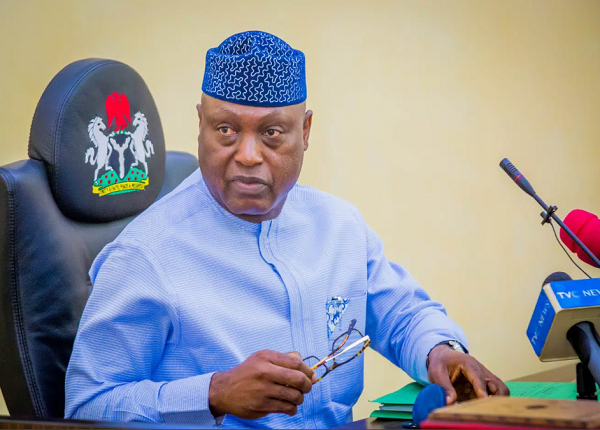
When Integrity Becomes Non-Negotiable: Oyebanji’s Path To Leadership. People with good intentions make promises; people with integrity keep them -unknown.....KINDLY READ THE FULL STORY HERE▶
Sine qua non is a Latin phrase that means “without which not” or “an indispensable condition.” It refers to a necessary condition or element that is required for something to happen, exist, or be true.
In other words, a sine qua non is a crucial factor that is essential for a particular outcome, event, or situation to occur. Without this factor, the outcome, event, or situation would not be possible.
Integrity, on the other hand, implies trustworthiness and incorruptibility to a high degree. People with integrity have nothing to hide and nothing to fear. Leaders who make integrity their watchword tend to embody trust and create the foundation for long-term success.
Ekiti is a very complex State to govern for the fact that limited resources are often thrown at limitless needs, with the people feeling entitled, it is quite tough to meet every need. It takes the citizens’ trust for the governor to be acceptable. In a political landscape like ours in Nigeria, often marred by corruption and self-interest, Governor Biodun Abayomi Oyebanji of Ekiti State, codenamed BAO, stands out as a shining example of what it means to be integrity-driven. His unwavering commitment to the betterment of his constituents has earned him a well-deserved reputation as one of the governors driven mostly by integrity in Nigeria today.
BAO’s integrity is not an artificial one. He also backs it up with action, and he is consistent with it. In his words: “If I make a promise, I will surely see to its fulfillment.” Meaning that he walks his talk, and does it so humbly that one would almost take it for granted as an auto-run venture.
While declaring open a three-day retreat for the heads of local governments and local council development areas, LCDAs, of the state last June, Gov. Oyebanji urged them to borrow a leaf from his administration by placing high premium on professionalism, discipline, compassion, and teamwork in order to drive substantial improvement in local government administration in the State.
The Governor further said the only way for them to earn the trust of the people was such that they would discharge their civic responsibility with utmost sincerity, integrity, efficiency and professionalism. He encouraged them to uphold the highest ethical standards of honesty and transparency in all their dealings.
Inconsistency is the antithesis of trust. A person commits the fallacy of inconsistency when he or she makes contradictory claims or when his actions are incongruous with his words. Oyebanji is very consistent in his dealings. He seems to have perfectly rehearsed and perfected his acts as if he knew he would someday mount the saddle.
Oyebanji does not only govern with integrity, he keeps his ears to the ground to listen to the yearnings of the people. Like he would often tell his aides: “don’t try to gag anyone, let them voice their feelings freely and let us endeavour to assuage them.”
It is two years now that Oyebanji canvassed, earned and mounted the saddle to govern Ekiti State. Right down the line, his passion to govern with integrity and prioritise the needs of the people has not waned a bit. He works relentlessly in and out of the box to meet every expectation. While traversing the length and breadth of the State passionately, asking the citizenry to trust him with their votes, Oyebanji made a lot of promises that not a few began to wonder if he was not over-promising. He indeed promised much. For every concern, he had an assurance to give. In general, he promised shared prosperity, that he won’t rest on his oars until every home feels the positive impact of his governance. He promised to give every son and daughter of Ekiti a sense of belonging and make them to be proud of their State under his watch. He promised every community a touch of governance in terms of projects and appointments.
Oyebanji promised the youths, he promised the aged, he promised the women, he promised the children, he promised the royal fathers and the subjects, he promised to make every religion count, he promised the investors, he promised the farmers, he promised the market women, he promised the artisans, he promised the transporters, he promised the teachers, he promised the students, he promised the workers, he promised the retirees, he promised the unemployed, he promised the out of school, he promised the politicians, he promised the apolitical., he promised the indigenes and non-indigenes alike. In his words, there would be something for everyone in his government, and no one would doubt where he stands as the governor on any matter.
Today, two years into his government, it can be said of Gov Oyebanji that he has not failed any of his promisees. Give it to him that he prioritizes integrity, he regards it as the paragon of his values. He not only preaches it, he embodies it in his official and personal lives. Add to this his non-treacherous nature. He honours all his predecessors in office and continues to value the ladder he climbed to reach the top.
By swashing about with qualities like honesty, transparency, accountability and by accommodating criticisms of all sorts, Oyebanji has given everyone a reason to trust his leadership and warm up to him. Even his critics today are of the view that the mantle of leadership should rest on him much longer.
As a leader steeped in integrity, Oyebanji makes ethical decisions, even when grappling with formidable dilemmas like trying to meet conflicting needs. He weighs the ramification of every choice on a broad spectrum and considers the interest of every stakeholder, especially that of a larger community.
Oyebanji is quick to accept blames. He takes ownership of his actions and tasks himself with shouldering responsibility for his choices. He does not give excuses, he gives results. And in doing so, he demonstrates an unwavering commitment to constant betterment.
Two of Oyebanji’s powerful assets as governor, aside humility and diligence, are diversity and inclusivity. He actively seeks out a multitude of perspectives, fosters an environment where all voices are respected. Such a “no-foe” approach to governance, fuels innovations and augments good decision making.
Simply because Oyebanji puts his integrity forward, communicates transparently, makes ethical decision and projects shared vision for the people to flourish collectively, not a few have come to believe in his mission and they call for an encore of his tenure, albeit, an uninterrupted second term. The call keeps resonating and increasing by the day.
Succinctly put, if the people must continue to believe in beautiful soul, kind heart and good energy, then, they must stick to BAO. Though he has spent just two of the first four-year term, a second four-year term is loading already and becoming a surer bet in Ekiti. So far, so good, it’s a merited call from the people who are happy with the current situation in Ekiti, made possible by Oyebanji’s sincerity of purpose.
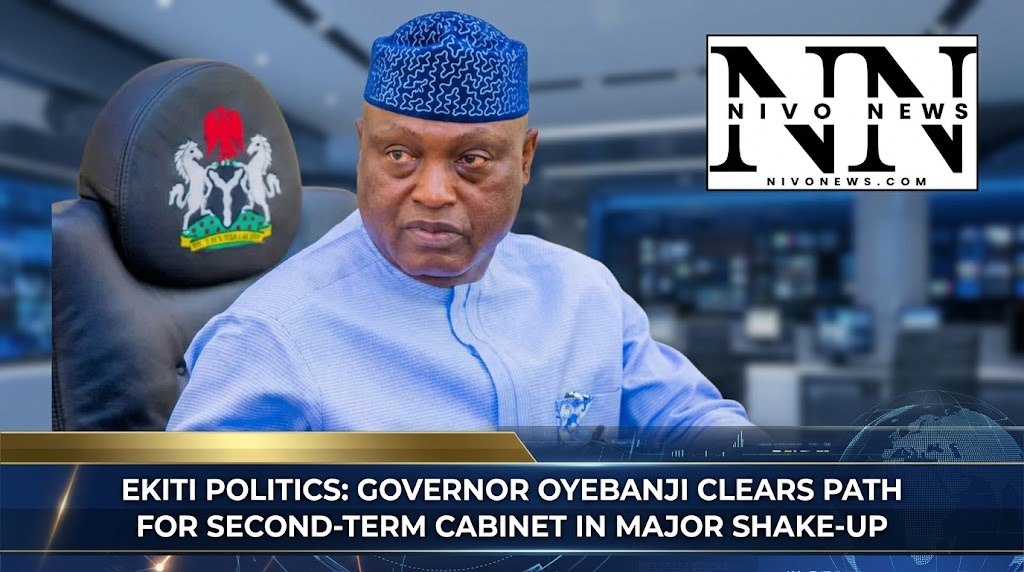
Ekiti State Governor, Biodun Oyebanji, has approved the immediate dissolution of state boards, commissions, and parastatals, alongside terminating the appointments of several political aides.....KINDLY READ THE FULL STORY HERE▶
According to an official statement released on Sunday by the Special Adviser on Media to the Governor, Yinka Oyebode, the termination affects all Special Assistants (SAs), Senior Special Assistants (SSAs), and Technical Assistants (TAs).
The statement clarified that the move is part of a gradual transition as the administration winds down its first term ahead of Governor Oyebanji’s second-term inauguration on October 16, 2026.
Key Exemptions
The governor outlined specific offices, governing bodies, and officials exempted from the directive:
-
Statutory Commissions: Members and chairmen of the State Independent Electoral Commission (SIEC), Civil Service Commission, Judicial Service Commission, and House of Assembly Service Commission remain in office.
-
Tertiary Institutions: The governing councils of all state-owned higher institutions are unaffected.
-
Selected Agency Leadership: The chairmen of the State Universal Basic Education Board (SUBEB), Teaching Service Commission, and Local Government Service Commission retain their positions, though their board members have been relieved of duty.
-
Senior Executive Aides: Directors-General and Technical Advisors to the Governor remain in their respective roles.
Governor Oyebanji commended the outgoing appointees for their dedication, hard work, and valuable contributions toward the progress of Ekiti State during his first tenure.
Former Governor of Cross River State and 2027 Peoples Redemption Party (PRP) presidential candidate, Donald Duke, has stated that petrol in Nigeria can sell between ₦200 and ₦300 per litre without government subsidies if fuel prices are pegged to local production costs rather than international market rates.....KINDLY READ THE FULL STORY HERE▶
Speaking in an interview with Vanguard, Duke explained that true subsidy occurs when a product is bought at a high price and sold to consumers below cost. He argued that since crude oil is Nigeria’s collective resource, domestic fuel pricing should reflect what it costs to extract, refine, and distribute the oil locally.
Key Highlights of Donald Duke’s Strategy:
-
Production Cost vs. Market Price: Duke noted that while crude oil sells internationally for $70 to $80 per barrel, Nigeria’s local production cost does not exceed $40 per barrel. Out of the ~1.7 million barrels produced daily, Nigeria requires only about 300,000 barrels for local consumption.
-
Byproduct Amortization: A single barrel yields seven refined products. Duke proposed that five of those byproducts (such as aviation fuel and kerosene) be sold at commercial international rates, using those revenues to offset the refining costs of petrol and diesel.
-
Domestic Pricing Formula: He advocated supplying petrol and diesel to Nigerians at actual production cost plus a modest 5% to 10% margin to cover distribution.
Under this model, Duke asserted, the federal government could completely eliminate subsidy payments while dramatically reducing pump prices for citizens.

Dr. Echuseh Audu, Executive Secretary of the Taraba State Emergency Management Agency (SEMA), is facing renewed scrutiny following financial disclosures linking her and a related business, Katuka’s Kitchen, to transfers totaling ₦49.44 million.....KINDLY READ THE FULL STORY HERE▶
The developments follow earlier, unproven social media allegations that SEMA diverted over 10,000 bags of rice and 1,000 cartons of groundnut oil intended for internally displaced persons (IDPs). Dr. Audu has strongly denied the diversion claims and voluntarily presented herself to security agencies—including the Police, DSS, NSCDC, and the Ministry of Justice—demanding a full investigation.
Key Financial Inflows & Controversial LPRES Transfer
Financial records obtained by SaharaReporters detail multiple transfers across accounts associated with Audu and Katuka’s Kitchen:
-
World Bank Project Transfer: On October 28, 2025, the Taraba State Livestock Productivity and Resilience Support Project (LPRES) Draw Down Account transferred ₦12,190,726.80 to Katuka’s Kitchen. The same amount was later returned to the LPRES account. Insiders questioned the propriety of a government project conducting business with a public official’s associated entity, though records do not specify if the transaction was a contract payment, reimbursement, or error.
-
Inflows Breakdown (Totaling ₦49.44 Million):
-
₦15M: Transferred from an account under Audu Echuseh Echuseh at UBA (May 10, 2024).
-
₦7M: Transferred from Katuka’s Kitchen’s Fidelity Bank account (August 16, 2024).
-
₦5.25M: Received from Sunday Stephen via Globus Bank (January 30, 2026).
-
₦5M: Received from Callistus Obiejezie (February 25, 2026).
-
₦5M: Transferred from a UBA account under Audu Echuseh (Date unspecified).
-
₦44 Million Hospital Payments
The records also highlight three transactions totaling ₦44 million paid to GTBank accounts belonging to Nizamiye Hospital in Abuja (₦15M on Feb 20, 2026; ₦14M on Feb 26, 2026; and an undated ₦15M payment). Sources close to Audu clarified that these funds were utilized to cover medical expenses for a young girl who subsequently passed away.
Questions Over Business Ownership & Corporate Filings
While sources close to the SEMA Chief claim she formally resigned her role with Katuka’s Kitchen at the Corporate Affairs Commission (CAC), reports indicate her Bank Verification Number (BVN) remains tied to the business’s active accounts across Access Bank, Globus Bank, and Fidelity Bank.
SEMA Maintains Stance on Integrity
TSEMA reiterated its commitment to transparency, noting that over 50,000 emergency victims have benefited from state relief distribution. Dr. Audu had not responded to requests for comment at the time of publication.
-

 latest1 year ago
“Social Media Erupts As Jim Iyke Declares Rita Dominic Nollywood’s Most Beautiful”
-
 latest3 years ago
Edo Political Showdown: Oshiomhole Appears At Presidential Villa As Tinubu Hands APC Gubernatorial Flag To Okpebholo (Photos & Video)
-
 entertainment3 years ago
Love Knows No Age American Woman Defends Marriage To Young Nigerian Man “I’m Not 70”
-
 latest3 years ago
Olumide Akpata Strikes Again: Drops Killer Track, Sends Edo State Into Frenzy!(Video)
-
 Politics3 years ago
Nigerians React As Pastor Adeboye Foresees Passing Away On A Sunday After Enjoying A Satisfying Meal Of Pounded Yam
-
 latest2 years ago
FG Identifies 31 States At Risk Of Heavy Flooding In 2024: See Full List
-
 Politics3 years ago
BREAKING: Inspector-General Of Police Summons Top Police Commanders For Crucial-Security Challenges
-
 latest3 years ago
5 NYSC Corpers Perish In Fatal Road Accident Returning From Camp