
entertainment
Bobrisky Debate Sparks Embarrassment For National Assembly


Bobrisky Debate Sparks Embarrassment For National Assembly. In the previous article I wrote regarding popular crossdresser and transgender Bobrisky, real name; Idris Okuneye, I suggested that if there is a way her antics have proved useful, it is how much they manage to reveal us to us.....KINDLY READ THE FULL STORY HERE▶
Well, Bobrisky did it again when she became a topic at the National Assembly. Credit goes to her for showing the vapidity of our lawmakers.
Not that we did not already know they are essentially overpaid harlequins, but watching the whole drama of their inviting a social media clout chaser―who shows up accompanied by another clown cosplaying “native doctor” to a purported investigative panel―confirmed the institution they represent as perhaps irretrievably degraded.
What were the lawmakers expecting when they summoned someone who had merely released a taped conversation? This character did not put any skin in the game; he did not embark on fact-finding to get the information. The expose was merely a dialogue between supposed friends that someone had passed him to blackmail Bobrisky to pay a debt. Already obsessed with Bobrisky, he decided to release the tape to the public even after the debt was cleared. That is the character lawmakers summoned to the “hallowed chamber.” They did not stop there; they also invited Bobrisky; who had enough sense not to show up. What exactly were they trying to achieve by bringing those two together to face off? Is the NASS now Kókóró Aláte?
Look, I get it. They wanted to respond to the Bobrisky case considering the public interest the leaked tape elicited, but was that how to go about it? Their unserious approach shows how poorly they think of their constitutional powers and their moral duty. If they are interested in reforming our carceral system, I am sure they will find serious research conducted by serious people at the libraries of either NIPSS in Kuru, Jos, or the various think tanks in the country. Why ignore all that to pursue a social media “influencer”? It is not as if anything that has been revealed so far is new information. We were all here in December last year when the National Correctional Service, the DSS, and the EFCC publicly fought over who should have custody of the former CBN governor, Godwin Emefiele. Why would three agencies be jostling over the detention of a rich inmate if not because they see him as an opportunity?
In 2019, investigative journalist Fisayo Soyombo published his investigation into the rot that typifies the Nigerian prison system. This was someone who actually got himself incarcerated just to substantiate his allegations of corruption in the Nigerian prison system. If the NASS needed to summon a person who had experienced how degenerate the prison system had become, it should have been him. Why overlook those who have committed sincere efforts towards researching these issues to run after those whose interest in this matter is not even skin deep? These are people who have turned the internet into a job, and all of this is just another show to tickle an idle followership.
To be clear, I am not against a diligent investigation into the issue. Yes, both the EFCC and the correctional service ought to be investigated with an eye toward reforms. I also think that the procedure for getting presidential pardons needs to be reviewed. The category of people who receive presidential pardons in Nigeria has always been suspicious anyway. As commonplace as the allegations that emanated from Bobrisky’s leaked tape are, they are still grievous enough to warrant a diligent investigation. What is entirely unacceptable is the frivolity of the lawmakers’ inviting social media figures―who are constantly at loggerheads―to confront each other. By also inviting a crowd of journalists, and televising the encounter, they reduce a grave matter of institutional collapse to mere entertainment. Those kinds of issues are best resolved by confronting the liable institutions, not individuals whose roles are merely symptomatic of the larger systemic rot.
For me, the matter is worth investigating given the role of the EFCC and the alleged N15m bribe. Their self-justification regarding why they dropped the money laundering charges against Bobrisky was more scandalising because of what it revealed about them and their investigation process. According to an EFCC prosecutor, Bilikisu Bala, who claimed the money laundering against Bobrisky was rightfully dropped, they had charged her based on her confessional statement that her firm, Bob Express, was not registered with SCUML and was not rendering returns to the organization. Now, that part piqued my interest.
So, it was not like there was any report that warranted their arresting Bobrisky and charging her with money laundering in the first place. They arrested her, and seeing as how the Naira mutilation offense―for which she was eventually imprisoned―was too cheap to convince the public of the necessity of their actions, they pressed her into some self-disclosure, and then proceeded to charge her with an offense based on her own words! Let me say that again. Prior to the arrest, they had nothing substantial against Bobrisky. But they thought that if they detained her and shook her well enough in their custody, one or two things that could be used against her in the court would eventually fall off.
Now, there is a possibility that even though they finally realised that the case of money laundering would not sail, some of their men still went ahead and used the charges to extort money from her. Since she might not have realised there was no evidence whatsoever to charge her with money laundering, they took advantage of the knowledge gap to demand a bribe. So, when their prosecutor Bala said the money laundering charges were “legally” dropped, he was not exactly lying. There was never a basis for them in the first place but were necessary because the EFCC was desperate to charge Bobrisky with an offense so sensational that it would obscure the very thing about her that was paining them: her sexuality.
If that was exactly how it happened, then it explains a lot about why the EFCC has been an ineffective institution; they are so crooked that they cannot stand straight on any issue at any time. When you see the EFCC chairman, Olu Olukayode, wringing his fingers and moaning about how they opened a “backdoor” for former Kogi governor Yahaya Bello, just know that it is not the way the law was worded that constricts their initiative on Bello. Where else does it happen that an investigating agency needs the cooperation of an accused to do their job to the extent they would practically be begging for the attention of the person they are supposed to prosecute? After months of EFCC’s whining, Bello finally walks into their headquarters and walks out while the officials look on like a headless mannequin in a lingerie store. They were paralyzed by their own lack of moral backbone. Shame!
We have no objective evidence of who demanded the money from Bobrisky and how it was shared, but there are enough details from the tape to convince anyone who has been paying attention to the pattern of things that the accusation could not have been false. No one prompted Bobrisky to rant, so why would she have lied against the EFCC in a tape she did not know would leak? Also, considering that aspects of her story—particularly the part about staying in a private prison—have been confirmed by prison officials, the part about the EFCC is most likely true as well. In any case, the only reason people are excited by this is Bobrisky. Nothing about this scandal is new. While one cannot control what topics people chinwag on social media, should lawmakers not be too serious to give institutional gravitas to every silliness?
entertainment
We Will Work Towards Our Wedding” – Nkechi Blessing Reconciles With Ex-Husband, Falegan.
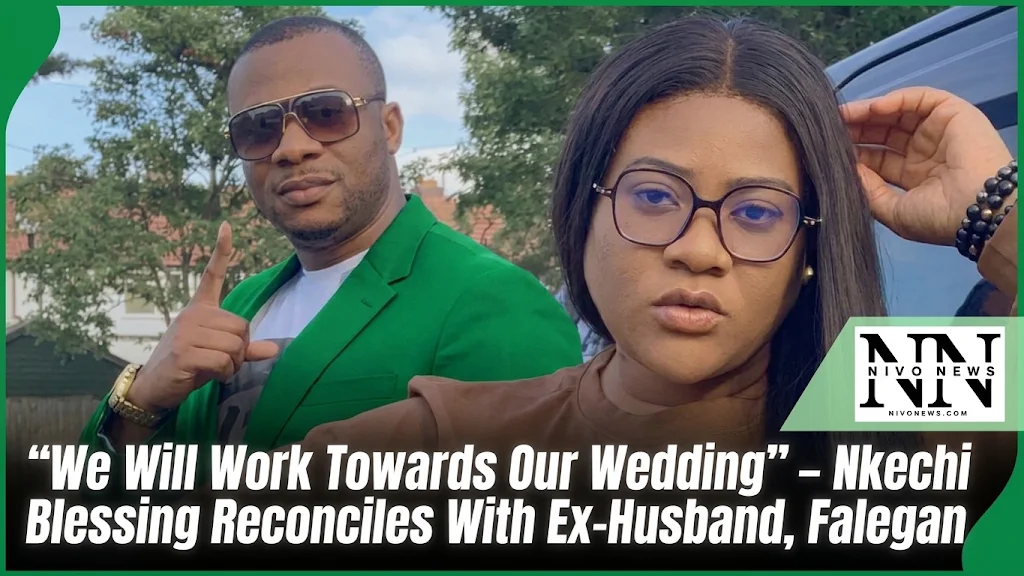
Nollywood actress Nkechi Blessing has rekindled her relationship with her former partner, Opeyemi Falegan, four years after their highly publicised breakup.....KINDLY READ THE FULL STORY HERE▶
The actress announced their reconciliation during a TikTok live session on Saturday night, revealing that they had been communicating since February 2026.
However, Nkechi said she had made a public apology a condition for rebuilding their relationship, insisting that Falegan must take responsibility for some of the negative remarks he made about her during their past disagreement.
According to her, his previous comments have continued to resurface online, with some social media users recently using them to ridicule and attack her.
She said: “I told you in February that if we must do this, you have to apologize to me because what you said years ago, some irrelevant nitwits still used it to insult me yesterday. That is to tell you that the internet never forgets. Anything dey outside? Lie, is anything dey outside? I have gone back to square one. You people should watch me and my baby; we will work towards our wedding, my love.”
Falegan subsequently acknowledged his past actions and tendered an apology to the actress.
He said: “From the bottom of my heart to the depth of my soul, I’m sorry, Nkechi. That’s in the past.”
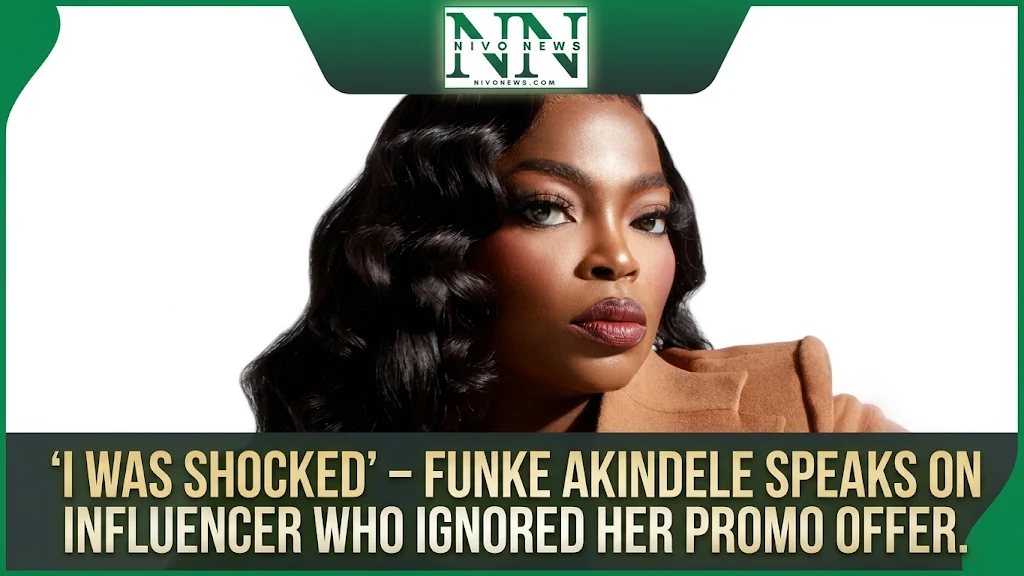
Nollywood actress and filmmaker, Funke Akindele, has revealed how a social media influencer ignored and turned down her offer to pay for promotional content for her 2024 movie, Everybody Loves Jenifa.....KINDLY READ THE FULL STORY HERE▶
Akindele made the revelation during a panel discussion at the Creative Africa Nexus Weekend (CANEX WKND).
The actress explained that she was initially hesitant to contact the unnamed influencer but eventually decided to reach out to explore a possible promotional partnership for the movie.
According to her, she waited for several days before receiving a response that the influencer’s management was not interested in the proposed collaboration.
Akindele said she even offered to pay for the promotional content, but the influencer allegedly ignored her message.
Despite the experience, the filmmaker maintained that the rejection did not discourage her from seeking promotional partnerships, adding that she had learnt not to allow such situations to affect her emotionally.
She also disclosed that she later came across claims that she had blocked someone over the disagreement but did not reveal the identity of the influencer.
Recounting the experience, she said:
“There was this influencer I reached out to, I sent a message to them that I would like to create content. One, two, three… for almost a week. And I did not want to send this message, this was during ‘Everybody Loves Jenifa’ but I tried and I was like let me send it, so I sent it.
“The person was like ‘I am sorry, my management does not want me to do this’. And I was like ‘I would pay’ but the person ignored me. Then months after, I read that I blocked somebody because of this.
“I didn’t let it affect me. I embraced it. I didn’t go and reply. I just said, God, take control. I got back to it.”
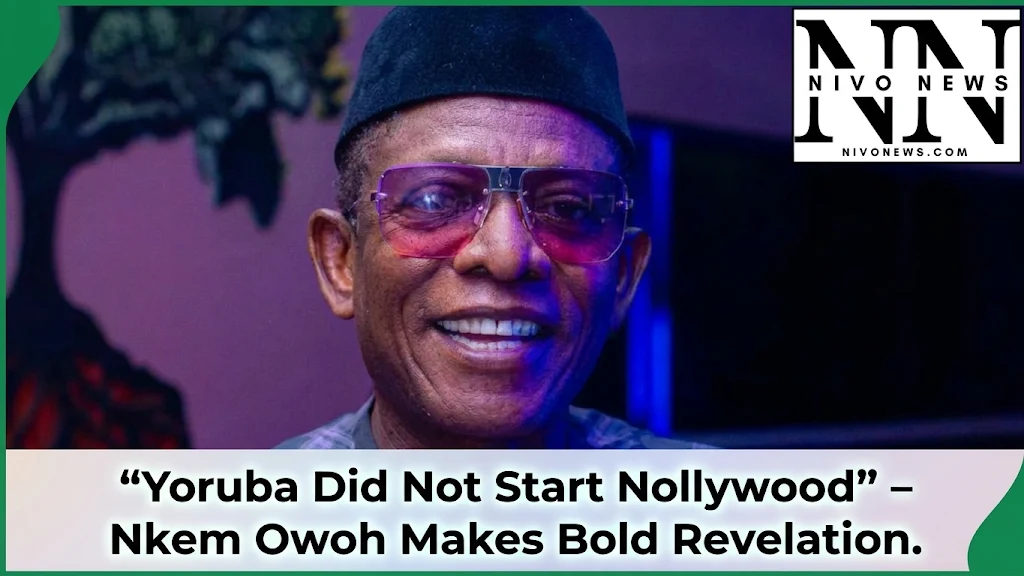
Veteran Nollywood actor Nkem Owoh, popularly known as Osuofia, has clarified that Yoruba people pioneered home-video production in Nigeria but did not start Nollywood.....KINDLY READ THE FULL STORY HERE▶
Owoh made the clarification during an appearance on Curiosity Made Me Ask, a programme hosted by Nigerian skit maker and content creator, Adebayo Abidemi, better known as Bae U.
The actor explained that the name Nollywood was not in existence when he and other filmmakers began producing movies. He noted that the term was introduced much later following discussions among industry stakeholders.
He credited Yoruba filmmakers, particularly veteran filmmaker Hubert Ogunde, with pioneering the home-video tradition and contributing to its popularity in Nigeria.
Owoh also insisted that his earlier comments about the origins of Nollywood had been misunderstood, stressing that he was referring specifically to home-video production rather than the creation of the Nigerian film industry.
He said, “I never said Yoruba started Nollywood. When did Nollywood come out? When we started film, there was no Nollywood as a name.
“Ogunde is not Igbo. I am not telling you that Yoruba started it.
“Yoruba did not start Nollywood; they started home video and the rest.”
Meanwhile, Owoh recently opened up about how his reputation as a comic actor sometimes influences people’s reactions to him, even in serious situations.
According to him, many people have become so accustomed to seeing him in humorous roles that they often laugh at his actions, even when he has no intention of being funny.
He recalled an incident at a gathering where he was invited to lead a prayer. However, shortly after he began praying with words calling on God, some attendees reportedly burst into laughter.
-

 latest1 year ago
“Social Media Erupts As Jim Iyke Declares Rita Dominic Nollywood’s Most Beautiful”
-
 latest3 years ago
Edo Political Showdown: Oshiomhole Appears At Presidential Villa As Tinubu Hands APC Gubernatorial Flag To Okpebholo (Photos & Video)
-
 entertainment3 years ago
Love Knows No Age American Woman Defends Marriage To Young Nigerian Man “I’m Not 70”
-
 latest3 years ago
Olumide Akpata Strikes Again: Drops Killer Track, Sends Edo State Into Frenzy!(Video)
-
 Politics3 years ago
Nigerians React As Pastor Adeboye Foresees Passing Away On A Sunday After Enjoying A Satisfying Meal Of Pounded Yam
-
 latest3 years ago
FG Identifies 31 States At Risk Of Heavy Flooding In 2024: See Full List
-
 Politics3 years ago
BREAKING: Inspector-General Of Police Summons Top Police Commanders For Crucial-Security Challenges
-
 latest3 years ago
5 NYSC Corpers Perish In Fatal Road Accident Returning From Camp