
latest
Nigeria Receives $1.57bn World Bank Funding To Strengthen Health, Education, And Combat Climate Change

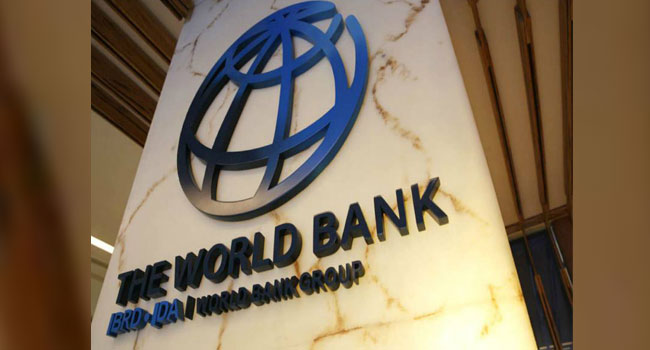
The World Bank has approved three initiatives totaling $1.57 billion to assist the Federal Government in enhancing human capital by improving health services for women, children, and adolescents, and building resilience against climate change impacts, such as floods and droughts, through improved dam safety and irrigation.
This new funding includes $500 million for the HOPE-GOV program, which addresses governance issues affecting the delivery of education and healthcare; $570 million for the Primary Healthcare Provision Strengthening Program (HOPE-PHC); and $500 million for the Sustainable Power and Irrigation for Nigeria Project (SPIN).
The combined HOPE-GOV and HOPE-PHC programs aim to help the Federal Government improve service delivery in the basic education and primary healthcare sectors, both critical to strengthening Nigeria’s human capital. Meanwhile, the SPIN project will focus on enhancing dam safety and water resource management for hydropower and irrigation in selected regions of Nigeria.
HOPE-GOV will tackle governance challenges in education and healthcare, focusing on financial and human resource management issues. It will increase the availability and efficiency of funding for these sectors, improve transparency and accountability, and enhance teacher and healthcare worker recruitment, deployment, and performance management across federal, state, and local levels.
In line with the government’s new health sector reforms, the World Bank’s Health Sector Renewal Investment Initiative, through HOPE-PHC, will work to improve the quality and use of reproductive, maternal, newborn, child, and adolescent health and nutrition services, with the aim of significantly reducing maternal and child mortality rates and strengthening the healthcare system, benefiting 40 million people, particularly vulnerable groups.
The HOPE-PHC project is funded by a concessional $500 million International Development Association (IDA) credit and an additional $70 million in grant funding from the Global Financing Facility (GFF) for Women, Children, and Adolescents. Contributions include $11 million from the UK Foreign, Commonwealth & Development Office (FCDO) and $12.5 million from the Children’s Investment Fund Foundation (CIFF), to bridge funding gaps for primary and community healthcare as well as maternal and newborn care at hospitals.
The SPIN project aims to protect Nigerians from floods and droughts by improving dam safety and operations, while expanding irrigation services across 40,000 hectares. This will benefit up to 950,000 people, including farmers, households, and livestock owners, by ensuring a more reliable and efficient irrigation and water supply, which will also boost agricultural productivity.
Additionally, SPIN will help develop a hydropower master plan and a public-private partnership framework for a hydropower project.
“Investing in the health and education of Nigerians is key to enhancing future employment opportunities, productivity, and income, while reducing poverty, particularly among vulnerable populations. This financing will help address challenges in access and quality of services, as well as the governance issues behind them,” said Dr. Ndiamé Diop, World Bank Country Director for Nigeria.
“The SPIN program is essential for protecting communities from climate impacts and increasing hydropower generation. The World Bank is proud to collaborate with the government and partners to make this project a success,” Diop added.
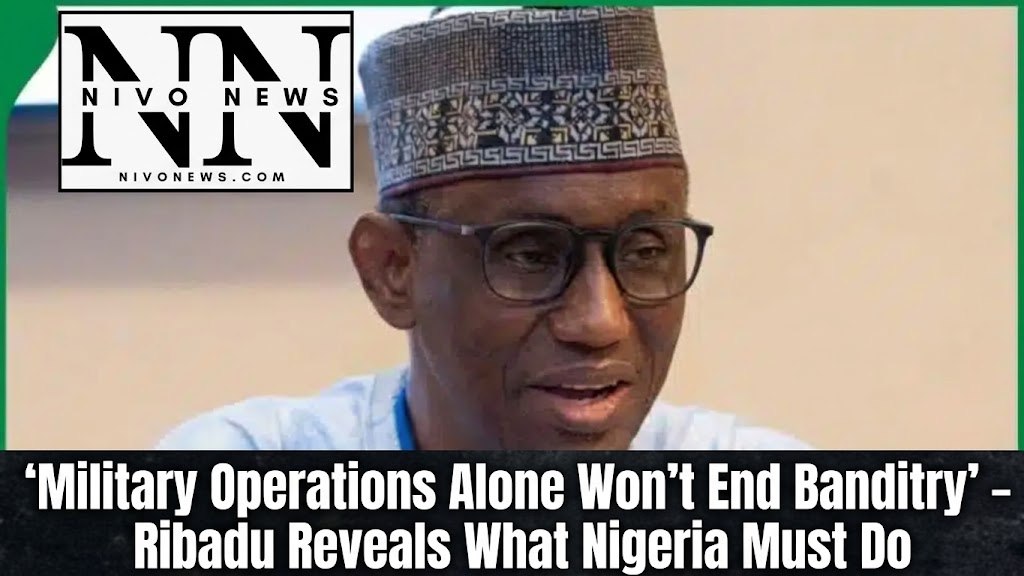
The National Security Adviser (NSA), Nuhu Ribadu, has said that military operations alone cannot bring an end to banditry in Nigeria, stressing the need for a comprehensive approach to tackling the security crisis.....KINDLY READ THE FULL STORY HERE▶
He noted that banditry had evolved beyond cattle rustling, highway robbery and kidnapping, becoming a more complex security challenge requiring coordinated interventions.
Ribadu made the remarks through the Director of Legal Services in the Office of the National Security Adviser, Zakari Mijinyawa, at a brainstorming session on addressing banditry organised by the Sokoto Advancement Forum in collaboration with the Centre for Peace Studies at Usmanu Danfodiyo University, Sokoto, on Saturday.
The NSA explained that Sokoto’s proximity to the Republic of Niger and the wider Sahel region had added a cross-border dimension to the crisis, allowing armed groups to exploit porous borders and security gaps to sustain their criminal activities.
According to him, tackling the problem requires a combination of intelligence-driven military operations, effective border control, regional collaboration and sustained efforts to disrupt the supply of illegal weapons and other logistical support to criminal groups.
Ribadu also stressed the importance of addressing the socioeconomic challenges that make young people susceptible to recruitment by criminal networks.
He advocated lawful rehabilitation programmes for eligible individuals who are willing to renounce violence, while emphasising that such initiatives must not undermine accountability.
“Reintegration must never replace justice or reward violence,” he said.
The NSA identified five priority areas for improving security in Sokoto State. These include denying armed groups safe havens, strengthening intelligence gathering and early-warning mechanisms, building public trust in security agencies, safeguarding agriculture and rural livelihoods, and preventing young people from being recruited into criminal networks.
He further urged security agencies to improve coordination and information-sharing to strengthen their response to security threats.
Ribadu added that communities would be more willing to provide useful intelligence when they had confidence that security authorities would act promptly on the information and protect the identities of those who supplied it.
latest
Timi Dakolo Opens Up On His Experience With Politicians, Reveals What Happens Behind Closed Doors

Popular Nigerian singer Timi Dakolo has revealed that he has witnessed politicians from different political parties interacting warmly and exchanging pleasantries when cameras are not rolling.....KINDLY READ THE FULL STORY HERE▶
Dakolo made the disclosure while responding to criticism over his social media post urging Nigerians not to turn political differences into personal enmity.
Reports that the singer sparked a debate on X on Thursday after sharing a message that read, “Stop making enemies because of politics.”
His post attracted mixed reactions, with some users accusing him of hypocrisy and questioning why Nigerians should maintain friendships with people they believe do not prioritise humanity.
However, others defended the singer, describing his message as a harmless opinion and a sincere piece of advice aimed at promoting unity among Nigerians.
Reacting to the criticism, Dakolo warned that political divisions often create unnecessary hostility among supporters, sometimes resulting in violent confrontations and loss of lives, while the politicians they support continue to maintain friendly relationships behind the scenes.
The singer urged Nigerians to avoid making enemies because of political disagreements, insisting that ordinary citizens often bear the consequences of conflicts that politicians themselves do not sustain privately.
In his response, Dakolo said he would never become an enemy to Nigerians or support those who oppress others. He explained that his personal experiences had exposed him to how politicians behave when they are away from public scrutiny.
According to him, he was initially surprised to see politicians from opposing camps embracing one another and exchanging pleasantries, including conversations about their families, projects and businesses.
He said Nigerians often quarrel and divide themselves over politicians who maintain cordial relationships outside the public eye, arguing that such divisions ultimately benefit the political class.
Dakolo also clarified that he was not affiliated with any political party, stressing that his comments were based on what he had personally witnessed rather than loyalty to any political group.
The singer further warned that political disagreements could lead to deadly confrontations among supporters, even as the politicians at the centre of such disputes sometimes switch parties and continue their political relationships.
He therefore appealed to Nigerians to prioritise peaceful coexistence and avoid destroying personal relationships over political affiliations.
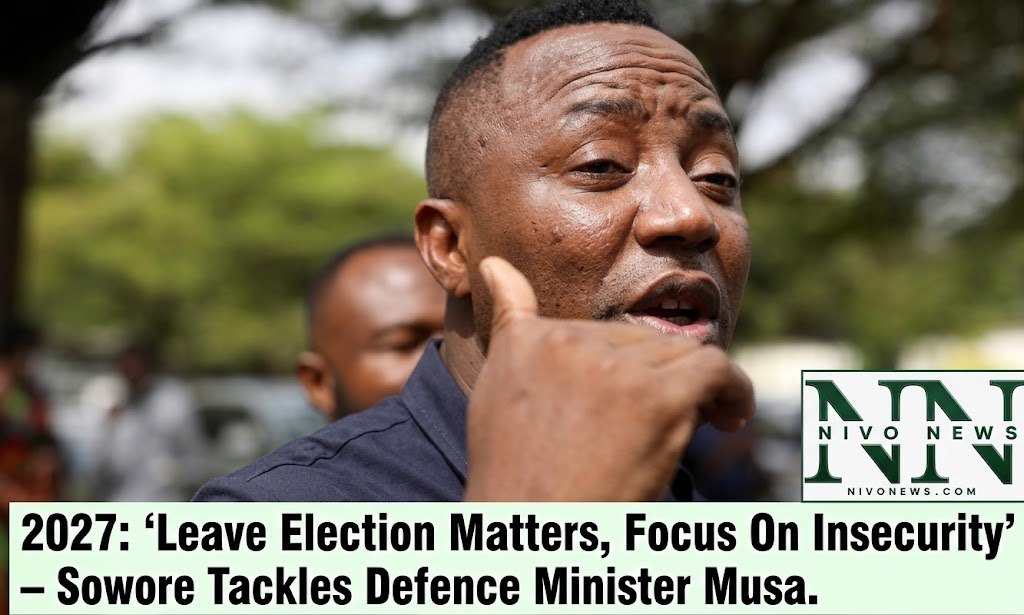
The presidential candidate of the African Action Congress (AAC), Omoyele Sowore, has criticised Defence Minister Christopher Musa over his assurance that security agencies would remain neutral during the 2027 general elections.....KINDLY READ THE FULL STORY HERE▶
Sowore accused Musa of being biased in favour of President Bola Tinubu, questioning whether the minister could guarantee impartiality during the electoral process.
In a post on X, the activist described Musa as a “loudmouth” and alleged that he had failed in his responsibilities as a military officer. He urged the defence minister to concentrate on addressing Nigeria’s security challenges rather than making promises about the 2027 elections.
Sowore’s remarks followed comments by Musa after a meeting with President Tinubu at the Presidential Villa in Abuja on Thursday, during which the minister assured Nigerians that security agencies would act professionally and ensure voters were not intimidated.
Reacting to the minister’s statement, Sowore wrote: “This retired loudmouth, Christopher Musa, who failed in his duties as a serving General in the Nigerian Army is now here promising free and fair elections in 2027, when he is, in fact, a partisan hack for Tinubu. He should leave 2027 alone and face insecurity.”
Musa had spoken to journalists after meeting Tinubu at the Presidential Villa, where he was accompanied by heads of security agencies.
The minister explained that the meeting was convened to brief the President on the country’s security situation ahead of the 2027 general elections.
According to Musa, Tinubu wants the elections to be free, fair and credible, with security agencies expected to maintain professionalism and prevent intimidation of voters.
However, Sowore questioned the minister’s ability to guarantee the neutrality of security operatives, alleging that his political disposition could undermine confidence in the assurances given ahead of the polls.
-

 latest1 year ago
“Social Media Erupts As Jim Iyke Declares Rita Dominic Nollywood’s Most Beautiful”
-
 latest3 years ago
Edo Political Showdown: Oshiomhole Appears At Presidential Villa As Tinubu Hands APC Gubernatorial Flag To Okpebholo (Photos & Video)
-
 entertainment3 years ago
Love Knows No Age American Woman Defends Marriage To Young Nigerian Man “I’m Not 70”
-
 latest3 years ago
Olumide Akpata Strikes Again: Drops Killer Track, Sends Edo State Into Frenzy!(Video)
-
 Politics3 years ago
Nigerians React As Pastor Adeboye Foresees Passing Away On A Sunday After Enjoying A Satisfying Meal Of Pounded Yam
-
 latest3 years ago
FG Identifies 31 States At Risk Of Heavy Flooding In 2024: See Full List
-
 Politics3 years ago
BREAKING: Inspector-General Of Police Summons Top Police Commanders For Crucial-Security Challenges
-
 latest3 years ago
5 NYSC Corpers Perish In Fatal Road Accident Returning From Camp