
latest
Nigeria Secures $600,000 To Boost Flood Relief And Reform Health, Agric Sectors

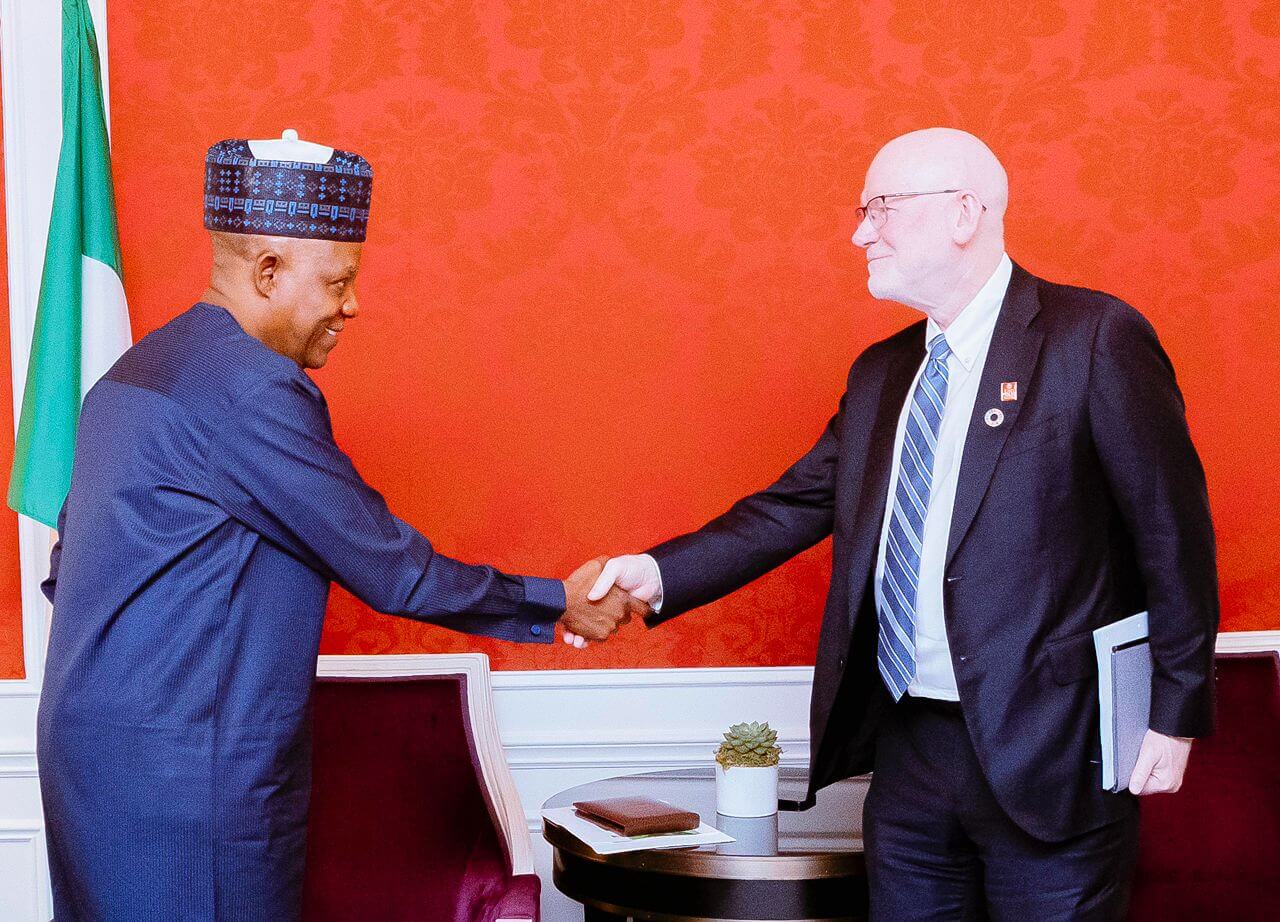
Nigeria Secures $600,000 To Boost Flood Relief And Reform Health, Agric Sectors....KINDLY READ THE FULL STORY HERE▶
The Nigerian government has secured a $600,000 relief fund and commitments from the Bill and Melinda Gates Foundation.
The Foundation pledged $600,000 for flood relief in Borno State and other health sector initiatives, with an additional $5 million grant approved for Lagos Business School and partners to develop the agricultural economics of industrial cassava.
The donation was announced when Vice President Kashim Shettima held a meeting with the Bill and Melinda Gates Foundation led by its head of Global Development Programme, Dr Christopher Elias, on the sidelines of the 79th United Nations General Assembly, in New York.
In reaction, Senator Kashim Shettima reaffirmed the commitment of the administration of President Bola Tinubu to placing health, nutrition, and agricultural development at the forefront of nation’s national agenda.
“We are deeply committed to addressing the pressing developmental challenges facing our nation, particularly the significant malnutrition crisis,” Shettima said.
He emphasized the Nigerian government’s dedication to integrity and effective leadership in tackling these issues, pointing out that there is an urgency in securing locations for maize production under the Telemaze programme
Promising swift action on import permits for certified seeds, Shettima stated, “We recognize the critical importance of food security and industrial agricultural development. The Cassava Accelerator programme, in particular, holds immense potential for our economy.
“We are pursuing a whole-of-government approach to digitization and data exchange systems, which we believe will revolutionize our public services,” he added while reiterating the government’s focus and commitment to digital transformation.
The Vice President further expressed firm belief that with the expertise of Nigeria’s ministers, “and the continued support of partners like the Gates Foundation,” the nation remains confident in its “ability to drive meaningful change and improve the lives of all Nigerians.”
On his part, the President of the Global Development Programme at the Gates Foundation, Dr. Christopher Elias, said the Foundation is deeply worried about the severe flooding in Borno, and is “committed to supporting Nigeria in times of crisis.”
The Foundation also pledged support for Nigeria’s health sector reforms, particularly in the fight against polio.
“We’re impressed by the national task force’s efforts to eliminate variant polioviruses by year-end,” Dr. Elias noted.
Also, the President of Global Growth & Opportunity Division at the Bill & Melinda, Rodger Voorhies, detailed plans for scaling up drought-tolerant maize production and advancing the Nigeria Cassava Investment Accelerator programme.
He disclosed that a $5 million grant has been approved for Lagos Business School and partners to develop the agricultural economics of industrial cassava.
“Industrial cassava presents a multi-billion-dollar opportunity for Nigeria,” Voorhees explained.
He requested import permits for 5,000 metric tons of certified maize seed to build a foundation seed system in the country.
entertainment
Regret And Revelation: Disqualified BBNaija Housemate Nomy Drops Bombshell On What She’d Do Differently!

Following her recent disqualification from the Big Brother Naija Season 11 house due to repeated infractions of Big Brother’s rules, former housemate Nomy has broken her silence for the first time. During an interview conducted on the platform , she offered a sincere apology to her supporters for letting them down, emphasizing that her rule violations and subsequent exit were never intentional.....KINDLY READ THE FULL STORY HERE▶
Reflecting on her journey and the massive wave of public backing awaiting her outside the house, Nomy expressed profound gratitude, noting that discovering she had an entire nation rooting for her brought immense joy. She admitted that had she realized the true depth of the love and support she commanded from viewers nationwide while still in the game, she would have exercised much greater caution and done everything within her power to avoid disqualification and secure a spot in the grand finale, though she ultimately accepted that her path unfolded the way it was meant to.
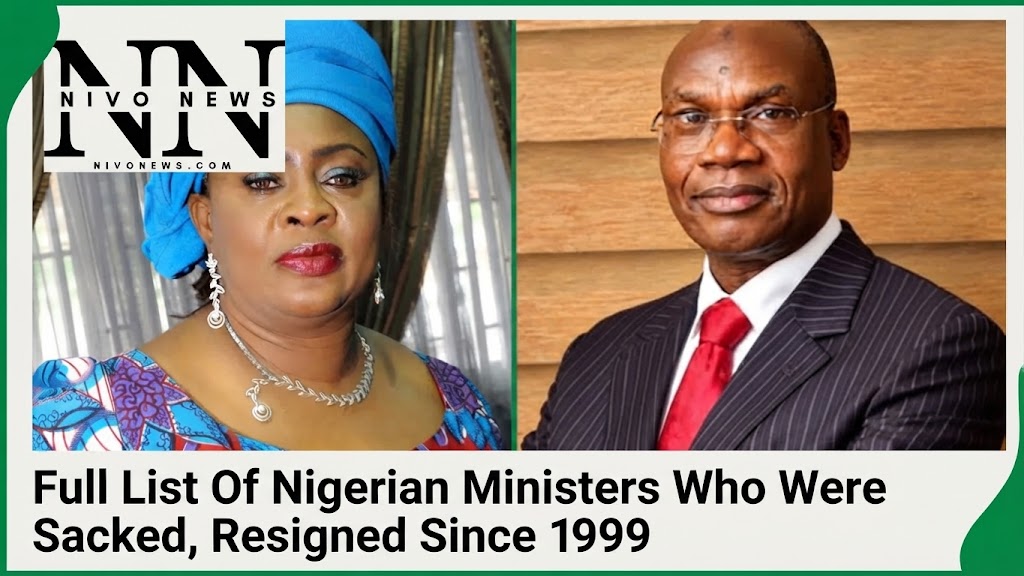
Nigeria’s Fourth Republic has experienced numerous high-profile cabinet reshuffles, dismissals, and forced resignations across successive administrations since 1999. Because departures often blur the line between formal terminations, voluntary resignations, and forced exits, there is no single definitive number of ministers who have been sacked.....KINDLY READ THE FULL STORY HERE▶
The Obasanjo Administration (1999–2007)
-
Hussaini Akwanga (Labour Minister): Sacked by President Olusegun Obasanjo in December 2003 due to allegations tied to a controversial national identity card contract awarded to SAGEM.
-
Fabian Osuji (Education Minister): Dismissed in March 2005 following allegations that ₦55 million was offered to National Assembly members regarding the ministry’s budget.
-
Alice Mobolaji Osomo (Housing Minister): Sacked weeks after Osuji’s removal over controversy regarding the allocation and proposed sale of over 200 Federal Government properties in Ikoyi, Lagos.
The Yar’Adua Administration (2007–2010)
-
Adenike Grange (Health Minister) & Gabriel Aduku (Minister of State for Health): Resigned in March 2008 amid investigations into about ₦300 million in unspent 2007 budget funds, having effectively been given the option to resign or face dismissal.
The Jonathan Administration (2010–2015)
-
Michael Aondoakaa (Attorney-General and Justice Minister): Removed from the Justice Ministry by Acting President Goodluck Jonathan in 2010 and initially redeployed to Special Duties.
-
Barth Nnaji (Power Minister): Left office in August 2012 amid concerns regarding a potential conflict of interest in the privatisation of electricity assets.
-
Inuwa Abdulkadir (Youth Development Minister): Appointment formally terminated by President Jonathan in August 2013 over issues relating to National Youth Council of Nigeria elections.
-
Nine Ministers Sacked in September 2013: Jonathan relieved nine ministers of their duties on September 11, 2013—namely Olugbenga Ashiru (Foreign Affairs), Ruqayyatu Ahmed Rufa’i (Education), Shamsudeen Usman (National Planning), Amal Pepple (Lands, Housing and Urban Development), Hadiza Mailafia (Environment), Ita Okon Bassey Ewa (Science and Technology), Olusola Obada (State for Defence), Zainab Ibrahim Kuchi (State for Power), and Bukar Tijani (State for Agriculture)—though the changes were framed as routine efforts to bring in fresh ideas rather than punishments.
-
Stella Oduah (Aviation Minister): Removed in February 2014 following heavy criticism and investigations surrounding the purchase of two armoured BMW vehicles by the Nigerian Civil Aviation Authority.
-
Godsday Orubebe (Niger Delta Minister), Caleb Olubolade (Police Affairs Minister), & Yerima Ngama (State for Finance): Departed the cabinet alongside Oduah in February 2014, with exits linked partly to pursuing political and private interests.
The Buhari Administration (2015–2023)
-
Mohammed Sabo Nanono (Agriculture Minister) & Sale Mamman (Power Minister): Both removed during a September 2021 cabinet reshuffle intended to reinvigorate the administration and address weaknesses found in government programs.
The Tinubu Administration (2023–Present)
-
Betta Edu (Humanitarian Affairs Minister): Suspended by President Bola Tinubu in January 2024 pending an EFCC investigation into ministry finances, and permanently replaced during the October 2024 cabinet restructuring.
-
October 2024 Dismissals: Tinubu dismissed five ministers on October 23, 2024, which included Uju Kennedy-Ohanenye (Women Affairs), Lola Ade-John (Tourism), Tahir Mamman (Education), Abdullahi Muhammad Gwarzo (State for Housing), and Jamila Bio Ibrahim (Youth Development).
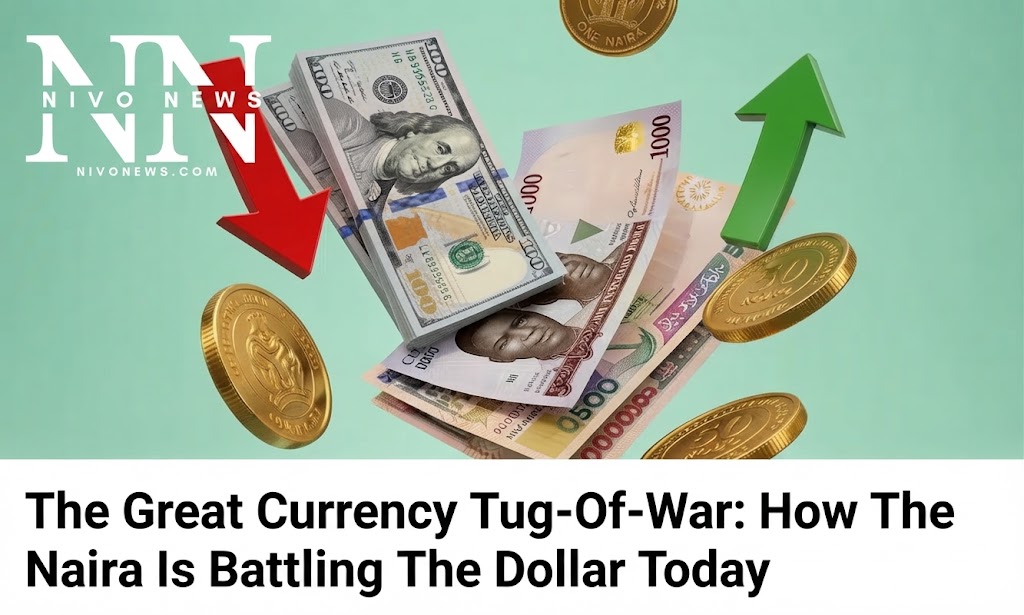
During Tuesday’s trading sessions, the Nigerian currency maintained its fluctuation against the greenback within official foreign exchange channels. Central Bank of Nigeria records indicated that the local currency exchanged at a value of $\text{₦}1,320.25$ per dollar, showing a slight shift from Monday’s rate of $\text{₦}1,320.56$. Conversely, trading at the parallel market settled at a rate of $\text{₦}1,400$ per dollar.....KINDLY READ THE FULL STORY HERE▶
Actual retail transactions handled by commercial banks, Bureau de Change networks, and independent FX dealers may fluctuate away from these baseline figures due to individual transaction costs as well as immediate supply and demand shifts. Observers and market analysts continue to watch foreign exchange inflows, general dollar demand, and upcoming monetary decisions by the Central Bank to determine if the local currency can maintain its performance through the remainder of the month.
-

 latest1 year ago
“Social Media Erupts As Jim Iyke Declares Rita Dominic Nollywood’s Most Beautiful”
-
 latest2 years ago
Edo Political Showdown: Oshiomhole Appears At Presidential Villa As Tinubu Hands APC Gubernatorial Flag To Okpebholo (Photos & Video)
-
 entertainment2 years ago
Love Knows No Age American Woman Defends Marriage To Young Nigerian Man “I’m Not 70”
-
 latest2 years ago
Olumide Akpata Strikes Again: Drops Killer Track, Sends Edo State Into Frenzy!(Video)
-
 Politics3 years ago
Nigerians React As Pastor Adeboye Foresees Passing Away On A Sunday After Enjoying A Satisfying Meal Of Pounded Yam
-
 latest2 years ago
FG Identifies 31 States At Risk Of Heavy Flooding In 2024: See Full List
-
 Politics3 years ago
BREAKING: Inspector-General Of Police Summons Top Police Commanders For Crucial-Security Challenges
-
 latest2 years ago
5 NYSC Corpers Perish In Fatal Road Accident Returning From Camp