
Business
Food And Other Commodity Prices Unlikely To Drop In The Next 6 Months – Financial Expert

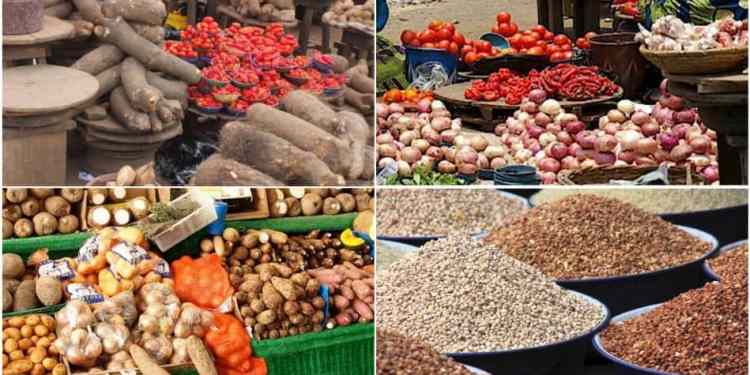
Food And Other Commodity Prices Unlikely To Drop In The Next 6 Months – Financial Expert....KINDLY READ THE FULL STORY HERE▶
The prices of food and basic commodities have skyrocketed in recent weeks as Nigerians battle one of the country’s toughest economic crises, a result of the current government’s twin policies of petrol subsidy removal and unification of forex windows………READ ALSO
According to the National Bureau of Statistics (NBS)’s Consumer Price Index (CPI), the inflation in the country has jumped to 33.20%, up from the 31.70% headline inflation in February.
The inflation report was followed by the hike of Nigeria’s interest rate from 22.75% to 24.75% by the Monetary Policy Committee (MPC) of the Central Bank of Nigeria (CBN).
This development comes despite the appreciation in Naira.
To curb the pacing inflation, the CBN raised the benchmark interest rate to 22.75 per cent in February from 18.75 per cent and further reviewed it upward to 24.75 per cent on Tuesday.
Naija News reports that the naira has appreciated against the dollar in recent weeks, gaining over 40%, from about N1,900/$ to about N1,105/$1 now.
Unfortunately, as the naira rebounds, the cost of living remains expensive.
Why Are Things Still Expensive Despite Naira Rebound
Some economists have stated that it will take a certain period of time before the effect of the rebounded naira would be seen on food prices and other commodities.
The Chief Executive Officer of Economic Associates told Punch that the impact of the naira on prices exhibited a time lag.
According to him, “Foods that have been bought at the old exchange rate will still be tied to the old exchange rate.
“Whether a month or a quarter, it depends on the duration it takes to order and sell. The effect we should hope to see is that the prices have stopped going up. We call it acceleration.”
The President of Nigerian Economic Society, Adeola Adenikinju also told the publication that what traders currently have in stock are old goods that were purchased at high prices.
He explained that there would be a loss if the goods are sold at low prices.
Adenikinju stated, “What people have in stock now was purchased at high prices. If they sell at lower prices, they are going to record losses.
“So until they replace the current one, that is when they will reduce their prices.
“But currently, to avoid losses, they will still sell at the rate at which they bought it. We will only start seeing the current prices of things as current stock is sold and new stock is acquired.”
There is a palpable fear among the citizenry that irrespective of how the naira appreciates food prices might never come down.
After all, it is a norm in the Nigerian market for prices of commodities to go up and stay the same.
Favour Uche, a foodstuff seller at EFAB market, said “The price of rice didn’t reduce even now that the dollar is down.”
Uche emphasised the challenges faced by traders, including the expenses incurred to maintain product quality amid infrastructural constraints.
“The price of rice didn’t decrease. Even now that the dollar is down, it still hasn’t reduced. For example, a carton of Titus fish cost N90,000 two weeks ago but today, the same carton of fish is sold at N95,000 as of March 29, 2024.
“Even with the fact that the dollar has reduced, but being in the system, I think I understand why. It is because they use one-third of their profit to buy diesel to cool these fish and keep them frozen. After all, there is no light. So, I understand their pain and why the prices are like that,” she added.
Another trader, Abdul Yusuf, who sells meat, asserted, “Price did not come down even with the dollar fall.
“Two weeks ago the price of one kilogramme of meat was selling at N4,800 but now, it is N5,000. So, the price did not come down even with the dollar falling.
A Financial Analyst identified as Gbenga Onifade told Naija News that President Bola Tinubu Administration was trying to use a hammer to force the naira down.
He advised that for inflation to come down, government has to keep raising the interest rates.
He also explained that the effect of the appreciated naira might not affect inflation for the next six month.
According to him, “Inflation in Nigeria is at the 1995 level and it is still going up unfortunately. To curb inflation, you have to keep raising rates. There have to be limitations to access to money which drives people to save.
“And of course the bank has a part to play, they have to pass some of these interest rates to tax payers and retailers.This means if the government increase the interest rate, it means more money from the bank, the better your money. This is why we say cash is king. If this is carried out inflation would abate.”
Do you think the return of fuel subsidy would help with inflation?
“Absolutely, now this is on the political side. The Nigerian government is known for back spending, splurging and they are known for corruption.
“Most well meaning Nigerians who understand economics do support subsidy taken away because the money could be diverted into more useful projects.
“But now that the subsidy is back it has been diverted from good projects. If we can manage the spending, cut down corruption and of course remittances very very important. Remittances that come into the country. If they can be well accounted for, all these will give the naira a boost.”
How long do you think it will take before the rebound of the Naira will reflect on inflation.
“It might take about six months.”
Why do you question the policies used in appreciating the naira by Tinubu’s administration and the CBN.
“It is a 50/50 for me. Who do I like more. Do I like Nigeria or do I say I like the government. I think for all of us we would say we love Nigeria as a country. Do I approve some of the policies, yes I do approve a lot of the policies. I also do not approve some if it. It is possible some of the policies are pseudo. It is not transparent. We cannot track the naira. I want to be able to track the naira.
“It should not be based on heresay, I want to be able to see the demand and the supply.
“There is no global market chart where we can see the naira.
“We see some of the things on the website but that is based on heresay.
“That is number one, one of the mistakes that people make is that the traders do not not have a say in the market, they just believe the click. Unfortunately these people produce a balance of trade, they produce liquidity into the market. That’s another point that people do not understand.
“I saw the CBN reserve management data and they were able to build 2 million dollar liquidity within one month.
“ It is laudable, it is actually respectful. I do respect that but I just feel that there are some things that I feel are not transparent, you are still defending the naira.
“If you say you are gonna do something then you should be able to do it regardless of the enemy you make. If you want the market to determine the naira, let the market determine the naira.
“If you want it to be a managed float let it be a managed float and make the people aware.
“We don’t know what is going on right now. As far as most people are concerned the market is being determined by the naira.
“Also some of the policies repealed are being brought back through the back door. I see the government saying one thing and doing another.”
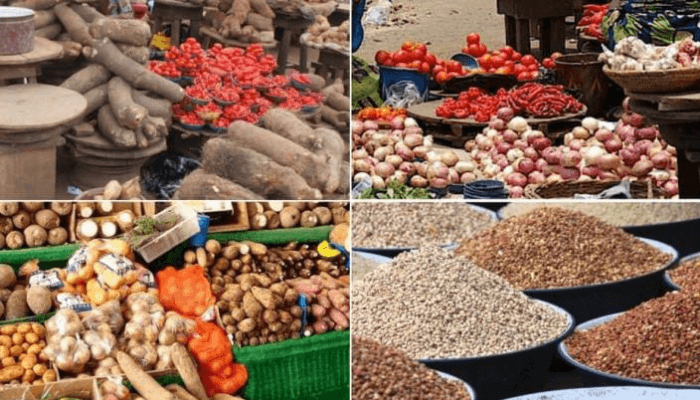



A recent survey conducted by Naija News has revealed a notable decrease in the price of cooking gas in Nigeria, offering much-needed relief to households and small businesses. According to the survey, the cost of refilling cooking gas per kilogram has reduced significantly from ₦1,350 to ₦1,020.....KINDLY READ THE FULL STORY HERE▶
This positive development is expected to ease the financial burden on Nigerian families and small enterprises, especially those that heavily depend on cooking gas as a primary energy source. The survey, encompassing gas stations and vendors from various parts of the country, shows that the reduced price may help lower the overall cost of living.
The revised price breakdown is as follows:
-
1 kg of Cooking Gas: ₦1,020
-
3 kg of Cooking Gas: ₦3,060
-
5 kg of Cooking Gas: ₦5,100
-
10 kg of Cooking Gas: ₦10,200
-
12.5 kg of Cooking Gas: ₦12,750
This decline marks a significant shift from the previous upward trend in gas prices and is likely to positively impact the economy, particularly the food and hospitality sectors. Businesses that rely on cooking gas will experience reduced operational costs, ultimately boosting their profit margins.
Experts attribute the drop in cooking gas prices to several factors, including fluctuations in global energy costs and adjustments within local supply chains. Despite recent variations in crude oil and natural gas prices, the reduction is perceived as a welcome development for Nigerian consumers.
By spending less on cooking gas, households and small businesses will now see some financial relief in their monthly budgets, especially during these economically challenging times.
-

 latest11 months ago
“Social Media Erupts As Jim Iyke Declares Rita Dominic Nollywood’s Most Beautiful”
-
 latest2 years ago
Edo Political Showdown: Oshiomhole Appears At Presidential Villa As Tinubu Hands APC Gubernatorial Flag To Okpebholo (Photos & Video)
-
 entertainment2 years ago
Love Knows No Age American Woman Defends Marriage To Young Nigerian Man “I’m Not 70”
-
 latest2 years ago
Olumide Akpata Strikes Again: Drops Killer Track, Sends Edo State Into Frenzy!(Video)
-
 Politics3 years ago
Nigerians React As Pastor Adeboye Foresees Passing Away On A Sunday After Enjoying A Satisfying Meal Of Pounded Yam
-
 latest2 years ago
FG Identifies 31 States At Risk Of Heavy Flooding In 2024: See Full List
-
 Politics3 years ago
BREAKING: Inspector-General Of Police Summons Top Police Commanders For Crucial-Security Challenges
-
 latest2 years ago
5 NYSC Corpers Perish In Fatal Road Accident Returning From Camp