
latest
Beware These Habits Could Be Contributing To Your Expanding Waistline


entertainment
‘I Abandoned School To Save My Father’s Business’ – Yinka Quadri Reveals Untold Story.

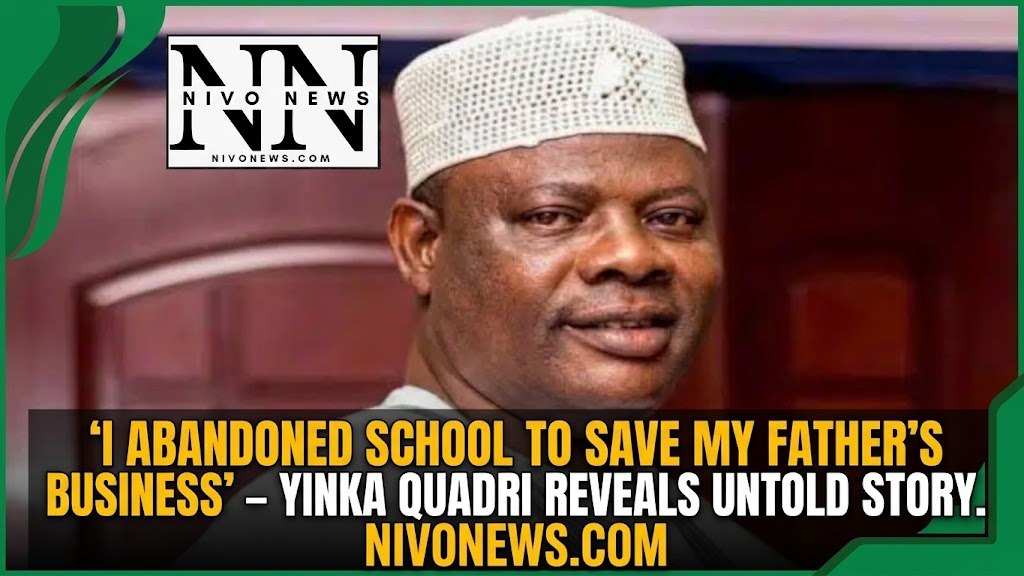
Veteran Nollywood actor Yinka Quadri has disclosed that he voluntarily abandoned his education at a young age to help his father manage the family business and address a disagreement involving a relative.....KINDLY READ THE FULL STORY HERE▶
The actor explained that his decision was driven by a desire to ease the burden on his father, who had become heavily dependent on a relative working in the family’s trading business.
Quadri shared the experience during an interview on the African A-List Podcast, published on YouTube on Saturday, October 10, 2026.
According to the veteran actor, his father never pressured him to leave school. Rather, he made the decision himself after observing the challenges facing his family and the situation surrounding the business.
He explained that the issue involved his late uncle’s son, who had been sent to work with his father to learn the family’s trading business.
Quadri said their parents had agreed that the young man would spend 10 years learning the trade before returning to his own family.
However, the arrangement continued beyond the agreed period, with the relative spending 16 years working alongside his father.
The actor noted that his father had grown so attached to the relative that he treated him almost like his own son, making the situation more complicated.
Explaining his decision to leave school, Quadri said, “I decided to leave school because I wanted to help my father manage the family business. My father depended heavily on my uncle’s son to run the business because he had spent many years learning the trade.
“Our parents agreed that he would spend 10 years learning the business before returning to his family. By the time I decided to leave school, he had already spent 16 years working with my father instead of the 10 years they initially agreed on. My father had become so attached to him that he treated him almost like his own son.”
latest
NPFL Drama: Ogunmodede, Moga Celebrate Victories As Ogunbote Cries Out After Plateau United Defeat.

Kano Pillars technical adviser Daniel Ogunmodede has expressed delight after his team ended a five-match winless streak with a 1-0 victory over Katsina United in the Nigeria Premier Football League (NPFL) on Sunday, October 18.....KINDLY READ THE FULL STORY HERE▶
The victory at the Sani Abacha Stadium provided a much-needed boost for Pillars, who had struggled to secure maximum points in their previous five matches.
Speaking after the local derby, Ogunmodede praised his players for their determination and fighting spirit.
“I must congratulate the boys for putting up a brilliant fight. We had not tasted a win in the last five games, and they delivered in the derby,” he said.
The coach also commended his team for its performance at both ends of the pitch, highlighting the attacking display and defensive discipline that secured all three points without conceding.
“That was a very good goal. We attacked well and defended well to get the maximum points with a clean sheet,” he added.
Ogunmodede further stressed that winning had always been central to his coaching philosophy, noting that his ambition to secure victories had remained unchanged throughout his career.
“It is part of my job to win. I like winning because that is what I am paid for. For three decades now, winning has always been my motive,” he said.
Meanwhile, Nasarawa United assistant coach Stephen Moga has praised his players following their impressive 2-0 away victory over Inter Lagos.
Kelechi Ogbobo opened the scoring for Nasarawa United in the 11th minute, while Ugochukwu Leonard extended the visitors’ lead five minutes later.
The victory lifted Nasarawa United, managed by Mbwas Mangut, to sixth position on the NPFL table.
Speaking to the club’s media, Moga explained that the team had been working towards achieving its objectives in both domestic and continental competitions.
“We have been strategising to get the results we desire so that we can achieve our targets, both in the league and on the continent,” he said.
He identified clinical finishing as a crucial factor in the team’s quest to meet its targets.
“To achieve your targets, you need to convert your chances and stay ahead of your opponents,” Moga added.
The assistant coach also expressed confidence that Inter Lagos would recover from the setback, insisting that the hosts possessed enough quality to improve their league position.
Nasarawa United are scheduled to host Enyimba in a Matchday 10 fixture on Sunday.
Ogunbote Disappointed After Plateau United Lose At Home
In another Matchday Nine encounter, Plateau United head coach Gbenga Ogunbote described his side’s 3-2 home defeat to Sporting Lagos as a disappointing setback after his team surrendered its advantage.
The loss ended Plateau United’s run of four consecutive home victories this season and handed Sporting Lagos a significant result on the road.
Aliyu Baba put Sporting Lagos ahead in the 10th minute before Victor Dawa scored twice to give Plateau United a 2-1 lead at half-time.
However, Victor Samuel restored parity for the visitors in the 53rd minute before Plateau United were reduced to 10 men with 10 minutes remaining.
Aondona Adeede then scored in the 82nd minute to complete Sporting Lagos’ comeback and secure all three points.
The victory moved Sporting Lagos to third place on the table with 15 points, one point ahead of Plateau United, who have accumulated 14 points.
Reacting to the defeat, Ogunbote admitted that his team failed to protect its lead but insisted that his players had given their best despite the disappointing outcome.
“I think it was a difficult one for us; I won’t say complacency because the boys put in their very best. Unfortunately, we gave up the lead, and things fell apart,” he said.
The Plateau United manager acknowledged Sporting Lagos’ performance and described the defeat as an early warning for his team as the season progresses.
“This is week nine; unfortunately, nobody wanted to lose the game, but we lost. Even a draw would have still been termed as a loss to us,” he said.
He added, “But as I did say, it’s good it happened early so that it would make every one of us wake up to know that we have not gotten there yet.”
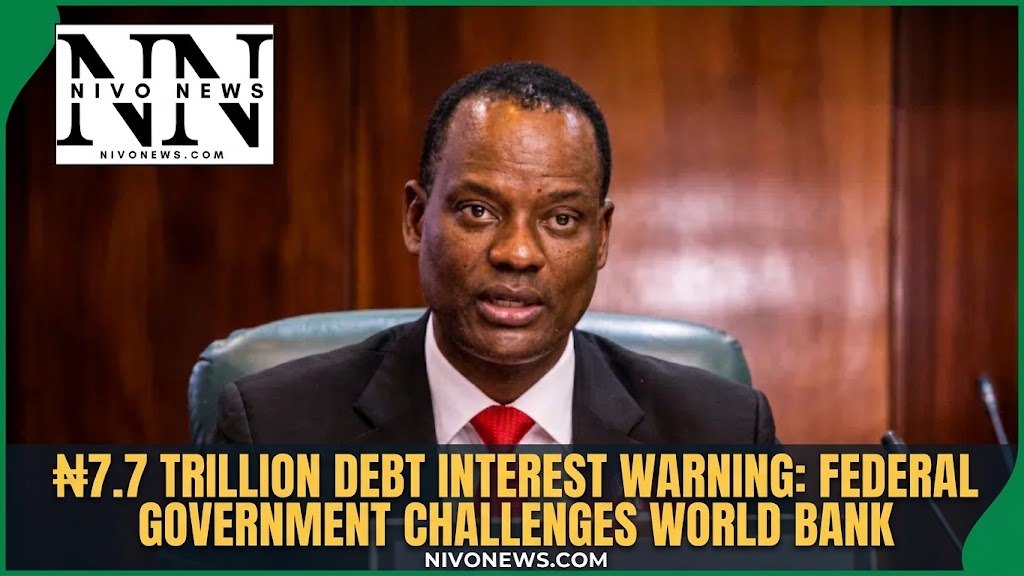
The Federal Government has defended Nigeria’s debt position, insisting that rising revenue and ongoing economic reforms demonstrate progress despite concerns raised by the World Bank over the ₦7.7 trillion spent on interest payments in the first half of 2026.....KINDLY READ THE FULL STORY HERE▶
The government rejected the World Bank’s assessment that interest payments amounted to 124 per cent of federal revenue between January and June 2026, describing the figure as misleading because it relied on incomplete revenue data and included debt obligations serviced on behalf of state governments.
The Federal Ministry of Finance outlined its position in a statement issued on Sunday and shared on X by the Minister of Finance and Coordinating Minister of the Economy, Taiwo Oyedele.
The response followed the World Bank’s October 2026 Nigeria Development Update, which raised concerns about the country’s growing debt-servicing burden.
According to the ministry, Nigeria’s financial position has improved because government revenue is increasing at a faster rate than interest expenses.
The ministry identified three reasons it believes the World Bank’s 124 per cent figure should not be used in isolation to assess the country’s debt sustainability.
First, it argued that the interest payments included obligations the Federal Government services on behalf of other levels of government, including external loans obtained by state governments. Comparing these payments with federal revenue alone, it said, creates a misleading picture because the figures cover different levels of government.
Second, the ministry maintained that the revenue figure used in the calculation was incomplete because it excluded funds already earned by government agencies and enterprises but not yet remitted to the Treasury.
Third, it explained that some taxes are collected predominantly in the second half of the year because of statutory payment schedules, making first-half revenue an incomplete basis for evaluating the government’s annual debt obligations.
The ministry noted that the interest-to-revenue ratio declined from 156 per cent in the first half of 2025 to 124 per cent during the corresponding period in 2026.
It added that Nigeria’s full-year debt-service-to-revenue ratio stood below 60 per cent in 2025, compared with 97 per cent before the current administration introduced its economic reforms.
The Finance Ministry disclosed that Federal Government revenue rose by 72 per cent between the first half of 2025 and the first half of 2026.
According to the figures released, revenue increased from ₦3.6 trillion to ₦6.2 trillion during the period.
Interest payments, meanwhile, rose by 38 per cent, from ₦5.6 trillion to ₦7.7 trillion.
The ministry argued that the figures demonstrate that revenue is growing considerably faster than the cost of servicing debt.
It also stated that the difference between interest payments and revenue narrowed from ₦2 trillion in the first half of 2025 to ₦1.5 trillion in the first half of 2026.
The statement read, “Revenue is therefore growing almost twice as fast as interest costs. As a result, the interest-to-revenue ratio fell by 32 percentage points in a single year, from 156% to 124%.”
The ministry described the development as evidence that the government’s economic reforms were yielding results rather than an indication that the country’s finances were in distress.
The Finance Ministry further argued that Nigeria’s debt sustainability should be assessed using full-year figures rather than data covering only six months.
It cited the World Bank’s projection that Nigeria’s total debt service, covering both interest and principal repayments, would account for 46 per cent of revenue for the full year in 2026.
The ministry described the projection as a more appropriate measure for evaluating the country’s debt position.
It also maintained that all Federal Government borrowing remained within the limits approved by the National Assembly under the 2026 Appropriation Act and the approved borrowing plan.
According to the ministry, the government’s borrowing activities comply with the Fiscal Responsibility Act 2007 and the Debt Management Office (Establishment) Act 2003.
It added that information on government borrowing is regularly published by the Debt Management Office.
While acknowledging the importance of public scrutiny of government finances, the ministry urged analysts and commentators to assess the figures within their proper context.
It advised those evaluating Nigeria’s debt position to compare figures covering the same level of government and account for the timing of revenue collection before reaching conclusions about the country’s fiscal health.
-

 latest1 year ago
“Social Media Erupts As Jim Iyke Declares Rita Dominic Nollywood’s Most Beautiful”
-
 latest3 years ago
Edo Political Showdown: Oshiomhole Appears At Presidential Villa As Tinubu Hands APC Gubernatorial Flag To Okpebholo (Photos & Video)
-
 entertainment3 years ago
Love Knows No Age American Woman Defends Marriage To Young Nigerian Man “I’m Not 70”
-
 latest3 years ago
Olumide Akpata Strikes Again: Drops Killer Track, Sends Edo State Into Frenzy!(Video)
-
 Politics3 years ago
Nigerians React As Pastor Adeboye Foresees Passing Away On A Sunday After Enjoying A Satisfying Meal Of Pounded Yam
-
 latest3 years ago
FG Identifies 31 States At Risk Of Heavy Flooding In 2024: See Full List
-
 Politics3 years ago
BREAKING: Inspector-General Of Police Summons Top Police Commanders For Crucial-Security Challenges
-
 latest3 years ago
5 NYSC Corpers Perish In Fatal Road Accident Returning From Camp