
latest
Nurturing Papayas: Sustainable Cultivation Amid Environmental Concerns


Nurturing Papayas: Sustainable Cultivation Amid Environmental Concerns....KINDLY READ THE FULL STORY HERE▶
Revised Article: Papayas, cherished for their tropical sweetness and versatility, are at the center of efforts to balance agricultural productivity with environmental conservation……….CONTINUE READING
The papaya, alternatively known as pawpaw in some regions, is renowned for its delectable flavor and myriad of health benefits. However, as demand for papayas continues to rise, concerns have emerged regarding the environmental impact of their cultivation.
In recent years, the papaya industry has grappled with issues such as deforestation, soil degradation, and pesticide pollution. Large-scale papaya plantations often require extensive land clearing, leading to the destruction of vital habitats and biodiversity loss. Additionally, intensive farming practices, including the use of chemical fertilizers and pesticides, can degrade soil quality and contaminate water sources.
In response to these challenges, there has been a growing movement towards sustainable papaya cultivation practices. Sustainable papaya farming aims to minimize environmental harm while promoting long-term agricultural viability.
One approach to sustainable papaya farming involves agroforestry, where papaya trees are intercropped with other plants to enhance biodiversity and soil fertility. This method helps to restore ecological balance, reduce erosion, and improve overall land health.
Furthermore, integrated pest management (IPM) techniques are employed to minimize reliance on chemical pesticides. IPM strategies focus on natural pest control methods, such as introducing beneficial insects and using pheromone traps, to manage pests effectively while minimizing environmental impact.
Water conservation is also a key consideration in sustainable papaya cultivation. Techniques such as drip irrigation and rainwater harvesting help optimize water usage and reduce reliance on finite water resources, particularly in regions prone to drought.
Social responsibility is another important aspect of sustainable papaya farming. Fair labor practices, including providing equitable wages and ensuring safe working conditions, are essential for supporting the well-being of farmworkers and local communities.
Certification programs, such as organic and Fair Trade certifications, provide consumers with assurance that papayas are produced in an environmentally and socially responsible manner. These certifications help promote transparency and accountability within the papaya supply chain, fostering consumer confidence in the sustainability of the product.
As consumers become increasingly conscious of the environmental and social impact of their food choices, the papaya industry must prioritize sustainability to ensure its long-term viability. By embracing eco-friendly farming practices and adopting transparent supply chain standards, stakeholders can safeguard the future of papaya production while preserving the health of our planet.


Some motorists in Birnin Kebbi, the capital of Kebbi State, have reduced their movements as several filling stations shut their gates despite the Nigerian National Petroleum Company Limited (NNPCL) announcing a ₦66 reduction in petrol prices.....KINDLY READ THE FULL STORY HERE▶
A survey conducted by journalists on Thursday revealed that many filling stations had stopped selling petrol barely a day after the price reduction was announced, leaving residents struggling to obtain the product.
The development followed decisions by some independent petroleum marketers to suspend sales, further reducing the number of outlets where motorists could purchase fuel.
The situation has also affected movement along major roads in the state capital, as some motorists have chosen to avoid unnecessary trips due to the high cost and limited availability of petrol.
A manager of one of the affected filling stations, who spoke to Vanguard on condition of anonymity, disclosed that although the station had petrol in stock, its owner had ordered a suspension of sales.
He explained that the available stock had been purchased at a higher price, making it difficult for the station to sell at the newly announced lower rate without incurring losses.
Meanwhile, reports indicate that several filling stations in the Oke-Ogun area of Oyo State were also shut on Wednesday and Thursday.
A civil servant in the state, Aminu Muhammed, said the situation had disrupted workers’ daily activities, with some unable to get to their workplaces.
He added that some commercial drivers had parked their vehicles because petrol was either too expensive or difficult to obtain.
Commercial transport operators, popularly known as kabu-kabu, also expressed dissatisfaction, arguing that the announced price reduction had yet to provide the expected relief.
They alleged that some filling stations that remained open were selling petrol for as much as ₦1,500 per litre, despite motorists spending hours waiting in long queues.
The closures have left residents in parts of Kebbi and Oyo struggling to access petrol despite the announced price cut. Motorists, workers and transport operators continue to face the combined challenges of limited supply and high pump prices.
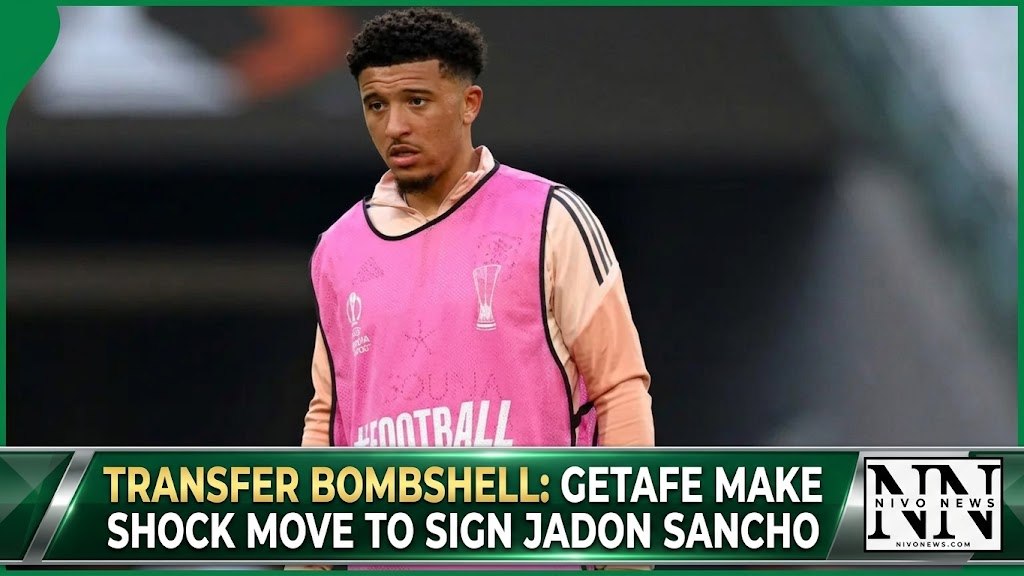
Spanish club Getafe have submitted a formal contract offer to sign Jadon Sancho, as the former Manchester United winger weighs his options after becoming a free agent.....KINDLY READ THE FULL STORY HERE▶
Getafe are keen to secure an agreement with the 26-year-old following the expiration of his contract at Old Trafford earlier this summer. However, negotiations with his representatives could prove challenging as both sides attempt to reach an agreement.
The La Liga side currently sit 14th in the league and are also competing in the Europa Conference League. The club are looking to strengthen their squad with experienced players ahead of the new campaign.
Getafe recently secured the services of former Real Madrid captain Dani Carvajal, who signed a contract running until June 2027 after leaving the Spanish giants when his previous deal expired in June.
Sancho is reportedly more interested in continuing his career outside England, although he is still considering other proposals before making a final decision on his future.
A possible move to Spain would follow several loan spells away from Manchester United. Last season, the England international played for Aston Villa, making 39 appearances as Unai Emery’s team secured Champions League qualification and won the Europa League.
Sancho came on as a late substitute in the Europa League final against Freiburg, marking his third consecutive season featuring in a European final. He had previously appeared in the final during loan spells with Borussia Dortmund and Chelsea.
Chelsea had included an obligation-to-buy clause in Sancho’s loan agreement for the 2024-25 season. However, the club reportedly chose to pay a £5 million penalty to return him to Manchester United after he made 41 appearances.
While assessing his options, Sancho has continued training to maintain his fitness. One of his recent training sessions took place at non-league club Flixton, prompting the North West Counties League side to clarify that the winger was not on trial with them.

The Nigerian Air Force (NAF) has announced the recovery of additional parts of its ATR 42-500 aircraft that crashed in Igbokoda, Ondo State.....KINDLY READ THE FULL STORY HERE▶
In a statement published on its official X account on Wednesday, the Air Force said a multi-agency team was continuing search and recovery operations at the crash site.
According to the NAF, specialist divers from the Nigerian Navy and the Nigerian Safety Investigation Bureau are working alongside its recovery team to conduct underwater searches and retrieve materials from the scene.
The operation includes hydrographic surveys, the use of satellite-based search-and-rescue imagery, mud excavation and the removal of excess water to gain access to critical areas.
The Air Force added that personnel were working around the clock to locate and retrieve materials that could be documented and preserved for the ongoing investigation.
The statement read, “Additional aircraft components have been recovered as efforts continue to locate and retrieve relevant materials for documentation and preservation in support of the ongoing investigation.”
Meanwhile, Edo State Governor, Monday Okpebholo, has described Squadron Leader Mahmoud Aburime, the pilot of the crashed aircraft, as a courageous officer whose death represents a significant loss to the country.
Aburime, an indigene of Edo State, was piloting the NAF 931 aircraft when it crashed in Igbokoda on October 5, 2026, killing everyone on board.
In a statement personally signed on Wednesday, the governor expressed condolences to the late officer’s family, describing his death as a painful loss to his loved ones, Edo State and Nigeria.
“The death of Squadron Leader Mahmoud Idanegbe Aburime, a proud son of Edo State and an officer of the Nigerian Air Force, is a painful loss to his family, our state and the country,” Okpebholo said.
He added that his thoughts and prayers were with the deceased’s wife, daughter, parents and others affected by the tragedy.
“As governor of Edo State, I mourn the loss of one of our own. My thoughts and prayers are with his wife, daughter, parents and everyone affected by this tragedy. While no words can ease the pain of losing a loved one, I want his family to know that Edo State grieves with them,” he stated.
Okpebholo disclosed that Aburime hailed from Uwessan in Esan Central Local Government Area, the same hometown as the governor. He said the community had lost a son who served the nation with dedication.
“As someone who shares roots with him, I feel this loss deeply. I extend my heartfelt condolences to his family and the entire Uwessan community at this difficult time,” the governor said.
Recalling the late pilot’s time at the University of Benin, where he studied Mass Communication, Okpebholo said Aburime did not flaunt his military rank and was remembered by his classmates as a quiet and humble individual who often sat at the back of the lecture hall.
“I find this particularly touching. Aburime showed that a person can carry great responsibility without arrogance,” he noted.
The governor also revealed that despite the demands of his military duties, Aburime remained committed to his education and sat for a make-up examination at the university just days before the aircraft crash.
“His determination to keep learning speaks volumes about his character. Sadly, his future has been cut short,” Okpebholo said.
He extended his condolences to the Chief of the Air Staff, Air Marshal Kelvin Aneke, officers and personnel of the Nigerian Air Force, the deceased’s colleagues and coursemates, as well as the families of the other victims.
The governor also urged young people in Edo State to draw inspiration from Aburime’s life, particularly his commitment to service, education, discipline and humility.
“To the young people of Edo State, Aburime’s life offers an important lesson. His commitment to service, education, discipline and humility is an example worth following. He served his country while continuing to improve himself and helping others prepare for their own responsibilities,” he added.
-

 latest1 year ago
“Social Media Erupts As Jim Iyke Declares Rita Dominic Nollywood’s Most Beautiful”
-
 latest3 years ago
Edo Political Showdown: Oshiomhole Appears At Presidential Villa As Tinubu Hands APC Gubernatorial Flag To Okpebholo (Photos & Video)
-
 entertainment3 years ago
Love Knows No Age American Woman Defends Marriage To Young Nigerian Man “I’m Not 70”
-
 latest3 years ago
Olumide Akpata Strikes Again: Drops Killer Track, Sends Edo State Into Frenzy!(Video)
-
 Politics3 years ago
Nigerians React As Pastor Adeboye Foresees Passing Away On A Sunday After Enjoying A Satisfying Meal Of Pounded Yam
-
 latest2 years ago
FG Identifies 31 States At Risk Of Heavy Flooding In 2024: See Full List
-
 Politics3 years ago
BREAKING: Inspector-General Of Police Summons Top Police Commanders For Crucial-Security Challenges
-
 latest3 years ago
5 NYSC Corpers Perish In Fatal Road Accident Returning From Camp