
latest
Citizens Experience Deepening Poverty Under Tinubu’s Administration


Nigeria’s untamed inflation rates have become persistent nightmares for the citizens….CONTINUE READING....KINDLY READ THE FULL STORY HERE▶

President Bola Ahmed Tinubu’s reign has been hellish for the masses in the last six months as hardship, Naira depreciation, and insecurity have put the nation on a precipice.
Like other inflation rates in the last twelve months, December’s inflation increased to 28.20 per cent from 28.20 per cent in November, the highest in 27 years, according to the National Bureau of Statistics.
The country’s food inflation, which accounts for the bulk of Nigeria’s inflation basket, rose to 33.93 per cent in December from 32.84 per cent a month earlier.
The direct implication is the rising cost of living for Nigerians as more people’s purchasing power shrinks.
Despite this, President Bola Ahmed has consistently told Nigerians to press on and be patient. But, Nigerians have queried how long the waiting game will last.
While the President begged Nigerians for the patient, a mudu of rice has moved to N1,900 from N1,500, beans (red) to N1,300 from N800, 1.4-litre of groundnut oil to N3,200 from N2500, a loaf of bread N1200 from N700, egg to N3,200 from N2,700 for a crate, garri (eed) N800 from N500 a mudu.
Umar Nasiru, a 46-year-old family man in Abuja, said “President Tinubu’s ‘Patient’ will not take care of more than a 100 per cent hike in food items, accommodation, clothing, education fees, and other prices which have all hit the rooftop.”
“Enough of the political rhetoric of ‘I will do this, I will do that.’ Nigerians are dying of hunger daily; we need food prices to come down”, he stated.
According to the World Bank, in the five months of 2023, accelerating inflation pushed 24 million Nigerians into poverty.
The bank’s latest Nigeria Development Update report for December 2023 disclosed that: “Sluggish growth and rising inflation have increased poverty from 40 per cent in 2018 to 46 per cent in 2023, pushing an additional 24 million people below the national poverty line.”
In 2022, the National Bureau of Statistics, NBS, Multidimensional Poverty Index, MPI, said 63 per cent of persons living in Nigeria (133 million people) are multidimensionally poor.
The National MPI is 0.257, indicating that poor people in Nigeria experience just over one-quarter of all possible deprivations.
The Central Bank of Nigeria, the country’s apex bank, in its last monetary policy committee meeting in July 2023, raised interest rates to 18.75 per cent to stymie inflation.
Similarly, the CBN lifted restrictions on 43 items in October to reduce the pressure on the foreign exchange market.
Tinubu, in December last year, listed the provision of N25,000 monthly for three months to 15 million Nigerians and tax waivers as solutions to the citizens’ economic hardship.
In spite of the government’s policies to address the hardship Nigerians face, the challenges have remained unchanged.
Since June last year when the Tinubu administration introduced fuel subsidy removal and floated the Naira, the majority of Nigerians are yet to have a reprieve.
This is as the country’s total debt stock jumped to N87.91 trillion ($114.35 billion) in September 2023, according to the Debt Management Office.
Meanwhile, while Nigerians languished in economic hardship, the twin policies of fuel subsidy removal and naira devaluation have raked in more revenue for the government.
Revenue accruing to the federation account increased in the last half of 2023 due to the fuel subsidy removal.
DAILY POST recalls that in the last six months, the Nigerian government made N907.05 billion in June, N966.110 in July, N1.1 trillion in August, N903.48 billion in September, N906.955 billion in October, and N1.783 trillion in November 2023.
Investors in the Nigerian Stock Exchange also made a rebound in 2023.
The Nigerian Exchange Limited achieved year-to-date growth of 45.90 per cent in 2023.
Speaking to DAILY POST in an interview on Nigeria’s soaring inflation, a renowned economist and former President and Chairman of the Council of Chartered Institute of Bankers, Prof Segun Ajibola described the country’s inflation as a monster.
He explained that inflation cannot be addressed overnight.
Ajibola said Tinubu’s administration should move away from rhetoric and be intentional about ending inflation.
“Inflation is a monster. It remains the world’s number one enemy (alluding to former US President Nixon). It cannot be ordered to conformity as it does not obey the last order. It cannot be panel beaten to shape overnight.
“It defies executive punches. Inflation can be tamed only through a three-pronged approach of the right diagnosis, prescription, and dosage.
“A carefully thought out process involving the identification of remote and immediate causes of inflation, the corrective measures to stem it and faithful implementation of those measures for optimal results are sine qua non.
“Against the above background, we can ask ourselves if we have followed the process with the required quality and quantity of willpower and determination.
“For quite some time, we have misunderstood the nature of inflation plaguing Nigeria’s economy. This economy is struggling with cost-push inflation.
“Unfortunately, most policy measures rolled out to arrest the monster are the ones meant for demand-pull inflation: contractionary monetary policies. No wonder the rising rate continues to defy the measures.
“I do not believe it is too difficult to understand the nature of inflation confronting Nigeria. The raw materials’ costs are going up due to Naira’s depreciated value.
“Manufacturers, SMEs, and the informal sector are all struggling with the rising costs of production driven further by increases in the cost of PMS, AGO, electricity, wages, transportation, logistics, etc. They struggle to pass on the rising costs to consumers.
“Those who could not succeed in doing that are closing down their factories and shops. Even multinationals are not spared. All these are leading to persistent increases in consumer and producer price indexes.
“Nigeria’s economy is also a victim of imported inflation. Because of the over-reliance on imported raw materials, food, medicals and other essentials, the depreciated value of the local currency continues to compound the rising international prices of those commodities.
“On food inflation, the problems of agriculture and farming are well known. Apart from the rising cost of farm inputs that are largely imported, farmers across the nation are saddled with challenges of insecurity, kidnapping and farmers/herdsmen clashes.
“Therefore, farm output of basic food items is badly affected. The prices of imported food items are climbing the roof.
“To redress the situation, we should avoid rhetoric and be intentional. Policies aimed at redressing rising costs of production, curtailing prices of fuel (letting the local refineries work), pushing down other associated costs affecting the manufacturers, subsidies on farm inputs, and guaranteeing the security of lives and properties and farmers, among others, are still in short supply.
“We need to initiate them and courageously implement them. Nigerians should produce what they consume and consume what they produce. Indian examples remain prominent in this direction.
“The solution, therefore, lies less in rhetoric but more in the art and science of understanding the peculiarities of the inflation confronting Nigeria, the right measures to tackle the monster and the will to implement those measures”, he told DAILY POST.
Prof Godwin Oyedokun, a don at the Lead City University in Ibadan, proposed eight key immediate measures the government at all levels should undertake to address the country’s rising inflation.
He told DAILY POST that, “There are several immediate solutions that could help reduce the suffocating prices of goods and services in Nigeria:
“Government intervention: The Government can impose price controls on essential goods and services to prevent excessive price hikes. This would involve monitoring and regulating prices to ensure affordability for consumers.
“Increasing productivity and efficiency: Enhancing productivity and efficiency in various sectors, such as agriculture, manufacturing, and service industries, can help reduce production costs. This can be achieved through investment in infrastructure, technology, and training.
“Addressing inflation and currency devaluation: Inflation and currency devaluation contribute to price increases. The Government can implement effective monetary policies and ensure exchange rate stability to control inflation and prevent further price hikes.
“Encouraging competition: Promoting competition within industries can lead to lower prices as companies strive to attract customers.
“The Government can facilitate a competitive market environment by enforcing anti-monopoly regulations and reducing barriers to entry for new businesses.
“Investing in agriculture: Nigeria has vast agricultural potential, and investing in the sector can help increase domestic food production and reduce reliance on imports. This can help stabilize food prices and make essential goods more affordable for the population.
“Expanding social safety nets: Implementing or expanding social welfare programs can help mitigate the impact of high prices on vulnerable populations. This can include targeted subsidies, cash transfers, or voucher programs to support those most in need.
“Improving infrastructure: Infrastructure gaps, such as inadequate transportation networks and unreliable power supply lead to increase in production and distribution costs. Infrastructure development can enhance supply chain efficiency and reduce costs, ultimately lowering prices of goods and services.
“Increasing access to credit: Limited access to affordable credit hinders business growth and productivity. The Government can support financial inclusion initiatives and create enabling conditions for businesses, particularly small and medium-sized enterprises, to access funding at lower interest rates.
“It is important to note that these solutions are not exhaustive, and a comprehensive approach involving multiple stakeholders and long-term strategies will be necessary to address the root causes of high prices in Nigeria.”
Also, the CEO of SD & D Capital Management, Mr Idakolo Gbolade, blamed the woes of rising inflation on the fuel subsidy removal and Naira floating policies of Tinubu’s administration.
However, Gbolade said that the government’s emergency policies on agriculture and coming upstream of Dangote and Port Harcourt refineries would help reduce inflation by the second half of 2024.
“The dual fuel subsidy removal policy and foreign exchange policy worsened the inflation rate. The expected measures to cushion the effect of these policies did not materialize in 2023. Hence, the country witnessed the highest rate of inflation in 27 years.
“The government proposed major policies like the declaration of a state of emergency on agriculture, single-digit interest loans to companies and SMEs, and creating an investment-friendly climate, which need to be urgently implemented.
“The high rate of food inflation was also tied to the subsidy removal policies and US dollar liberalization; so once we start overcoming the scarcity of the US dollar, it will positively affect the cost of goods and services.
“The coming of the Dangote and Port Harcourt refineries will help to retain US dollars in the system, and will help strengthen the Naira.

The Federal High Court has announced that its 2026 Christmas vacation will begin on Monday, December 21, and end on Tuesday, January 5, 2027.....KINDLY READ THE FULL STORY HERE▶
The court is expected to resume regular sittings on Wednesday, January 6, 2027.
The announcement was contained in a statement issued on Monday by the Director of Information of the Federal High Court of Nigeria, Dr Catherine Oby Christopher.
According to the statement, the Chief Judge of the Federal High Court, Justice John Terhemba Tsoho, approved the vacation arrangement and the appointment of judges who will handle cases during the period.
Christopher explained that only designated judicial divisions would remain operational throughout the vacation to provide essential judicial services.
She added that the vacation judges would handle only matters involving the enforcement of fundamental human rights, the arrest or release of vessels, and other issues of urgent national importance, including the trial of pre-election cases.
The statement read:
“Pursuant to the provisions of Order 46, Rule 4(c) of the Federal High Court (Civil) Procedure Rules, 2019, the Chief Judge of the Federal High Court of Nigeria, Hon. Justice John Terhemba Tsoho, KSS, OFR, FCIArb. (UK), has approved the Christmas Vacation of the Court for the year 2026 and the roster of Judges designated to sit during the vacation period.
“The Christmas Vacation shall commence on Monday, 21st December 2026, and end on Tuesday, 5th January, 2027.
“Regular court sittings shall resume on Wednesday, 6th January 2027.
“During the vacation period, only the designated Judicial Divisions shall remain operational to provide judicial services to the litigating public.
“It is important to note that, during the vacation period, the Vacation Judges shall entertain only matters relating to the enforcement of fundamental rights, the arrest or release of vessels, and other matters of urgent national importance such as trial of pre-election cases.”
Full List Of Federal High Court Vacation Judges
The judges designated to handle cases during the Christmas vacation are as follows:
Abuja Judicial Division
-
Justice I. E. Ekwo
-
Justice O. A. Egwuatu
Lagos Judicial Division
-
Justice Akintayo Aluko
-
Justice Ogazi F. Nkemakonam
Port Harcourt Judicial Division
-
Justice P. M. Ayua
-
Justice A. T. Mohammed
Enugu Judicial Division
-
Justice F. O. G. Ogunbanjo
-
Justice M. T. Segun-Bello
The statement added that the Chief Judge extended Christmas and New Year greetings to all judges and members of the court.
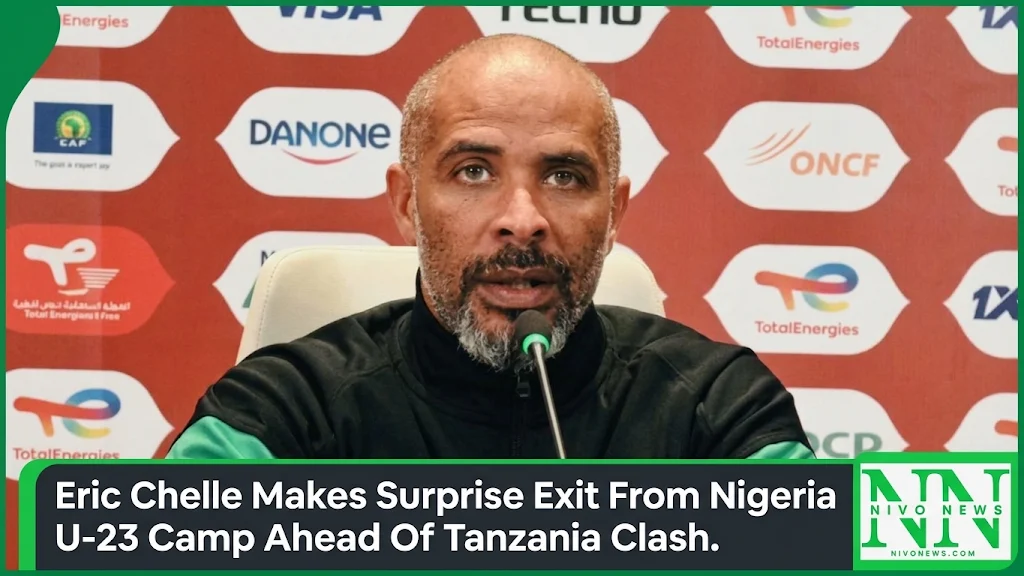
Super Eagles head coach Eric Chelle has departed Nigeria’s U-23 team camp to concentrate on the senior national team’s 2027 Africa Cup of Nations (AFCON) qualifying fixtures against Tanzania.....KINDLY READ THE FULL STORY HERE▶
Chelle, who also supervises the Olympic Eagles, will be unavailable for Nigeria’s two-legged U-23 AFCON qualifying tie against the Democratic Republic of Congo (DR Congo) because both teams have matches scheduled during the same international window.
The Olympic Eagles are scheduled to travel to Lubumbashi for the first leg against DR Congo on Friday, November 13. The encounter will take place on the same day the Super Eagles host Tanzania at the Godswill Akpabio International Stadium in Uyo.
The return leg is slated for Tuesday, November 17, in Ikenne, coinciding with Nigeria’s second meeting with Tanzania.
In Chelle’s absence, assistant coach Deniran Ortega will oversee the Olympic Eagles, working alongside Ikorodu City head coach Bright Ozebagbe.
Ortega reportedly conducted most of the team’s training sessions on Thursday and led the technical crew during their friendly victory over Grassrunners on Friday, ahead of the squad’s departure for the first leg.
Meanwhile, Chelle has selected 23 players for the Super Eagles’ AFCON qualifying matches against Tanzania. Among the notable inclusions are Brighton forward Zadok Yohanna and Molde FC midfielder Daniel Daga.
Goalkeeper Michael Atata and junior international Abdulmuiz Adeleke have also earned places in the squad. Atata will compete for the goalkeeping position alongside Samuel James of SJK FC and Clinton Andy.
Other notable selections include defenders Victory Akpe, Vince Osuji and Emmanuel Ochobi, as well as midfielders Chibuzor Nwoko and Aderemi Adeoye.
The attacking options also feature Peter Edokpolor and Umar Abubakar.
The seven home-based players in the squad are expected to depart Nigeria on Tuesday for the Olympic Eagles’ first-leg encounter against DR Congo at the Stade TP Mazembe in Lubumbashi.
Full Nigeria U-23 Squad
Goalkeepers: Samuel James (SJK FC, Finland); Clinton Andy (Rivers United); Michael Atata (Ikorodu City).
Defenders: Christian Akpan (Genk FC, Belgium); Victory Akpe (FC Basel, Switzerland); Vince Osuji (Tromsø IL FC, Norway); Emmanuel Godwin (Pardubice FC, Czechia); Odinaka Alfred (Nasarawa United); Emmanuel Ochobi (Rivers United); Aliu Sugau (Barau FC).
Midfielders: John Otomewo (Reims FC, France); Daniel Daga (Molde FC, Norway); Wilfred George (Kristiansund FC, Norway); Chibuzor Nwoko (Fulham FC, England); Aderemi Adeoye (Ikorodu City); Sadiq Saleh (FC Metta, Latvia); Victor Samuel (Pardubice FC, Czechia).
Forwards: Peter Edokpolor (SL Benfica, Portugal); Sulaiman Sani (Al-Qadsiah FC, Saudi Arabia); Umar Abubakar (FC Famalicao, Portugal); Zadok Yohanna (Brighton FC, England); Abdullahi Umar (Hradec Kralove, Czechia); Abdulmuiz Adeleke (Sporting Supreme).
latest
“Behave Yourself!” – Seyi Tinubu Fires Back At Isaac Fayose Over Port Harcourt ‘City Boy’ Walk.


Seyi Tinubu, son of President Bola Tinubu, has criticised political commentator Isaac Fayose over his remarks about the City Boy movement’s walk in Port Harcourt, Rivers State.....KINDLY READ THE FULL STORY HERE▶
Fayose had taken to social media to question the gathering, describing it as a waste of time and expressing doubts about the number of people who attended the event.
Responding in the comment section of the post, Seyi urged the businessman to conduct himself properly instead of criticising the group’s activities.
He defended the Port Harcourt walk, describing it as a successful and peaceful gathering organised by young Nigerians in support of President Tinubu and his administration.
Seyi wrote: “My content creator Egbon e behave ara yin o. You and I both know that those gallant men and women were there for the city boy walk in PH, which was a success by the way. Vote APC.”
In a related development, Fayose has alleged that he is being targeted with false accusations because of his support for the Nigeria Democratic Congress (NDC) presidential candidate, Peter Obi.
The younger brother of former Ekiti State Governor, Ayodele Fayose, made the allegation in a video shared on his verified Facebook page on Sunday.
He was reacting to a post by an unnamed blogger linking him to a rape allegation, which he denied, describing it as a fabrication intended to damage his reputation because of his refusal to withdraw support for Obi.
Fayose further alleged that individuals who turn down offers from the All Progressives Congress (APC) are often subjected to smear campaigns.
-

 latest1 year ago
“Social Media Erupts As Jim Iyke Declares Rita Dominic Nollywood’s Most Beautiful”
-
 latest3 years ago
Edo Political Showdown: Oshiomhole Appears At Presidential Villa As Tinubu Hands APC Gubernatorial Flag To Okpebholo (Photos & Video)
-
 entertainment3 years ago
Love Knows No Age American Woman Defends Marriage To Young Nigerian Man “I’m Not 70”
-
 latest3 years ago
Olumide Akpata Strikes Again: Drops Killer Track, Sends Edo State Into Frenzy!(Video)
-
 Politics3 years ago
Nigerians React As Pastor Adeboye Foresees Passing Away On A Sunday After Enjoying A Satisfying Meal Of Pounded Yam
-
 latest3 years ago
FG Identifies 31 States At Risk Of Heavy Flooding In 2024: See Full List
-
 Politics3 years ago
BREAKING: Inspector-General Of Police Summons Top Police Commanders For Crucial-Security Challenges
-
 latest3 years ago
5 NYSC Corpers Perish In Fatal Road Accident Returning From Camp