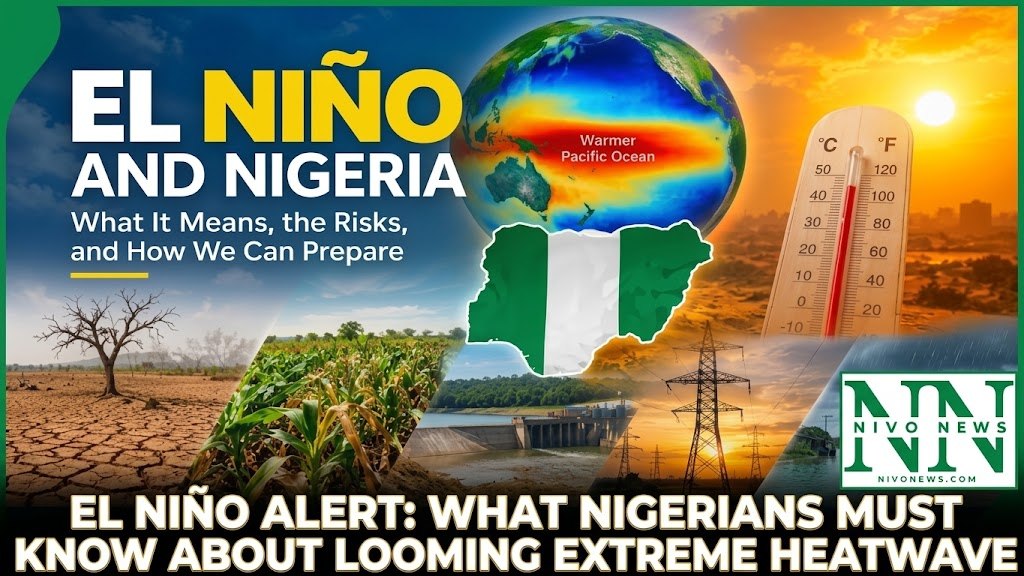
Nigeria may face significant public health challenges from extreme heat in the coming months as a strengthening El Niño climate pattern raises concerns about higher temperatures and changing rainfall patterns across the country, Naija News reports.....KINDLY READ THE FULL STORY HERE▶
Researchers at the University of Chicago’s Climate Impact Lab have projected that Nigeria could experience an additional 31,400 heat-related deaths between September 2026 and February 2027 if the forecast conditions occur.
The estimate, published in September, ranks Nigeria among the countries expected to record some of the highest numbers of additional heat-related deaths during the period.
However, the figure is a scientific projection rather than a confirmed death toll, and it does not mean that the deaths will inevitably occur.
The warning follows a September 3 report by the World Meteorological Organisation (WMO), which stated that El Niño had become firmly established and was expected to intensify into a very strong event, with potential effects on global weather patterns extending into early 2027.
Nigeria’s weather agency, the Nigerian Meteorological Agency (NiMet), also confirmed the onset of a strong El Niño event in its August 2026 climate update, cautioning that the development could influence weather conditions.
What Exactly Is El Niño?
El Niño is a natural climate phenomenon characterised by unusually warm sea surface temperatures in the central and eastern tropical Pacific Ocean.
Although the warming occurs thousands of kilometres away from Nigeria, it can influence atmospheric circulation around the world, potentially changing temperature and rainfall patterns in different regions.
El Niño is part of a broader climate cycle known as the El Niño-Southern Oscillation (ENSO). Its opposite phase, La Niña, occurs when sea surface temperatures in the same region of the Pacific Ocean become cooler than normal.
According to the WMO, El Niño typically occurs every two to seven years and generally lasts between nine and 12 months. Its effects differ across regions and may be influenced by other climate conditions.
Consequently, a strong El Niño does not automatically mean that every part of Nigeria will experience drought, flooding or extreme heat. However, it can increase the likelihood of unusual weather patterns, making advance preparation essential.
Why Nigeria Should Be Concerned
The potential impact of extreme heat extends beyond uncomfortable weather. Rising temperatures can threaten human health, agricultural production, water supplies and other essential services.
The Climate Impact Lab estimates that extreme heat could contribute to 451,000 additional deaths worldwide between June 2026 and February 2027, compared with a normal year. Nigeria accounts for a projected 31,400 of those deaths between September 2026 and February 2027.
The figures should not be interpreted as a certainty that a particular number of Nigerians will die. Instead, they highlight the potential scale of the health threat if temperatures rise and adequate protective measures are not implemented.
1. Extreme Heat Could Endanger Lives
One of the major concerns is the impact of prolonged exposure to high temperatures on human health.
Extreme heat can cause dehydration and heat exhaustion, and in severe cases, heatstroke, a life-threatening condition that requires immediate medical attention.
The World Health Organisation (WHO) identifies older people, infants, outdoor workers and individuals with underlying health conditions as particularly vulnerable to heat-related illnesses.
People working on farms, construction sites, in markets and along roads may face increased risks because of the long hours they spend outdoors, especially under direct sunlight.
To reduce these risks, Nigerians are advised to drink water regularly, wear lightweight and loose-fitting clothing, seek shade or cooler environments and avoid strenuous physical activities during the hottest hours of the day whenever possible.
Residents should also check on elderly relatives, children, neighbours and others who may be more susceptible to extreme temperatures.
Anyone who experiences severe symptoms such as confusion, convulsions or loss of consciousness during extreme heat should receive emergency medical attention.
2. Farmers Could Face Unpredictable Rainfall
Agriculture is another sector that could be affected by changes in rainfall patterns associated with shifting climate conditions.
If the rainy season ends earlier than expected or dry spells become prolonged, farmers may struggle to obtain sufficient water for their crops. Such conditions could disrupt planting schedules, affect crop development and reduce harvests.
Conversely, excessive rainfall in certain areas could trigger flooding, wash away crops and damage farmland.
NiMet’s August 2026 seasonal update highlighted the possibility of varying rainfall conditions across the country. Its outlook for August to October 2026 projected normal to above-normal rainfall across much of northern Nigeria, while parts of the South-West and Cross River State were expected to experience normal to below-normal rainfall.
These regional differences underline the importance of farmers following NiMet’s localised forecasts and adjusting their planting and water-management plans accordingly.