
Politics
Breaking: FG Mandates CCTV Setup On Nine Major Highways


The announcement of this directive was made in a statment released by his Special Adviser on Media, Orji Uchenna, on Tuesday.The decision is part of the government’s ongoing initiatives to enhance the safety and efficiency of crucial transportation corridors across the nation….CONTINUE READING....KINDLY READ THE FULL STORY HERE▶

In May 2023, the government entered into an agreement with private-sector investors to upgrade and manage selected highways, with the aim of generating over N11.54 trillion in revenue over a 25-year concession period.
This Public-Private Partnership involves the construction, operations, and maintenance of highways, enabling concessionaires to recover their investments through toll and non-toll revenues, as per negotiations.
The initiative is regarded as a significant stride towards modernizing Nigeria’s highway infrastructure and stimulating economic activities.
However, eight months after the project’s approval, the contractors have not yet initiated work on the site, causing frustration for Minister Umahi.
His recent directive and the formation of three committees to expedite the implementation of the initiative underscore the government’s commitment to ensuring timely and efficient progress in this vital infrastructure project.
The introduction of CCTV and solar lighting is anticipated to improve security and visibility on these highways, addressing safety concerns for motorists and local communities.
He remarked, “This issue has lingered for four years and six months now but this January, we must conclude everything about the successful companies this month. Those companies who are jokers will be taken out. If we have one or two serious contractors, we engage them to take over the project site.”
However, during the event at the ministry headquarters in Abuja, Umahi emphasized the necessity for the committees to work effectively and collaboratively, considering the expectations of Nigerians in terms of transparency, standard, and efficiency in contract negotiations.
He also instructed a review of the scope of work and cost implications to accommodate current economic dynamics and the new policy direction of the present administration. Umahi charged the concessionaires to adhere to the set criteria and timeline for the projects.
He explained, “We own the design; you will own the cost of the project while we carry out verification on the cost of the projects; the idea is to scope the projects. We want to have a standard road infrastructure to toll.
“Our business is to ensure that your design conforms with the ministry’s standard of design, that is why we are making the Director of Roads and Bridges of the ministry the Chairman of the Committee on Scoping and Design. We don’t want to do just a patch on the road and give it to the public for you to toll. The public will resist. We want to have a standard road to toll.
“We have to provide an alternative road because by law you cannot toll road if there is no alternative route to it. Every one of the projects must have alternative routes. The number of toll gates and toll stations will be determined by the Infrastructure Concession Regulatory Commission.
“We also have to put CCTV Camera, Solar Light and Security on our roads. Whatever that will make our roads safer is very important to us. All these must be considered part of the business.”
According to the statement, the three committees set up by the minister for the actualisation of the HDMI programme are “Scoping and design, financial and the due diligence and agreement review committee.”
latest
HUNTED AGAIN! EFCC Unleashes Red Alert, Declares Notorious Ex-Pension Boss Abdulrasheed Maina Wanted!,

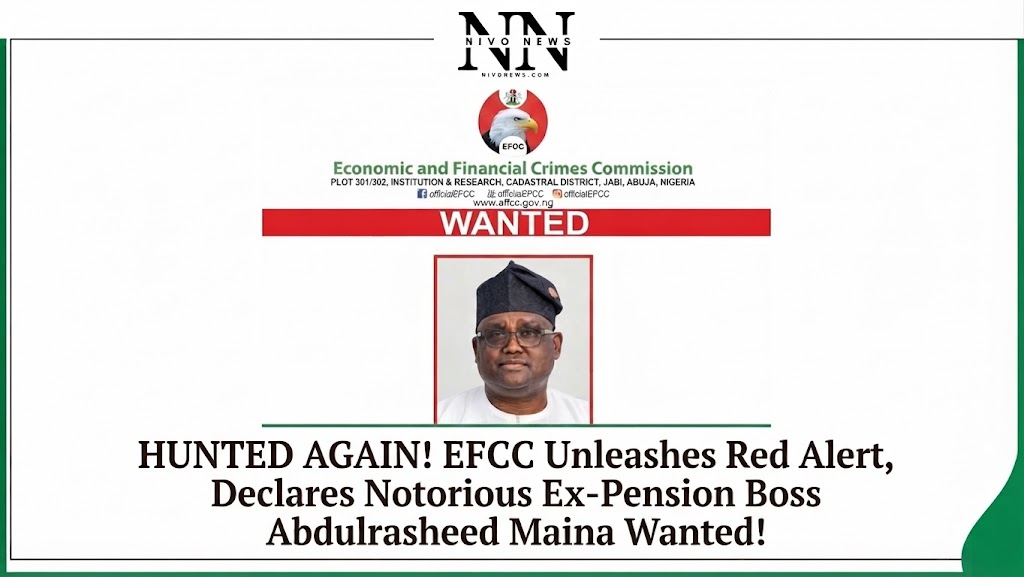
The Economic and Financial Crimes Commission (EFCC) has officially declared the former Chairman of the Pension Reform Task Team (PRTT), Abdulrasheed Abdullahi Maina, wanted in connection with an alleged case of receiving stolen property.....KINDLY READ THE FULL STORY HERE▶
According to a wanted notice issued by the anti-graft agency, 61-year-old Maina is an indigene of Biu, Borno State. The commission has urged anyone with actionable intelligence regarding his whereabouts to reach out immediately to the nearest police station, security agency, or any of the EFCC’s zonal and headquarters offices across the country.
Key background details on the case include:
-
Previous Conviction: Maina previously faced heavy prosecution by the EFCC, which secured his conviction in November 2021 on a 12-count charge involving money laundering, fictitious bank accounts, and fraud connected to roughly ₦2 billion.
-
Sentencing: A court previously sentenced him to a cumulative 61 years of imprisonment (to run concurrently) and ordered him to refund ₦1 billion to the Federal Government.
The EFCC continues its nationwide manhunt as authorities step up efforts to track down the fugitive former pension chief.
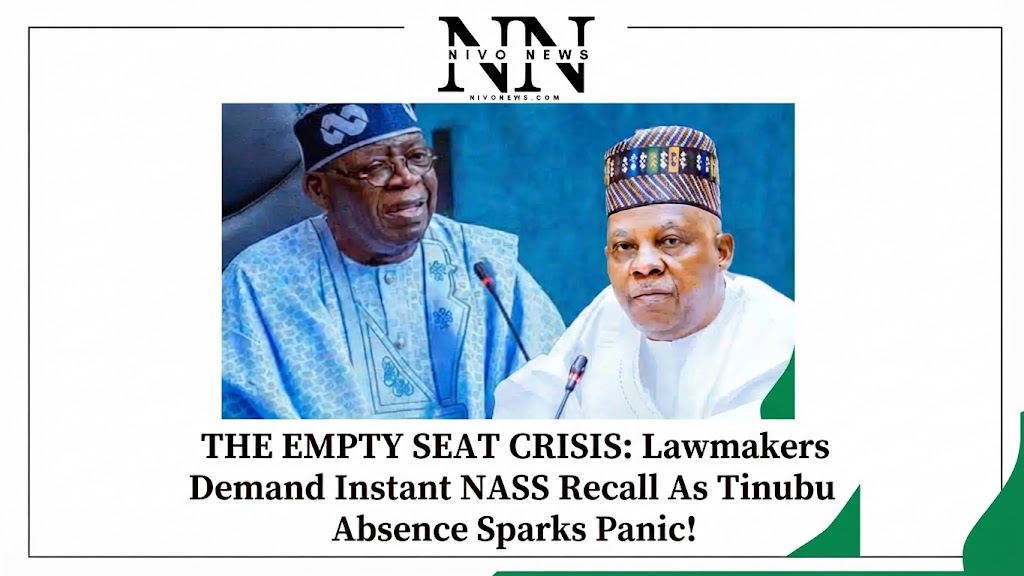
Political tension has gripped Abuja as a group of House of Representatives members under the Save Democracy Group (SDG) are demanding an immediate reconvening of the National Assembly. The lawmakers argue that President Bola Tinubu’s prolonged absence has triggered severe constitutional uncertainty, pushing the country into a leadership vacuum.....KINDLY READ THE FULL STORY HERE▶
President Tinubu left Nigeria for Europe on August 30 for what was initially billed as a three-week working vacation. Although the Presidency later announced a minor extension with an expected return over the weekend, the expiration of the initial 21-day window has sparked a fierce constitutional standoff.
Led by Awaji-Inombek Abiante and Abubakar Kusada, the SDG is demanding clarity on whether President Tinubu transmitted a formal written declaration to Senate President Godswill Akpabio and House Speaker Tajudeen Abbas, as required under Section 145 of the 1999 Constitution.
-
The Constitutional Rule: Section 145 mandates that if a President goes on vacation or is unable to perform duties, a written declaration must be sent to the leadership of the National Assembly. If the President fails to do this within 21 days, both chambers can pass simple-majority resolutions to mandate the Vice-President to act as President.
-
No Room for Informal Assurances: The lawmakers stressed that modern communication and assurances from presidential aides do not override the supreme law of the land. “The question is not whether modern technology allows the President to work from another country. The question is whether the Constitution has been obeyed,” the group stated.
-
Call to Action: The SDG is urging Akpabio and Abbas to publicly disclose whether the letter was transmitted, or alternatively, immediately reconvene both chambers to empower Vice-President Kashim Shettima legally.
While Vice-President Shettima has been actively representing Nigeria on international fronts—including the United Nations General Assembly in New York—the lawmakers insist that constitutional processes must be transparent, formal, and strictly followed rather than left to political convenience.
latest
THE CORRUPTION TRAP: Why A Six-Year Single Term Will Destroy Nigeria, According To Ex-Candidate!.
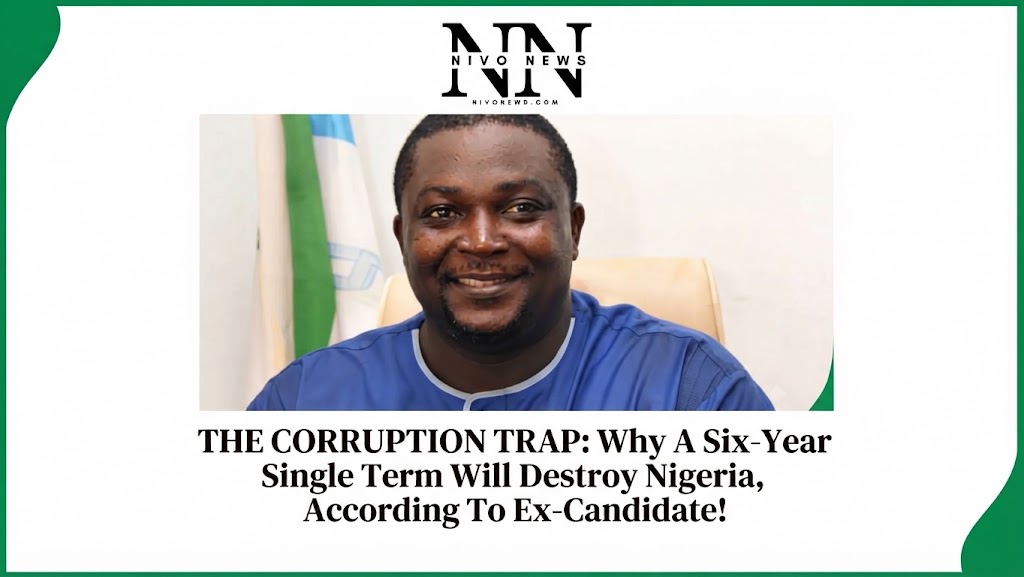
A fresh debate is sweeping across Nigeria concerning the tenure of the President and governors, following a proposal by Senate Leader Opeyemi Bamidele to replace the current system with a single six-year term[cite: 17]. While the lawmaker argues that this would eliminate re-election pressures and allow leaders to focus on governance, former presidential candidate Peter Ameh has issued a stern warning, asserting that such a move could ultimately “worsen corruption”[cite: 17].....KINDLY READ THE FULL STORY HERE▶
Bamidele announced plans to sponsor a constitutional amendment bill in the 11th National Assembly to institute this change post-2027[cite: 17]. He contended that the current two-term, four-year system forces incumbents to waste valuable time and resources preparing for re-election battles[cite: 17].
“If you know you are there for six years, only one tenure, you put in your best from day one. You know this is the only chance that you have,” Bamidele argued[cite: 17].
However, Ameh, a former National Chairman of the Inter-Party Advisory Council (IPAC), countered that removing the re-election check would create a six-year period of unaccountability[cite: 17]. He explained that the re-election process is a vital mechanism for voters to evaluate and pass judgment on a government’s performance[cite: 17].
Without this mechanism, Ameh fears elected officials would use their single term to enrich themselves, buying private jets and renovating government houses before leaving office without consequence[cite: 17].
“If this six-year term comes into practice, there will not be accountability. It will worsen corruption,” Ameh stressed[cite: 17].
Instead of a blanket switch to a single term, Ameh proposed a radical alternative: retain the four-year tenure but introduce a mandatory referendum. This assessment would determine whether an incumbent has performed well enough to be eligible to seek a second term on the ballot[cite: 17].
Furthermore, Ameh addressed the long-standing demand for rotational presidency, suggesting it could foster inclusivity among Nigeria’s geopolitical zones, though he warned that rotation alone “cannot guarantee good governance” if the leadership lacks the “kindness” to serve the people[cite: 17].
Ultimately, Ameh concluded, Nigeria’s priority must be comprehensive electoral reform to ensure transparent elections where voters can freely choose leaders capable of addressing poverty and transforming national resources for the common good[cite: 17].
-

 latest1 year ago
“Social Media Erupts As Jim Iyke Declares Rita Dominic Nollywood’s Most Beautiful”
-
 latest3 years ago
Edo Political Showdown: Oshiomhole Appears At Presidential Villa As Tinubu Hands APC Gubernatorial Flag To Okpebholo (Photos & Video)
-
 entertainment3 years ago
Love Knows No Age American Woman Defends Marriage To Young Nigerian Man “I’m Not 70”
-
 latest3 years ago
Olumide Akpata Strikes Again: Drops Killer Track, Sends Edo State Into Frenzy!(Video)
-
 Politics3 years ago
Nigerians React As Pastor Adeboye Foresees Passing Away On A Sunday After Enjoying A Satisfying Meal Of Pounded Yam
-
 latest2 years ago
FG Identifies 31 States At Risk Of Heavy Flooding In 2024: See Full List
-
 Politics3 years ago
BREAKING: Inspector-General Of Police Summons Top Police Commanders For Crucial-Security Challenges
-
 latest3 years ago
5 NYSC Corpers Perish In Fatal Road Accident Returning From Camp