
latest
Former Minister Explores Reasons-Behind Nigerians Seeking Counterfeit Degrees In Benin (View Details)


Former Minister of Education, Prof. Tunde Adeniran, shares insights with TEMITOPE ADETUNJI regarding the issue of counterfeit degree certificates from universities in Benin Republic….CONTINUE READING....KINDLY READ THE FULL STORY HERE▶

What are your thoughts on the prevalence of fake certificates from Benin Republic universities and its impact on Nigeria’s education system?
The prevalence of fake certificates from Benin Republic universities highlights societal flaws, reflecting a shift away from valuing education for knowledge. In Nigeria, undue emphasis on paper certificates undermines the education system, leading to graduates with inadequate skills. Vigilant recruitment processes and a systemic restructuring are essential to address this issue and ensure genuine merit.
As the former Minister of Education, what advice do you offer on collaborative efforts between neighboring countries to tackle fraudulent academic credentials?
Collaboration should be built on mutual respect for standards and shared goals in human capital development. Engaging with international organizations like UNESCO and the United Nations can facilitate this collaboration. However, Nigerians must also establish a system that renders counterfeit certificates meaningless, discouraging individuals from obtaining them.
What regional measures do you propose to curb the production and circulation of fake certificates?
To address this challenge, focus on three key steps. First, convene discussions at the National Council of Education to engage stakeholders and propose effective solutions. Second, reorient the leadership of the educational system to emphasize the value of genuine education over shortcuts. Third, raise awareness in society about the pivotal role of education in national development, encouraging a more serious approach.
How can educational institutions enhance their verification processes to detect and prevent the acceptance of counterfeit qualifications?
Equip institutions with the necessary resources and strengthen quality control mechanisms. Inspectorates need reorientation and motivation to carry out verifications effectively. Human capital is crucial; institutions must invest in skilled personnel to implement robust verification procedures.
Are there successful strategies or initiatives you implemented during your tenure to combat fake certificates in Nigeria?
Verification exercises, visitation panels, and reforms were crucial during my tenure. Immediate actions were taken based on observations, and reforms addressed issues like cultism. By prioritizing the recruitment of qualified individuals, we laid the foundation for positive initiatives and a repositioned educational sector.
What legislative or regulatory changes could contribute to a more robust defense against fraudulent academic credentials?
Existing legislation can be improved by tightening the system and imposing strict penalties for offenders. Consequences should deter individuals from engaging in certificate fraud, emphasizing the severity of the crime against the nation.
How do you envision the role of technology in preventing and detecting fraudulent qualifications in the digital age?
Technology plays a crucial role in detection, but its effectiveness depends on subsequent actions. Once fraudulent qualifications are identified, appropriate consequences must follow. Additionally, a focus on mathematics education from primary to university levels is vital for leveraging technology effectively.

Isaac Fayose, younger brother of former Ekiti State Governor Ayo Fayose, has called on African Action Congress (AAC) presidential candidate Omoyele Sowore to join forces with Peter Obi and other opposition leaders ahead of the 2027 general election.....KINDLY READ THE FULL STORY HERE▶
Fayose argued that Sowore could not effectively challenge the government on his own, urging opposition figures to set aside their political differences and work together.
He made the appeal while reacting to the attack on Sowore in Ado-Ekiti, Ekiti State.
In a video posted on his verified Facebook page on Friday, Fayose condemned the incident and warned that it highlighted the risks opposition figures could face in the country.
The social media critic said other opposition leaders could experience similar attacks if they failed to unite against the government.
“Sowore, you can’t fight alone. You need to unite with Peter Obi and other opposition figures. What happened to you in Ekiti can happen to anyone. This government does not want opposition,” Fayose said.
The businessman also urged security agencies to identify and arrest those responsible for the attack, insisting that they must face justice.
Recall that Sowore had accused the Ekiti State Police Command and the Department of State Services (DSS) of removing CCTV footage showing the attack on him in Ado-Ekiti.
The AAC presidential candidate alleged that the removal of the footage was an attempt to conceal evidence of the incident and shield those responsible.
latest
‘Voice Of Jacob, Hand Of Esau’ – Reuben Abati Raises Alarm Over Speculations In Uzodinma’s Court Case


Former presidential aide, Reuben Abati, has questioned whether the circumstances surrounding the court judgment that nullified Imo State Governor Hope Uzodimma’s candidacy for the Imo West Senatorial District election reflected what some have described as the “voice of Jacob and the hand of Esau”.....KINDLY READ THE FULL STORY HERE▶
Speaking on Arise Television’s Morning Show on Friday, Abati examined the controversy surrounding the ruling and warned against making unsubstantiated claims about possible external influence on the judiciary.
The former presidential aide stressed that the legal battle was not yet over, pointing to the Imo State chapter of the All Progressives Congress (APC), which rejected the judgment and indicated its intention to challenge the decision at the Court of Appeal.
Abati explained that the Imo APC had raised constitutional concerns relating to Section 285, particularly the provision stipulating that pre-election cases must be instituted within 14 days.
According to him, the party argued that Senator Rochas Okorocha, who challenged Uzodimma’s candidacy, failed to file the case within the constitutionally prescribed period.
He noted that the Court of Appeal would have the opportunity to review issues surrounding the procedure, timing, technicalities and evidence presented before the lower court.
Abati maintained that the legal questions raised by the Imo APC should be resolved through the appellate process rather than through speculation about the circumstances surrounding the judgment.
He said, “So the matter is not ended yet. They will go to the Appeal Court, and then, the Appeal Court will be able to look at the issues either about procedure, about timing, about technicality, about evidence, how evidence was filed, and whether the procedure should have been originating summons or another thing.
“That’s the purpose of an Appeal Court.
“Finally on that subject is the fact this is the voice of Jacob and the hand Esau, without putting on the table the implications of that caveat, because I’ve seen some people saying there are questions to be raised about some people having powers over the judiciary. But we cannot speculate in that regard.”
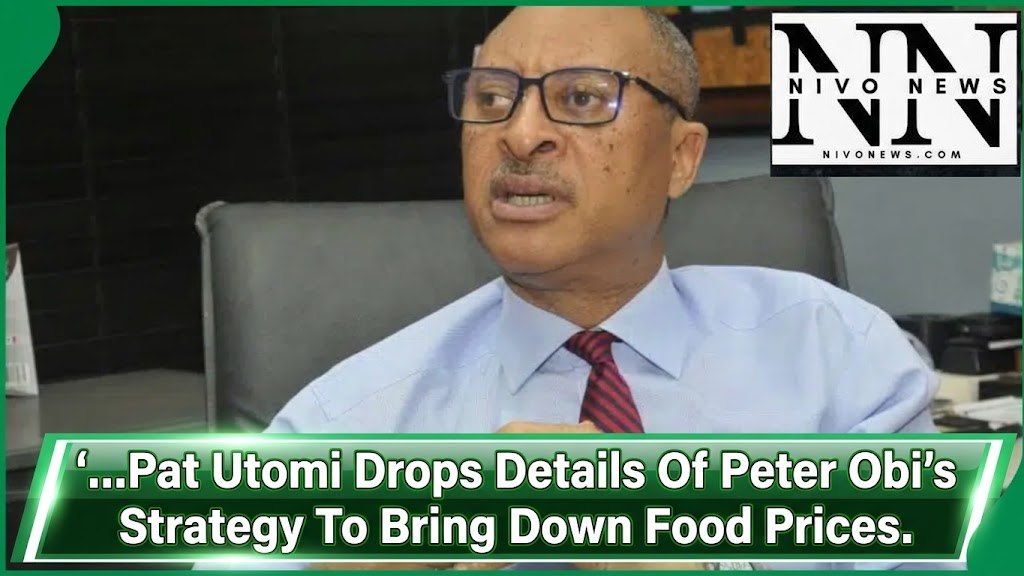
A chieftain of the Nigeria Democratic Congress (NDC), Pat Utomi, has said the party’s presidential candidate, Peter Obi, plans to strengthen the naira to ₦500 against the US dollar if elected president.....KINDLY READ THE FULL STORY HERE▶
As of Friday, the naira traded at ₦1,346.86 per dollar on the official Nigerian Foreign Exchange Market (NFEM), while the dollar exchanged for approximately ₦1,385 in the parallel market.
In a post on X, Utomi explained that strengthening the naira from about ₦1,350 to ₦500 per dollar would help tackle inflation, reduce poverty and improve Nigerians’ purchasing power.
He described the proposed exchange rate as a key component of Obi’s economic agenda ahead of the 2027 presidential election.
Utomi projected that the price of a loaf of sliced bread could fall from ₦1,750 to ₦800, while a 50kg bag of imported rice could drop from ₦55,000 to ₦27,500.
He further estimated that a medium-sized tuber of yam could decline from ₦2,400 to ₦1,200, while a 50kg bag of maize could reduce from ₦75,000 to ₦37,500.
According to him, the price of a bunch of plantain could also fall from ₦2,500 to ₦1,250, while a whole chicken could become cheaper, dropping from ₦7,000 to ₦3,500.
The NDC chieftain also listed petrol and cement among the commodities expected to become more affordable under the proposed economic programme.
Utomi said the party was convinced that targeting a strategic appreciation of the exchange rate by strengthening the naira from ₦1,350 to ₦500 per dollar would be a winning strategy.
“We are convinced that targeting a strategic appreciation of the exchange rate by reasonably strengthening it from ₦1,350/$ to ₦500/$ as part of our manifesto is a winning strategy.
“It offers a direct, multi-faceted approach to curbing inflation, reducing poverty, and lowering the cost of living,” he said.
He added that the proposal reflects the party’s commitment to improving the living conditions of Nigerians, particularly those affected by multidimensional poverty.
“It clearly demonstrates our concrete plan to uplift the 140 million Nigerians currently experiencing multi-dimensional poverty,” he said.
-

 latest1 year ago
“Social Media Erupts As Jim Iyke Declares Rita Dominic Nollywood’s Most Beautiful”
-
 latest3 years ago
Edo Political Showdown: Oshiomhole Appears At Presidential Villa As Tinubu Hands APC Gubernatorial Flag To Okpebholo (Photos & Video)
-
 entertainment3 years ago
Love Knows No Age American Woman Defends Marriage To Young Nigerian Man “I’m Not 70”
-
 latest3 years ago
Olumide Akpata Strikes Again: Drops Killer Track, Sends Edo State Into Frenzy!(Video)
-
 Politics3 years ago
Nigerians React As Pastor Adeboye Foresees Passing Away On A Sunday After Enjoying A Satisfying Meal Of Pounded Yam
-
 latest3 years ago
FG Identifies 31 States At Risk Of Heavy Flooding In 2024: See Full List
-
 Politics3 years ago
BREAKING: Inspector-General Of Police Summons Top Police Commanders For Crucial-Security Challenges
-
 latest3 years ago
5 NYSC Corpers Perish In Fatal Road Accident Returning From Camp