Connect with us

Politics

Nigerians React As House Of Representatives Threatens EFCC Action Over Alleged N43 Billion Missing From NCAA (Details)

Published

on

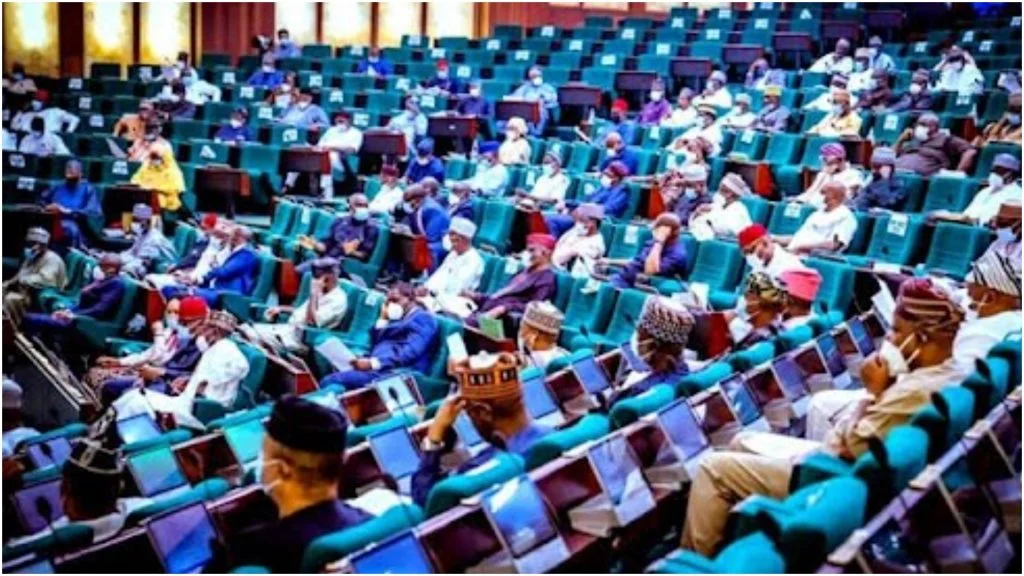
Rep. James Faleke, Chairman of the House Committee on Finance, issues a warning in Abuja, stating the House’s intent to hand over the management of the Nigeria Civil Aviation Authority (NCAA) to the EFCC due to the alleged missing N43 billion…..CONTINUE READING....KINDLY READ THE FULL STORY HERE▶


The notification was made during an interactive session with revenue-generating agencies.

Obaseki Warned: Public Walk Could End in Disaster, Says APC

The session also revealed data from the Federal Airport Authority of Nigeria (FAAN) indicating that local airlines transported 16 million passengers in 2022, with international carriers transporting three million passengers. Concerns were raised about the N1.28 trillion generated from tickets sold to overseas passengers, with N64 billion representing 5% of the total divided among regulatory bodies in 2022.

Court Cracks Down: Agballah And Nine APC Officials Barred From Party Leadership In Enugu

The discrepancy in the NCAA’s declared revenue of N12.7 billion, compared to the projected gross revenue share of N66 billion for 2022, further heightened legislative concerns.

Stay connected via Google News
Follow us for the latest travel updates and guides.
Add as preferred source on Google
Advertisement

latest

Tinubu Mourns Ex-NFA Boss Ibrahim Galadima, Praises His Legacy.

Published

on

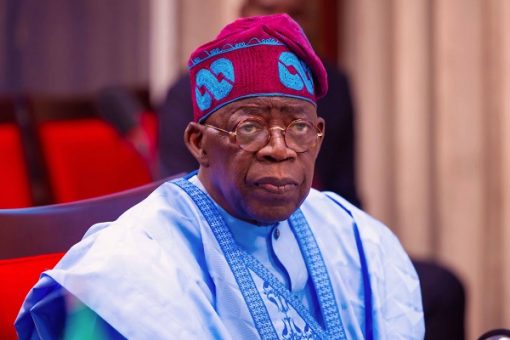
President Bola Ahmed Tinubu has expressed deep sadness over the death of former Nigeria Football Association (NFA) president and veteran sports administrator, Alhaji Ibrahim Galadima, describing his passing as a significant loss to Nigeria’s sports community.....KINDLY READ THE FULL STORY HERE▶
Court Cracks Down: Agballah And Nine APC Officials Barred From Party Leadership In Enugu

Stay connected via Google News
Follow us for the latest travel updates and guides.
Add as preferred source on Google
Continue Reading

latest

Ekiti 2026: PDP, ADC No Match For Oyebanji’s Re-election Bid — Ekundayo.

Published

on

The current political atmosphere in Ekiti State is calm, stable, and highly favourable for Governor Biodun Oyebanji to secure a second term. Beyond just winning, there is growing expectation that he will deliver a decisive and overwhelming victory for the All Progressives Congress (APC) across the state.....KINDLY READ THE FULL STORY HERE▶
Edo 2024: Pastor Ize-Iyamu’s Potential Gubernatorial Bid Promises Political Earthquake

Stay connected via Google News
Follow us for the latest travel updates and guides.
Add as preferred source on Google
Continue Reading

latest

2027: State Of The Parties (2) — APC Dominates, Opposition In Freefall.

Published

on

In the volatile landscape of Federal Capital Territory (FCT) politics, the ruling APC has staged a dramatic comeback, transforming itself from an embattled underdog after the 2022 elections into a dominant political force now firmly in control of the nation’s administrative capital.....KINDLY READ THE FULL STORY HERE▶

This current dominance sharply contrasts with the setbacks of the February 2022 Area Council elections. After a strong showing in 2019, where the party controlled three of six councils, its fortunes dipped significantly three years later.

At the time, the PDP gained momentum, winning key councils such as Abuja Municipal Area Council (AMAC), Bwari, and Kuje. APC was reduced to Abaji and Kwali, while Gwagwalada went to APGA. Many observers then concluded that APC’s influence in the FCT had weakened considerably.

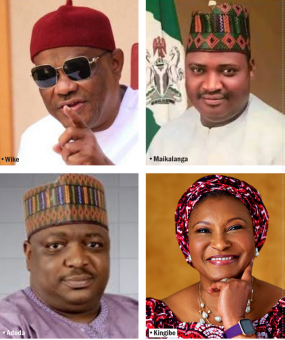
The turnaround, however, came not through elections but through a wave of high-profile defections that reshaped the political balance in the territory. A major shift began when AMAC Chairman Christopher Zaka Maikalangu left the PDP for APC.

This was followed by further political realignments, most notably the defection of Senator Philip Aduda, a prominent PDP figure and long-time power broker in FCT politics. These movements significantly weakened the opposition and strengthened APC’s grassroots structure.

According to political analysts, the entry of figures like Aduda and Maikalangu did more than boost numbers—it fundamentally altered the political dynamics of the capital.

The impact of this shift became clear in the most recent Area Council elections, where APC recorded a sweeping victory in five out of six councils, losing only Gwagwalada in a close contest.

With this stronghold at the grassroots level, APC has re-established itself as the dominant political force in Abuja and is now widely viewed as the party to beat heading into 2027.

However, internal tensions remain a concern. Some long-standing APC members have expressed dissatisfaction, alleging marginalisation in appointments linked to the FCT Minister, Nyesom Wike. There is also ongoing concern about voter apathy in urban centres, where opposition candidates still retain some influence.

Nigerian Army Retires 15 Generals From Artillery Corps In Kaduna Ceremony

Nationally, APC continues to project strength, now controlling 31 of Nigeria’s 36 states. This expansion has been supported by its “Renewed Hope Agenda” and a steady stream of defections from opposition parties such as the PDP and NNPP.

While APC and PDP still dominate the political structure on paper, a third force—the ADC—had begun to reshape the FCT political space before recent setbacks disrupted its momentum.

Before its crisis, ADC was gradually building a coalition by absorbing elements from APGA networks, drawing urban supporters previously aligned with Labour Party, and tapping into dissatisfaction within established political blocs.

At one point, the party appeared poised to become a decisive player in a tightly contested Abuja political environment. However, its progress has been halted after INEC withdrew recognition of its leadership, plunging the party into uncertainty and internal confusion.

Now, the ADC faces a critical decision between restructuring within limited time or challenging the regulatory decision, while also battling the risk of losing political momentum entirely.

Meanwhile, the influence of former Rivers State Governor Nyesom Wike remains a defining factor in FCT politics. Though still associated with the PDP, he has effectively built a cross-party alliance that cuts across political boundaries.

This strategy was evident in the last Area Council elections, where a broad coalition delivered victories across all six councils, highlighting that political success in Abuja is often driven more by alliances than party labels.

Wike’s role has strengthened PDP influence in some areas while also creating internal contradictions within the party’s structure.

For now, APC maintains the upper hand, benefiting from federal influence, strong grassroots control, and high-profile defections. The movement of figures like Aduda has further consolidated its reach, especially among indigenous communities.

Still, the PDP remains relevant, retaining loyal support bases across several communities and relying on long-standing political structures. Its challenge now is maintaining relevance in a rapidly shifting political environment shaped by alliances rather than ideology.

Breaking: High Court Confirms Edison Ehie As Legitimate Speaker Of Rivers State House Of Assembly

Across the FCT, the road to 2027 remains uncertain. Opposition fragmentation has created space but also raised questions about who can effectively challenge APC dominance. Labour Party’s earlier momentum has not fully translated into lasting structures, while smaller parties continue to struggle for relevance.

At present, APC stands as the most organised and strategically positioned party, while PDP faces internal challenges and ADC fights to regain stability.

However, Abuja politics remains unpredictable, with voter behaviour often influenced by personalities, alliances, and shifting loyalties rather than fixed party structures.

In a related development, Senator Ireti Kingibe, the current FCT representative, has aligned with ADC ahead of the 2027 elections after leaving Labour Party.

APGA, on its part, remains a mid-tier player in the FCT political space. While it maintains visibility across the six Area Councils, it has struggled to convert presence into electoral victories, often playing the role of a minor or spoiler party.

Despite attempts to reposition itself under new leadership, APGA continues to lack a strong indigenous support base in the FCT and remains constrained by internal disputes and limited resources compared to larger parties.

As political preparations intensify, attention is now shifting to emerging alliances and strategic defections, which are expected to play a decisive role in shaping the 2027 elections.

In Kano State, another major political battleground, APC and ADC are also locked in a fierce contest ahead of the next general election. The Kwankwasiyya faction’s movement into ADC has intensified competition, while APC relies on a coalition of influential figures, including serving and former governors, to strengthen its hold.

With high-profile politicians switching sides and new alliances forming, both Kano and Abuja are shaping up to be key indicators of Nigeria’s broader political direction heading into 2027.

Stay connected via Google News
Follow us for the latest travel updates and guides.
Add as preferred source on Google
Continue Reading

Trending

Copyright © 2023 NIVONEWS

×