
latest
“Outrage In Kogi As ₦2 Billion Spent on Governor’s House While Debt Skyrockets”.

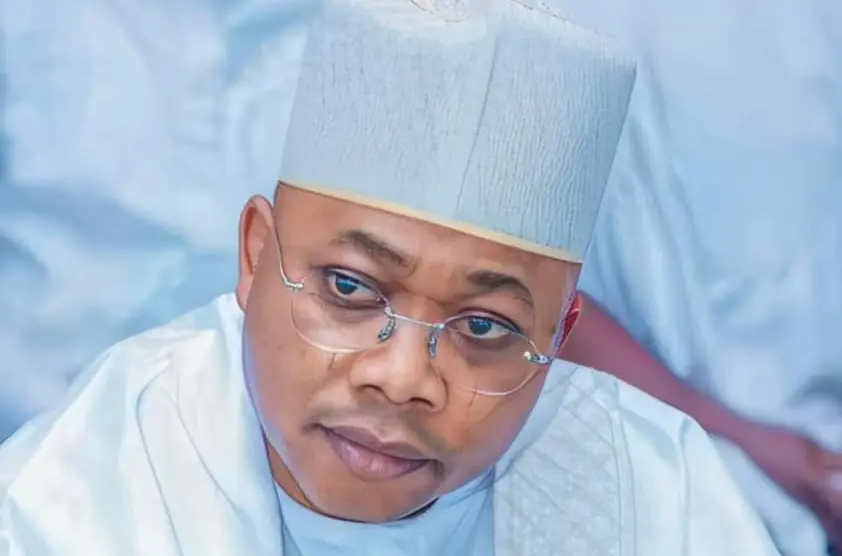
According to Nivo News, Kogi State has come under public scrutiny after its 2026 draft budget revealed plans to spend over ₦2 billion on the remodelling of the Government House and related projects, despite mounting concerns over the state’s rising debt and weak revenue base. The draft budget allocates ₦1.015 billion for extensive renovations of the Government House structure, alongside ₦1 billion for minor capital works to be executed through direct labour.....KINDLY READ THE FULL STORY HERE▶
In addition, the budget earmarks ₦500 million for the construction of residential apartments for members of the State House of Assembly and the head of legislative services. The project is described as being on an “owner-occupier basis,” implying that lawmakers would eventually take ownership of the houses built with public funds.
The planned expenditure has drawn criticism, particularly against the backdrop of Kogi’s growing debt servicing obligations. A review of the state’s Medium-Term Expenditure Framework for 2025–2027 indicates that more than 80 per cent of internally generated revenue (IGR) will be committed to debt servicing. The state is projected to generate ₦35.1 billion in IGR for both 2025 and 2026, with debt servicing expected to consume ₦27.9 billion and ₦28.2 billion respectively. By 2027, debt service is projected to rise to ₦28.5 billion, representing 81.1 per cent of projected revenue.
The MTEF warned that Kogi’s financial position remains fragile, with a “very high risk” that the state’s ability to meet debt obligations may be unexpectedly weakened due to lower-than-expected revenue, higher expenditures, or an unforeseen increase in liabilities. The framework also highlighted the state’s weak revenue robustness, largely driven by socio-economic challenges and heavy reliance on volatile federal allocations, including VAT and statutory transfers. Internally generated revenue accounts for less than 20 per cent of total operating revenue, significantly below the Nigerian states’ average.
A review of the first half of 2025 budget performance showed that ₦28.1 billion was spent on debt servicing between January and June, surpassing allocations to several critical sectors. Combined expenditure by the Ministry of Works and Planning, the Road Maintenance Agency, and the state fire service was ₦17.2 billion, while the Ministry of Water Resources received ₦1.4 billion, Education ₦20.3 billion, and Health ₦12.3 billion. Notably, the 2025 budget had also earmarked ₦7 billion for the purchase of 60 vehicles for ministries, departments, and agencies.
Residents and analysts have expressed concern over the state government’s spending priorities, questioning its commitment to fiscal prudence and responsible management of public resources amid dwindling revenues and mounting debt obligations.
latest
FALLOUT OVER THE POLLS: Femi Falana Drops Bombshell, Declares Osun Governorship Election Must Never Reach The Courts!.
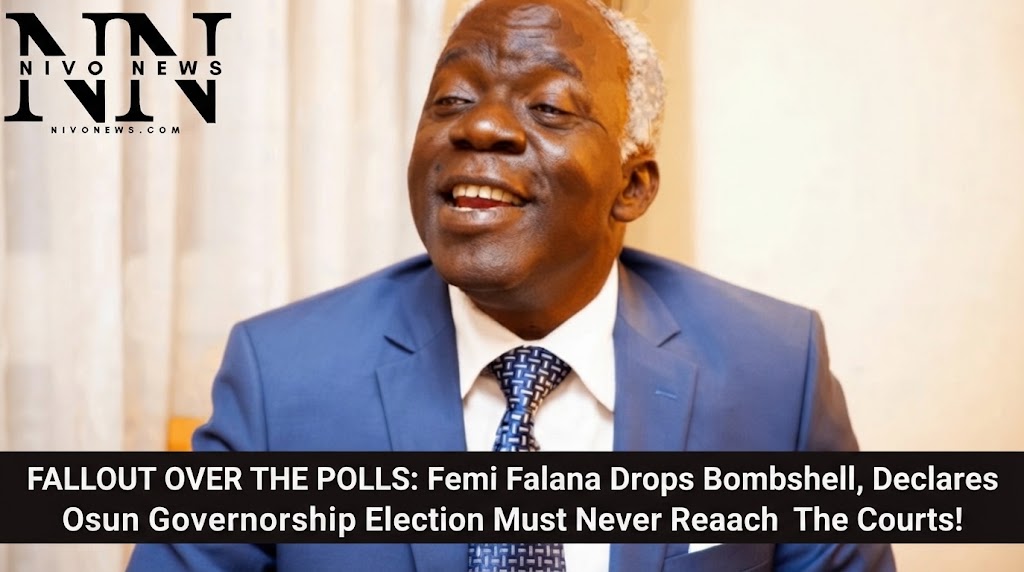
Renowned human rights lawyer Femi Falana (SAN) has asserted that the outcome of the recent Osun State governorship election should not be dragged to court, emphasizing that the electorate has already spoken decisively through the ballot box.....KINDLY READ THE FULL STORY HERE▶
Speaking on Arise Television’s Sunrise Daily on Wednesday, the legal luminary criticized the practice of courts determining election winners, arguing that such judicial intervention undermines voter sovereignty and makes a mockery of popular choices. He stressed that the judiciary’s role in democratic processes should be extremely limited, especially when a proper poll has produced a clear winner, and warned that Nigeria remains ill-prepared to handle future electoral disputes unless the scope of judicial involvement is redefined.
Curbing Technicalities and Ensuring Credible Polls
Falana cautioned against courts hiding behind technicalities to overturn the genuine will of the people. He noted that reducing election tribunal cases starts with improving the integrity and quality of elections conducted by the Independent National Electoral Commission (INEC). By focusing on transparent processes that reflect actual votes cast, stakeholders can prevent unnecessary legal battles and restore total confidence in the democratic mandate of the electorate.
latest
THE GREAT RELIEF: All 36 Governors Join Forces In Massive Masterplan To Slash Transportation And Food Prices!.
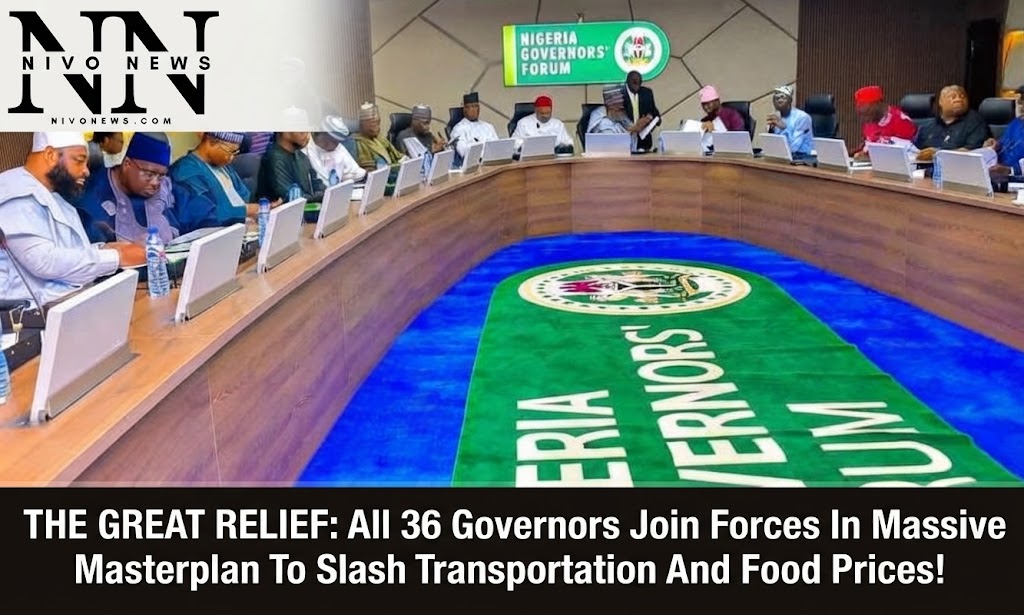
The governors of all 36 states have resolved to finance and expand the adoption of Compressed Natural Gas (CNG)-powered vehicles to drive down transportation expenses and curb the rising cost of goods and services.....KINDLY READ THE FULL STORY HERE▶
The decision was finalized on Wednesday night during the Nigeria Governors’ Forum (NGF) meeting at the NGF Secretariat in Abuja. To accelerate this rollout, the governors agreed to forge stronger partnerships with private investors, boosting vehicle conversions and building necessary infrastructure nationwide.
The National Affordable CNG Transit Programme
This resolution stems from a presentation on the National Affordable CNG Transit Programme—a state-driven scheme aimed at passing lower operational costs directly to commuters via reduced passenger fares. In an official communique signed by NGF Chairman and Kwara State Governor AbdulRahman AbdulRazaq, the forum stated that the plan involves state-backed support for conversions, fleets, and infrastructure, coupled with fare reduction commitments from participating operators.
Tackling Post-Subsidy Pressures and Food Inflation
Speaking to journalists after the session, Bayelsa State Governor Duoye Diri emphasized that leveraging cheaper gas alternatives will cushion the economic blow of fuel subsidy removal. Diri explained that targeting transportation acts as a strategic catalyst because high travel costs directly inflate the market prices of food items like yams and garri. By cutting transport overheads, the initiative aims to trigger a positive multiplier effect across every sector of the economy to ease the burden on everyday citizens.
latest
SHOCK RESIGNATION: Nigeria High Commission Media Coordinator In Ghana Quits In Sudden, Dramatic Exit!.
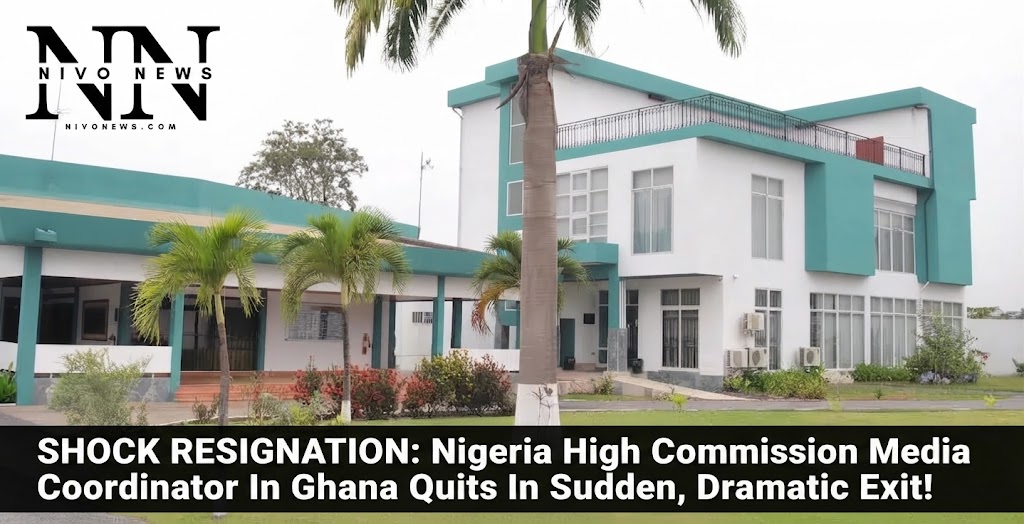
Destiny Austine Omon, the Media Coordinator at the Nigerian High Commission in Accra, Ghana, has resigned effective August 27, 2026. According to his resignation letter addressed to the High Commissioner, his departure was driven by pressure to remain silent on accountability issues, restrictions on media coverage, and financial challenges.....KINDLY READ THE FULL STORY HERE▶
Key Grievances and Transparency Concerns
Omon highlighted that mounting pressure to ignore inquiries from Nigerians regarding a controversial ₦2 billion budget allocation made it untenable for him to stay. He noted that transparency and accountability had become major concerns within the mission.
Furthermore, he criticized the heavy-handed control placed on reporting the struggles faced by Nigerians in Ghana, arguing that credible communication requires freedom from undue interference. Beyond editorial constraints, Omon pointed to low and irregular stipend payments, as well as prolonged financial delays, which severely hampered his capacity to execute his duties.
Commitment to the Nigerian Cause
Insiders close to the former coordinator emphasized that his resignation does not amount to a rejection of the diplomatic mission or its goals. Instead, it stems strictly from his inability to function effectively under the current conditions. Omon has offered to ensure a seamless handover of official materials and responsibilities while wishing the commission continued success in safeguarding the welfare of Nigerians in Ghana.
-

 latest1 year ago
“Social Media Erupts As Jim Iyke Declares Rita Dominic Nollywood’s Most Beautiful”
-
 latest2 years ago
Edo Political Showdown: Oshiomhole Appears At Presidential Villa As Tinubu Hands APC Gubernatorial Flag To Okpebholo (Photos & Video)
-
 entertainment2 years ago
Love Knows No Age American Woman Defends Marriage To Young Nigerian Man “I’m Not 70”
-
 latest2 years ago
Olumide Akpata Strikes Again: Drops Killer Track, Sends Edo State Into Frenzy!(Video)
-
 Politics3 years ago
Nigerians React As Pastor Adeboye Foresees Passing Away On A Sunday After Enjoying A Satisfying Meal Of Pounded Yam
-
 latest2 years ago
FG Identifies 31 States At Risk Of Heavy Flooding In 2024: See Full List
-
 Politics3 years ago
BREAKING: Inspector-General Of Police Summons Top Police Commanders For Crucial-Security Challenges
-
 latest2 years ago
5 NYSC Corpers Perish In Fatal Road Accident Returning From Camp