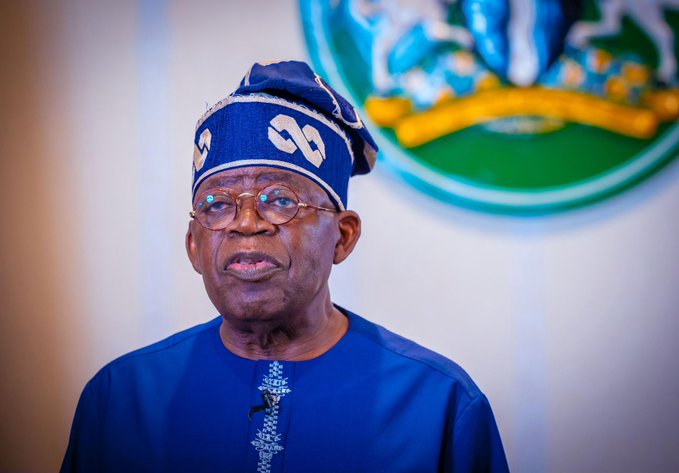
The source explained that the upward review became necessary following President Bola Tinubu’s recent announcement of large-scale personnel intake across security formations, a decision that came after Ministries, Departments and Agencies had already concluded the submission of their budget proposals to the Budget Office of the Federation in line with the Budget Call Circular.
It was gathered that the timing of the recruitment decision created additional financial obligations that were not reflected in the earlier framework, thereby compelling an adjustment of the overall budget size to absorb the new personnel costs.
According to the presidency source, the President proceeded to present the budget to the National Assembly without delay to demonstrate commitment to an early passage, noting that the budget process was already behind schedule and could not wait for all implementation details to be fully reconciled before presentation.
The source further explained that necessary adjustments and fine-tuning would be carried out before the Appropriation Bill returns to the National Assembly for continuation of the process, including budget defence sessions by MDAs.
The proposed 2026 budget puts total expenditure at ₦58.18 trillion, representing a six per cent increase over the ₦49.7 trillion approved for 2025. The figure includes ₦4.98 trillion in projected spending by government-owned enterprises and ₦1.37 trillion earmarked for grants and donor-funded projects.
Statutory transfers are estimated at ₦4.1 trillion, while debt servicing stands at ₦15.52 trillion, including ₦3.388 trillion allocated to the sinking fund for retiring maturing obligations owed to local contractors and creditors.
Personnel costs, including pensions, are projected at ₦10.75 trillion, reflecting a seven per cent increase from the 2025 provision, with ₦1.02 trillion allocated to government-owned enterprises. Overhead costs are estimated at ₦2.22 trillion.
The source also noted that non-oil revenues continue to strengthen, now accounting for about two-thirds of total government receipts, signalling a sustained structural shift away from oil dependence.
With projected revenue of ₦34.33 trillion against total expenditure of ₦58.18 trillion, the fiscal deficit for 2026 is estimated at ₦23.85 trillion, representing 4.28 per cent of the Gross Domestic Product.
Recurrent non-debt expenditure is put at ₦15.25 trillion, while capital spending is projected at ₦26.08 trillion. Sectoral allocations show security taking the largest share at ₦5.41 trillion, followed by infrastructure with ₦3.56 trillion, education at ₦3.52 trillion and health at ₦2.48 trillion.

 Follow on Google News